
University Hemp Research & Field Trials Featuring Oregon CBD and GTR Seeds Genetics

Independent Research on CBD, CBG, CBDV, and Triploid Hemp Varieties
How do cannabis genetics perform when evaluated outside the breeder's own fields?
At GTR Seeds, we believe independent agricultural research is one of the most valuable resources growers have when choosing cannabis seeds. University field trials provide important information about flower yields, cannabinoid concentrations, disease susceptibility, genetic stability, and performance across different growing environments.
Over the years, genetics developed by Oregon CBD, the breeding company behind GTR Seeds, have been evaluated by researchers at Cornell University, Oregon State University, University of Vermont, North Carolina State University, University of Wisconsin–Madison, University of Illinois, University of Tennessee, and other agricultural institutions.
These studies have examined everything from the exceptional flower yields of Lifter to the reduced fertility and production potential of triploid cannabis, the stability of CBG-dominant genetics, and the performance of hemp varieties across different climates.
Below is a growing collection of independent university research featuring Oregon CBD genetics, with links to the original reports and findings.
1. University of Vermont: Lifter Leads the 2020 Hemp Flower Variety Trial
University: University of Vermont
Year: 2020
Research: Hemp Flower Variety Trial
Varieties of interest: Lifter and other Oregon CBD cultivars
One of the most impressive demonstrations of Lifter's production potential came from the University of Vermont's 2020 Hemp Flower Variety Trial.
Led by Dr. Heather Darby, the research evaluated 27 hemp varieties at Borderview Research Farm in Alburgh, Vermont. Researchers measured flower yield, quality, plant growth, and pest tolerance.
Lifter recorded the highest dry flower yield in the trial, producing 4,283 pounds per acre at 8% moisture, compared with a trial average of 1,838 pounds per acre.
That represents approximately 133% more flower than the trial average. Although the numerical ranking does not necessarily indicate a statistically significant advantage over every competing variety, it was an outstanding result for a commercial CBD cultivar.
These findings help explain why Lifter has remained one of the most widely recognized high-CBD hemp cultivars since its introduction in 2018.
Read the University of Vermont 2020 Hemp Flower Variety Trial (PDF)
2. Cornell University: Triploid Hemp Shows Reduced Seed Production Under Pollen Pressure
University: Cornell University
Years: 2021–2022
Research: Triploid Pollen-Challenge Trials
Varieties: Lifter, Lifter Seedless, Suver Haze, Suver Haze Seedless, White CBG, White CBG Seedless, Sour Lifter Seedless, Sour Suver Haze Seedless, Pine Walker Seedless, and Sour RNA Seedless
One of the most important advances in modern hemp breeding has been the development of triploid cannabis varieties.
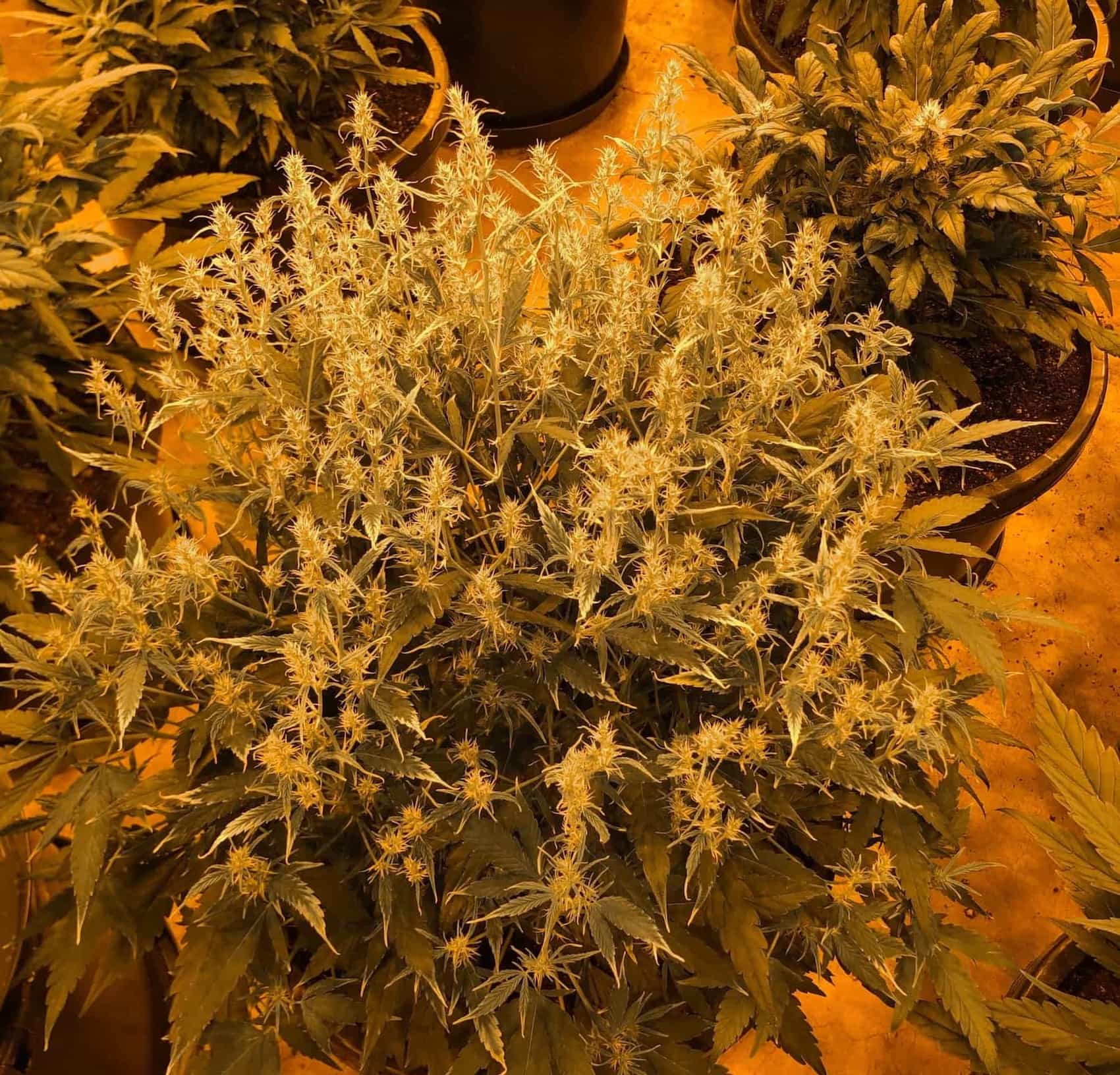
Triploid plants contain three sets of chromosomes rather than the two sets found in conventional diploid cannabis plants. This chromosome configuration can substantially reduce fertility and seed production following pollination.
Cornell University researchers conducted field trials comparing Oregon CBD diploid and triploid varieties in environments with and without pollen pressure.
The results demonstrated several important findings:
-
Triploid plants produced significantly fewer seeds than diploid plants when exposed to pollen.
-
Triploid cultivars maintained similar cannabinoid concentrations in pollen-free and pollen-challenged environments.
-
Under pollen pressure, triploid plants maintained higher cannabinoid concentrations than their diploid counterparts.
Importantly, researchers also observed that triploid plants could still produce some viable seeds. Triploid cannabis should therefore be described as highly seed-resistant rather than completely sterile.
These findings provide independent support for one of the central benefits of triploid hemp genetics: reducing unwanted seed production and helping preserve cannabinoid-rich flower quality when pollen exposure occurs.
The research was supported by the Foundation for Food and Agriculture Research, with matching support from Oregon CBD.
Read Cornell University's Triploid Pollen-Challenge Research
Learn more about the science behind triploid cannabis.
3. University of Vermont: Triploid Hemp Outperforms Diploid Varieties in 2023 Flower Trials
University: University of Vermont
Year: 2023 (report published April 2024)
Research: Hemp Flower Variety Trial
Varieties: Forbidden V, Forbidden V Seedless, Lifter, Lifter Seedless, Pinewalker Seedless, Sour Lifter, Sour Lifter Seedless, Sour Special Sauce, Sour Special Sauce Seedless, Stem Cell, Stem Cell Seedless, Vitality Seedless, White CBG, and White CBG Seedless
The University of Vermont's 2023 Hemp Flower Variety Trial provides some of the strongest independent field evidence supporting the flower production potential of triploid hemp genetics.
Researchers evaluated 14 varieties at Borderview Research Farm in Alburgh, Vermont, comparing plant growth, flower yields, cannabinoid production, and disease susceptibility.
Several Oregon CBD varieties were evaluated in both conventional diploid and triploid forms, allowing researchers to make direct comparisons.
Triploid Varieties Demonstrated Higher Flower Yields
In the 2023 trial, triploid varieties frequently outperformed their diploid counterparts in dry flower production.
Some notable results, expressed as dry flower yield at 8% moisture, included:
| Variety | Diploid yield | Triploid yield |
|---|---|---|
| Lifter | 1,167 lbs/acre | 2,562 lbs/acre |
| Sour Lifter | 1,972 lbs/acre | 2,482 lbs/acre |
| Sour Special Sauce | 1,920 lbs/acre | 2,667 lbs/acre |
| Stem Cell CBG | 1,504 lbs/acre | 2,258 lbs/acre |
| White CBG | 1,318 lbs/acre | 1,703 lbs/acre |
| Forbidden V | 2,335 lbs/acre | 2,543 lbs/acre |
These results represent the specific conditions of the 2023 Vermont trial and should not be interpreted as guaranteed yield increases for all triploid cannabis varieties.
The differences were particularly striking for Lifter, whose triploid version produced more than twice the dry flower yield of its diploid counterpart in this trial.
Vitality Seedless recorded the highest numerical dry matter flower yield at 2,508 pounds per acre, equivalent to approximately 2,726 pounds per acre at 8% moisture. Several other varieties were statistically comparable to the top performer.
In their discussion, the researchers also noted that triploid varieties had consistently demonstrated higher yields than other flower varieties evaluated across their research program.
This is particularly significant because the observation comes from independent agricultural researchers conducting replicated field trials rather than from breeder marketing claims.
Additional Findings: Cannabinoids and Disease Resistance
The study also revealed important differences in cannabinoid concentrations and disease susceptibility.
Sour Lifter Seedless and Lifter Seedless had among the highest total potential CBD concentrations, at approximately 19.4%.
The CBG varieties, including White CBG and Stem Cell, generally had some of the lowest total THC concentrations.
Researchers also observed that several CBDV varieties, including Forbidden V Seedless, Pinewalker Seedless, and Vitality Seedless, demonstrated comparatively favorable disease tolerance. Some CBG varieties experienced greater susceptibility to leaf spot diseases and powdery mildew.
Not every variety met the total THC compliance threshold at the study's sampling date, underscoring the importance of variety selection, testing, harvest timing, and local regulations.
Overall, this trial provides valuable independent evidence of the potential agronomic advantages of triploid hemp, while also documenting the differences among individual varieties.
Read the University of Vermont 2023 Hemp Flower Variety Trial (PDF)
4. North Carolina State University: Multi-Location Hemp Variety Trials

University: North Carolina State University
Year: 2021
Research: Floral Hemp Variety Trials
Varieties: Lifter, Lifter Seedless, Suver Haze, Suver Haze Seedless, White CBG, White CBG Seedless, Sour Lifter Seedless, Sour Suver Haze Seedless, Stem Cell CBG Seedless, Pine Walker Seedless, Forbidden V Seedless, and Elektra
North Carolina State University evaluated commercial floral hemp genetics across three distinct agricultural regions of North Carolina.
Research sites included the Coastal Plain, Piedmont, and Mountain regions, allowing researchers to compare cultivar performance across different climates and growing conditions.
The study included numerous Oregon CBD cultivars alongside genetics from other breeders.
Researchers examined varietal adaptation, plant development, biomass production, and cannabinoid characteristics.
This work is especially valuable because a cultivar that performs exceptionally well in one location may respond differently to temperature, humidity, growing season, and disease pressure elsewhere.
For growers evaluating CBD, CBG, or triploid hemp varieties, multi-location university trials provide useful information about how genetics perform beyond their original breeding environment.
Explore North Carolina State University's Hemp Research
5. University of Wisconsin–Madison: 2021 Hemp Cultivar Trial
University: University of Wisconsin–Madison
Year: 2021
Research: Wisconsin Hemp Cultivar Trial — Cannabinoid Production
Oregon CBD varieties: Forbidden V, Lifter, Lifter Seedless, Pine Walker, Suver Haze, Suver Haze Seedless, White CBG, and White CBG Seedless
Researchers at the University of Wisconsin–Madison evaluated 29 hemp cultivars at the Arlington Agricultural Research Station in 2021.
The replicated trial was designed to better understand how high-cannabinoid hemp varieties perform in the Upper Midwest, where growing seasons, temperatures, and environmental conditions differ considerably from those of the Pacific Northwest.
Researchers examined plant height, uniformity, flowering time, biomass yield, and cannabinoid production.
The study included several Oregon CBD varieties representing CBD, CBG, and CBDV genetics, along with conventional diploid and triploid selections.
One interesting observation was the strong vegetative growth of Lifter Seedless, which recorded an average plant height of approximately 65 inches in the trial, compared with approximately 42 inches for conventional Lifter.
The research also documented cannabinoid profiles at different flowering stages, providing growers with useful information about how cannabinoid concentrations develop throughout the season.
The results reinforce the importance of evaluating genetics under regional growing conditions rather than assuming that performance in one location will translate directly to another.
Read the University of Wisconsin–Madison 2021 Hemp Cultivar Trial (PDF)
6. Cornell University: Evaluating the Stability of CBG Hemp Genetics
University: Cornell University
Year: 2020
Research: CBG Hemp Cultivar Trial
Oregon CBD varieties: White CBG and Auto CBG
As interest in cannabigerol (CBG) increased, breeders faced a significant challenge: developing cultivars that reliably produced CBG-dominant flowers rather than CBD-dominant or mixed cannabinoid profiles.
Cornell University evaluated 12 CBG hemp cultivars in 2020, including White CBG and Auto CBG from Oregon CBD.
The study examined cannabinoid profiles, biomass production, flowering characteristics, and powdery mildew susceptibility.
Researchers discovered that several commercially available CBG cultivars were not genetically stable for important characteristics. Some produced plants with different dominant cannabinoids, while others segregated for autoflowering traits.
White CBG and Auto CBG were identified as CBG-dominant cultivars without the segregating traits listed for several competing entries.
The study also documented substantial powdery mildew pressure, including significant disease severity in White CBG.
These findings reinforce the importance of stable, well-characterized genetics while demonstrating why disease management and regional adaptation remain essential considerations.
Explore Cornell University's Hemp Research
Explore our CBG seed collection.
7. University of Illinois Extension: Midwest Hemp Cultivar Check Program
University: University of Illinois Extension
Year: 2021
Research: Midwestern Hemp Database Cultivar Check Program
Oregon CBD varieties: Suver Haze and White CBG
The University of Illinois Extension coordinated a collaborative research effort to evaluate the performance and cannabinoid stability of hemp varieties grown throughout the Midwest.
The 2021 Cultivar Check Program involved 14 grower-cooperators who evaluated selected CBD- and CBG-dominant cultivars under real-world agricultural conditions.
Oregon CBD's Suver Haze and White CBG were among the varieties selected for the program.
Researchers collected samples at multiple stages of flowering to evaluate cannabinoid concentrations and determine how consistently varieties maintained their intended cannabinoid profiles.
CBD-to-THC Ratios Remained Relatively Stable
One of the most interesting findings was that CBD-to-THC ratios remained relatively consistent throughout flowering in the evaluated CBD-dominant cultivars.
The researchers used Suver Haze as one of the representative varieties illustrating this relationship.
While overall cannabinoid concentrations can change as plants mature, the ratio between CBD and THC is strongly influenced by genetics and is generally less sensitive to environmental conditions than absolute cannabinoid concentrations.
These findings support previous research from Cornell University on the genetic stability of cannabinoid ratios.
For hemp growers, understanding these relationships can help with cultivar selection, compliance planning, and harvest management.
The program also demonstrated substantial variation in yield and agronomic performance across different locations, highlighting the importance of regional testing.
This research was part of the broader Midwestern Hemp Database effort involving multiple land-grant universities and collaborating growers.
The report is an independent research resource, not an endorsement of any particular seed company or cultivar.
Read the University of Illinois Extension 2021 Cultivar Check Program Report (PDF)
8. University of Vermont: Continued Hemp Variety Evaluation in 2021
University: University of Vermont
Year: 2021
Research: Hemp Flower Variety Trial
Oregon CBD varieties: Lifter, Lifter Seedless, Suver Haze, Suver Haze Seedless, White CBG, White CBG Seedless, Hawaiian Haze, Forbidden V, and Pine Walker
Following its 2020 research, the University of Vermont continued evaluating commercial hemp cultivars in 2021.
The trial included conventional CBD varieties, CBG-dominant genetics, CBDV genetics, and triploid cultivars from Oregon CBD.
Researchers evaluated important production characteristics, including plant size, flower yield, flower-to-stem ratios, and cannabinoid quality.
One notable observation was that White CBG was among the cultivars with favorable flower-to-stem ratios, a characteristic that can influence harvest efficiency and processing requirements.
The research also provided additional comparisons between conventional and triploid hemp varieties.
Combined with the university's 2020 and 2023 trials, these findings contribute to a valuable multiyear record of hemp performance under Vermont growing conditions.
Explore the University of Vermont Hemp Research Program
9. University of Tennessee: Disease Susceptibility in Oregon CBD Hemp Varieties
University: University of Tennessee Extension
Research period: 2019–2020
Research: Hemp Disease and Pest Management, Extension Publication W916
Oregon CBD varieties: Frosted Lime, CB Dawg, and Siskiyou Gold
The University of Tennessee Extension evaluated disease susceptibility in commercial hemp varieties as part of its research into hemp pest and disease management.
The research included field observations from multiple locations in Tennessee, where warm temperatures and humid conditions can create substantial disease pressure.
Several Oregon CBD varieties were included in leaf spot susceptibility evaluations.
Frosted Lime and Siskiyou Gold received low susceptibility ratings at one research location, while CB Dawg received a moderate rating. Ratings varied by location, and not every variety was evaluated at every site.
Researchers also noted considerable phenotypic variation among Frosted Lime plants, an important reminder that uniformity and disease susceptibility can differ among cultivars and seed populations.
The findings illustrate why disease resistance is an important consideration in commercial hemp production, particularly in humid climates where fungal pathogens can significantly affect crop quality and yield.
Unlike trials focused primarily on cannabinoid concentrations or flower production, this research provides a useful perspective on the challenges growers may encounter when cultivating hemp in disease-prone environments.
Read the University of Tennessee Hemp Disease and Pest Management Guide (PDF)
10. University of Kentucky: Multistate Research Into Triploid Hemp
University: University of Kentucky, in collaboration with Cornell University and North Carolina State University
Research: Multistate Screening of Triploid CBD Hemp Agronomic Performance and Pollen Sensitivity
Varieties: Lifter, Lifter Seedless, Suver Haze, Suver Haze Seedless, White CBG, and White CBG Seedless
The development of triploid hemp genetics prompted a coordinated, multistate research effort supported by the Foundation for Food and Agriculture Research.
The University of Kentucky participated alongside Cornell University and North Carolina State University in a project designed to evaluate the agronomic performance and pollen sensitivity of triploid hemp cultivars.
Oregon CBD provided three pairs of diploid and triploid varieties for comparison.
The research design included replicated field trials under both pollen-free and pollen-challenged conditions.
This collaborative effort demonstrates the level of academic interest in triploid hemp breeding and the potential agricultural benefits of reduced fertility.
The University of Kentucky's project description documents the research objectives and participating genetics. It should be considered a project record rather than a standalone final-results report.
Read the University of Kentucky Multistate Triploid Hemp Research Project
11. Cornell University: High Germination Rates in CBD and Triploid Hemp Seeds
University: Cornell University
Year: 2021
Research: CBD and CBG Cultivar Trials
Cornell University's 2021 cultivar trial handout documented germination percentages for a broad selection of commercial hemp seeds.
Several Oregon CBD varieties achieved particularly strong results:
| Oregon CBD cultivar | Reported germination |
|---|---|
| Lifter | 99% |
| Suver Haze | 95% |
| Lifter Seedless | 97% |
| Suver Haze Seedless | 99% |
| Sour Lifter Seedless | 98% |
| Sour Suver Haze Seedless | 98% |
| Pine Walker Seedless | 90% |
These results demonstrate strong germination performance in the seed lots evaluated by Cornell, including several triploid varieties.
Germination performance can vary between seed lots, storage conditions, and planting environments, so these historical results should not be interpreted as guarantees for current inventory.
Explore Cornell University's Hemp Research
12. Oregon State University: Research on Lifter Planting Density and CBD Yield
University: Oregon State University
Research period: 2021–2023
Research: Plant Density and Irrigation Management in Floral Hemp
Variety of interest: Lifter
Oregon State University has studied the relationship between planting density, flower production, and CBD yield in commercial hemp cultivation.
Researchers conducted field trials in Southern Oregon to investigate how different planting populations affected floral biomass and cannabinoid production.
The research found that increasing planting density generally reduced the size and branching of individual plants, while flower CBD concentration remained relatively stable.
For Lifter, total CBD yield appeared to plateau at approximately 70,000–80,000 plants per hectare under the tested production conditions.
These findings highlight an important principle for commercial growers: maximizing individual plant size is not always the same as maximizing cannabinoid production per acre.
Explore Oregon State University's Hemp Research and Extension Resources
More University Research Is Underway
The research highlighted above represents only a portion of the independent scientific work involving Oregon CBD and GTR Seeds genetics.
Our varieties are currently being evaluated at more than a dozen additional universities and research organizations, with ongoing trials investigating cannabinoid production, genetic stability, agronomic performance, and other important characteristics of cannabis cultivation.
As these studies progress and new findings become publicly available, we'll continue updating this page with published results and links to the original research.
We're excited to see what these independent evaluations reveal and to share the findings with growers around the world.
Why Independent University Research Matters
Selecting the right cannabis genetics is one of the most consequential decisions a grower makes.
Marketing descriptions and breeder observations can provide useful information, but independent field trials add another layer of evidence.
University research helps growers evaluate important characteristics such as:
-
Yield potential: How much harvestable flower or biomass a variety can produce.
-
Cannabinoid expression: Whether genetics consistently produce their intended CBD, CBG, CBDV, or other cannabinoid profiles.
-
Genetic stability: How uniformly plants express desirable traits.
-
Pollen sensitivity: How triploid and diploid cultivars respond to unintended pollination.
-
Regional adaptation: How cultivars perform across different climates, soils, and growing conditions.
-
Disease susceptibility: How varieties respond to common pathogens and environmental pressures.
-
Germination performance: How seed lots perform under controlled evaluation conditions.
Not every trial produces favorable results for every cultivar. That is precisely why independent research is valuable.
At GTR Seeds, we believe growers benefit from access to the complete findings, including the limitations and challenges identified by researchers.
Decades of Breeding Experience, Backed by Agricultural Research
Oregon CBD and GTR Seeds have focused on developing high-performing cannabis genetics for growers seeking consistency, productivity, and distinctive cannabinoid profiles.
From pioneering CBG-dominant hemp varieties to developing commercially available triploid CBD and CBG seeds, our breeding programs have helped advance modern cannabis cultivation.
The university research collected here represents an important part of that history.
As new academic studies become available, we intend to continue expanding this resource to help growers make informed decisions based on independently published agricultural research.
Explore GTR Seeds genetics:
Research note: The studies summarized here represent specific seed lots, field conditions, research methods, and growing seasons. Results should not be interpreted as guarantees of performance, cannabinoid concentration, regulatory compliance, or disease resistance in other environments.