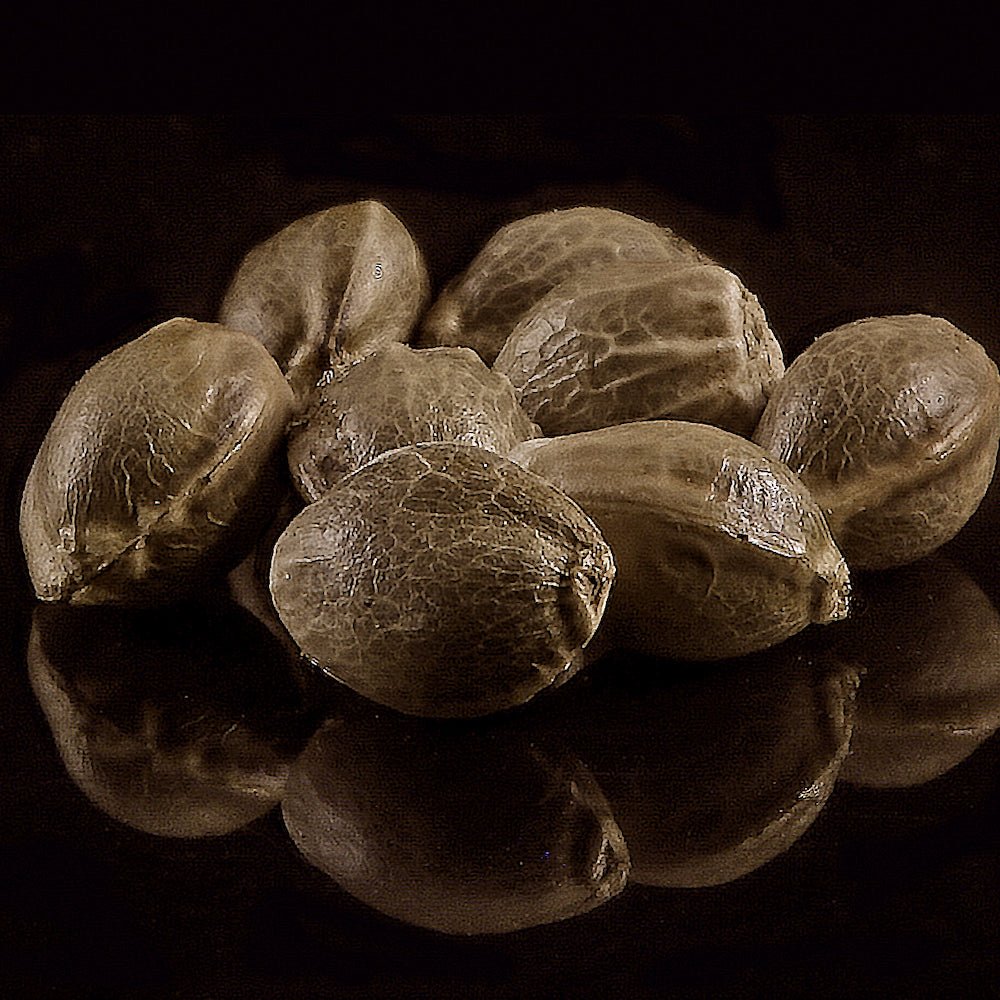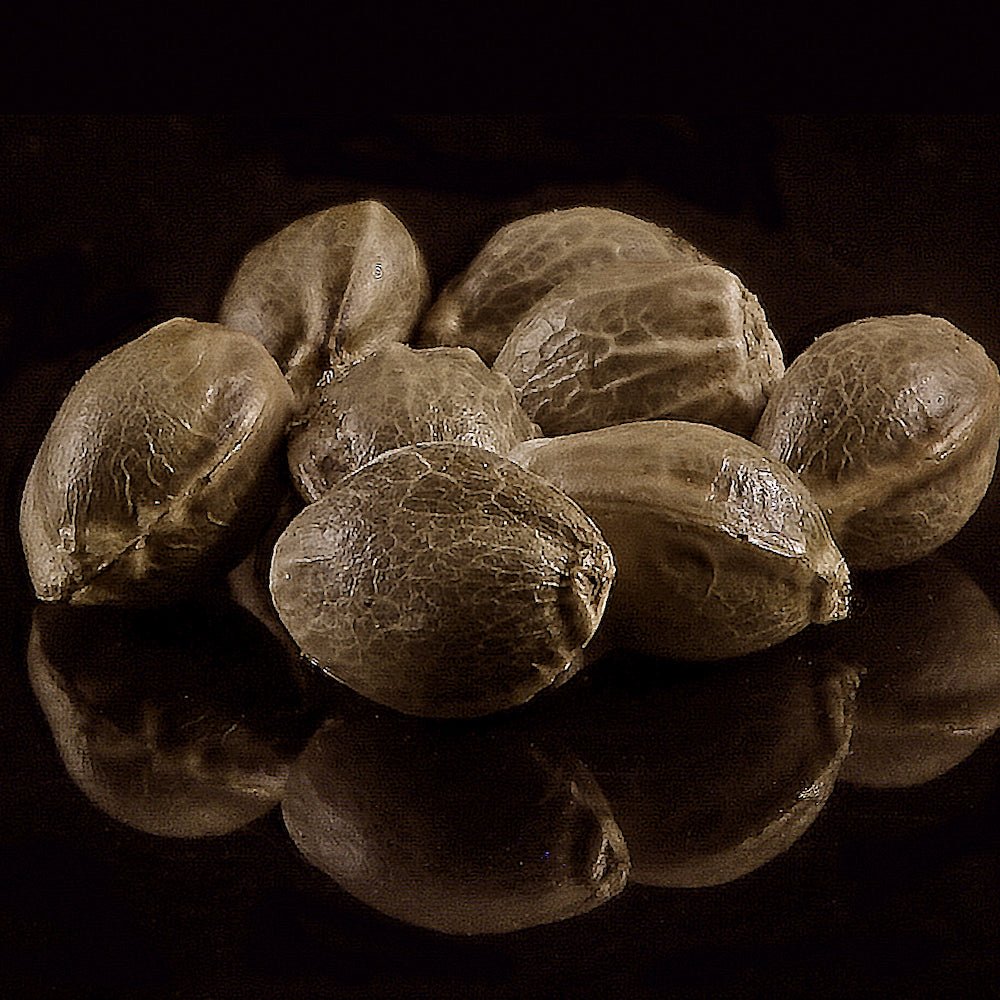


Triploid cannabis seeds are becoming increasingly popular, with more breeders advertising seedless cannabis genetics. But there's an important question growers should be asking: How do you actually know if the seeds you're buying are triploid?
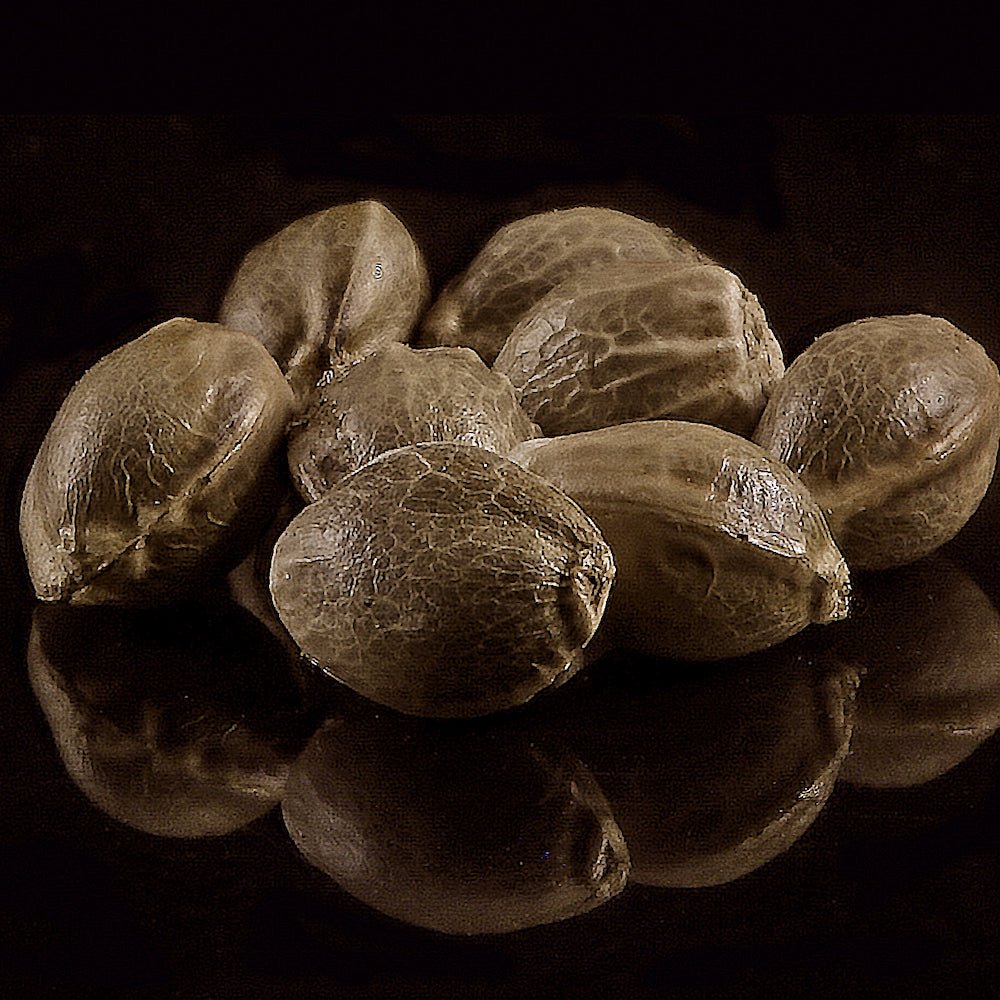
The answer isn't in the size of the seeds, the appearance of the flowers, or even whether a plant produces seeds after being exposed to pollen.
It's in the chromosomes.
At GTR Seeds, we've spent years developing triploid cannabis genetics, and one of the most important tools in our breeding program is a piece of laboratory equipment called a flow cytometer.
Here's how triploid cannabis is identified, why testing matters, and what growers should know before purchasing triploid seeds.
What Makes a Cannabis Plant Triploid?
Most cannabis plants are diploid (2x), meaning they contain two complete sets of chromosomes. In conventional cannabis, that's typically 20 chromosomes.
Triploid cannabis plants (3x) have three complete sets, typically totaling 30 chromosomes.
Tetraploid plants (4x), which are commonly used to produce triploid seeds, have four sets, typically totaling 40 chromosomes.
| Cannabis ploidy | Chromosome sets | Typical chromosome count |
|---|---|---|
| Diploid (2x) | 2 | 20 |
| Triploid (3x) | 3 | 30 |
| Tetraploid (4x) | 4 | 40 |
Triploid seeds are generally produced by crossing a tetraploid plant with a diploid plant.
The tetraploid contributes two sets of chromosomes through its reproductive cells, while the diploid contributes one set.
The resulting offspring should contain three complete chromosome sets.
Sounds pretty straightforward, right?
Unfortunately, biology doesn't always cooperate.
Unusual chromosome segregation, reproductive abnormalities, and unstable breeding material can complicate the process. That's why the expected chromosome count of a cross shouldn't be treated as proof that every resulting seed is triploid.
For more background, read our guide to triploid cannabis.
Can You Tell If Cannabis Is Triploid Just by Looking at It?
No.
This is probably the biggest misconception we encounter when discussing polyploid cannabis.
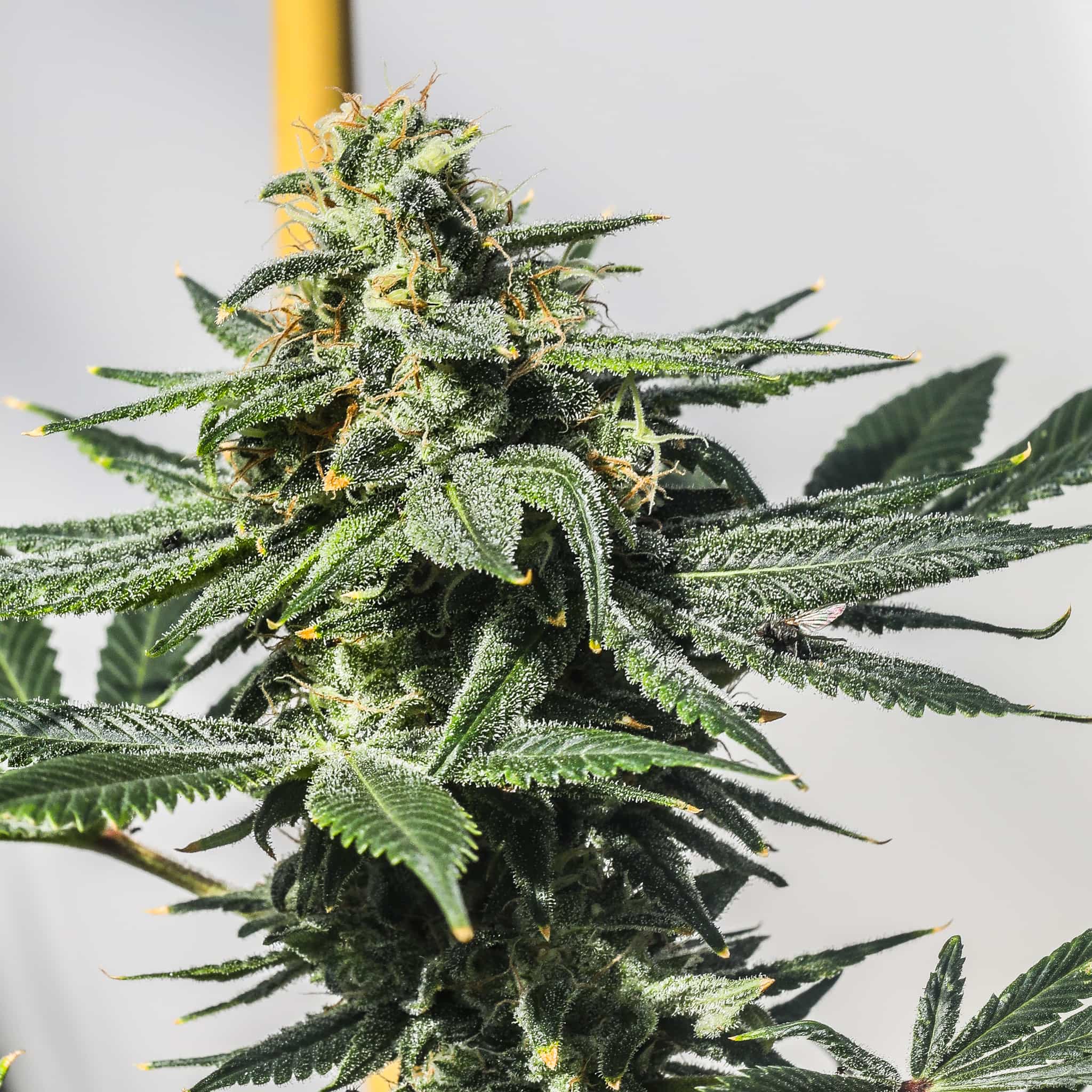
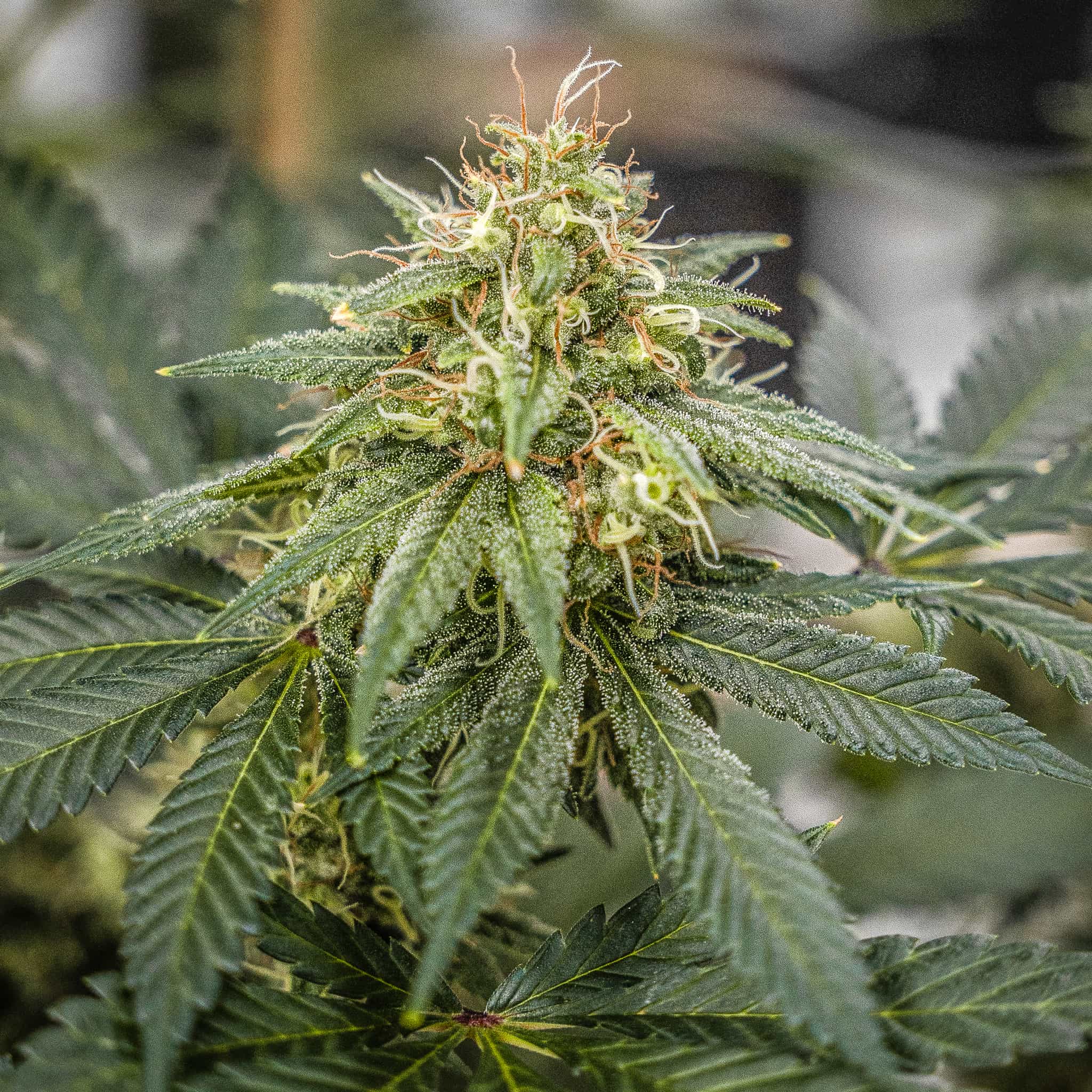
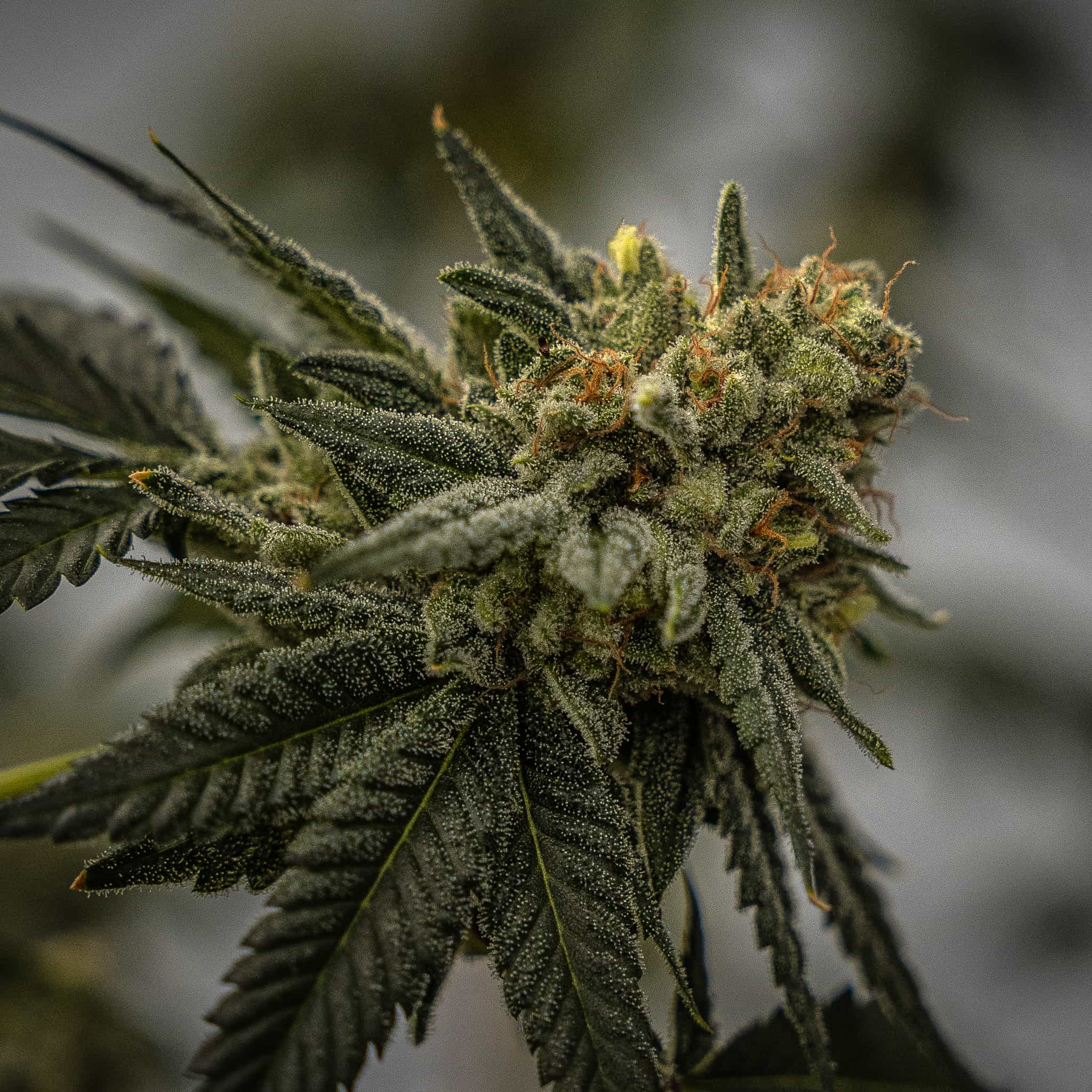
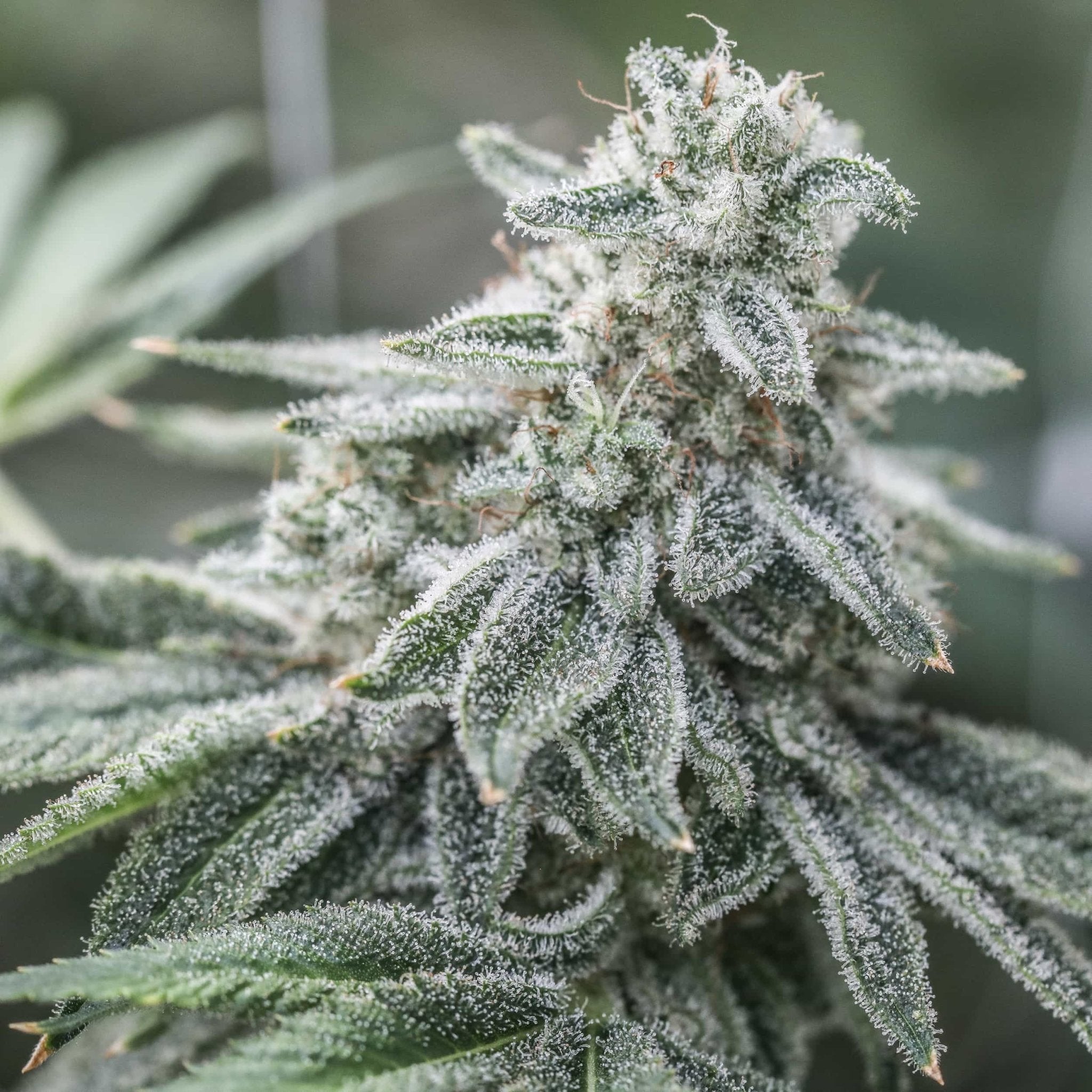
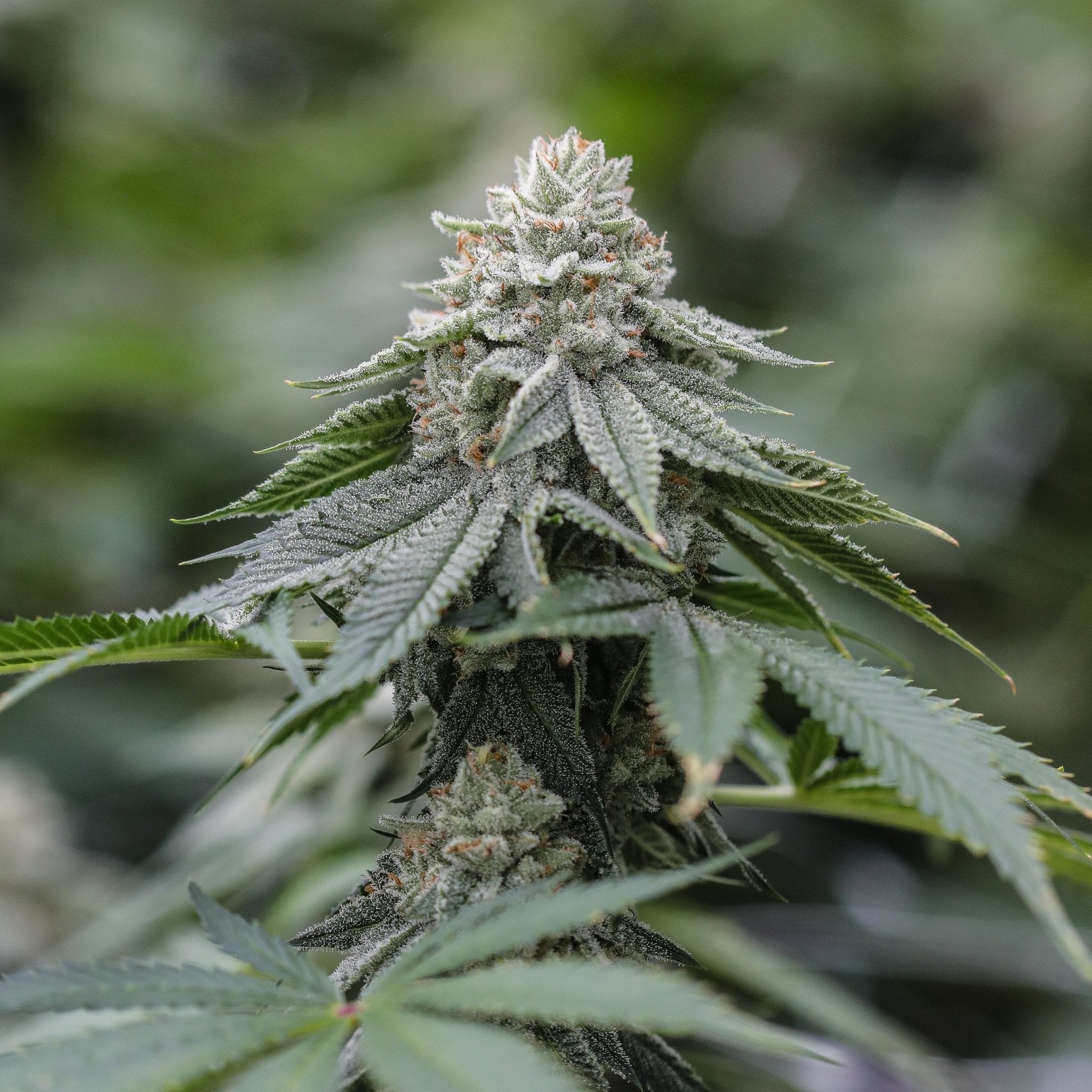
Triploid plants can exhibit larger flowers, unusual leaf characteristics, increased vigor, and other differences from conventional diploids.
But none of these traits proves that a plant is triploid.
We've grown plenty of diploid cannabis plants with enormous flowers, thick stems, and exceptional vigor.
We've also seen triploids that look remarkably similar to conventional diploid plants.
Even unusual growth mutations aren't reliable indicators of chromosome number.
One common example is fasciation, where stems and flowers become flattened or unusually wide. Growers sometimes mistake these plants for polyploids, but fasciation and polyploidy are entirely different phenomena.
We've written more about this in our article on fasciation and polyploidy in cannabis.
The bottom line is simple: You cannot reliably identify a triploid cannabis plant by appearance alone.
Flow Cytometry: How We Test Cannabis Ploidy
The primary method we use to determine whether a cannabis plant is diploid, triploid, or tetraploid is flow cytometry.
A flow cytometer is a specialized laboratory instrument capable of measuring the relative DNA content of individual cell nuclei.
To test a cannabis plant, a small tissue sample is collected, commonly from a young leaf.
The tissue is processed to release cell nuclei, which are then stained with a fluorescent dye that binds to DNA.
As the nuclei pass through the flow cytometer, the instrument measures their fluorescence.
Because the amount of fluorescence corresponds to the amount of DNA present, researchers can compare the sample against a known reference.
A diploid plant produces a characteristic DNA-content peak.
A triploid plant generally produces a peak corresponding to approximately 1.5 times the DNA content of the diploid reference.
A tetraploid plant produces a peak at approximately twice the diploid DNA content.
This allows researchers to distinguish between plants with different chromosome-set levels without having to count individual chromosomes under a microscope.
Of course, proper sample preparation, reference standards, and interpretation are essential. Flow cytometry measures DNA content rather than directly counting chromosomes, so unusual genome-size variation or abnormal cells may require additional investigation.
But for routine ploidy screening in cannabis breeding, it's an incredibly valuable tool.
Why We Test Our Tetraploid Parent Plants Repeatedly
One of the biggest challenges in producing triploid cannabis seeds happens long before the seeds are harvested.
To produce triploids commercially, we first need stable tetraploid parent plants.
These are generally developed through chromosome-doubling techniques.
But successful chromosome doubling doesn't necessarily mean the entire plant has become tetraploid.
Some plants develop a combination of diploid and tetraploid tissues, a condition known as mixoploidy.
For example, one shoot might be tetraploid while another remains diploid.
If we used an unstable plant for breeding, we could end up with offspring that don't have the chromosome characteristics we're trying to produce.
That's why our breeding program involves repeatedly testing new growth from converted plants.
We've observed diploid shoots emerging from plants that initially appeared to have undergone successful tetraploid conversion.
Those plants aren't suitable for our commercial breeding program.
We continue testing until we're confident that the breeding material is consistently tetraploid.
It's a time-consuming process, but it's essential for producing dependable triploid genetics.
Want to see what goes into commercial production? Read our article on why triploid cannabis seeds are so difficult to produce.
Can a Diploid Cannabis Plant Naturally Produce Triploid Offspring?
Interestingly, yes.
Triploidy can occur naturally in cannabis, although it's relatively uncommon.
A 2023 study published in Plants examined 13 cannabis seedling populations using flow cytometry.
Researchers identified naturally occurring triploid plants in 10 of those populations, with an average frequency of approximately 0.5%.
That's roughly one triploid in every 200 plants examined.
The researchers also reported that some elite cannabis clones had previously been identified as naturally triploid.
Another study examining genome-size diversity in cannabis identified a naturally occurring triploid and confirmed its chromosome count.
These findings demonstrate that triploidy isn't exclusively the result of laboratory chromosome doubling.
However, finding an occasional natural triploid is very different from producing thousands or millions of uniform triploid seeds.
Commercial triploid breeding requires carefully selected parents, reliable crosses, and quality-control testing.
Can You Test a Cannabis Seed Without Germinating It?
This is where things get interesting.
A mature cannabis seed contains several different tissues, and they don't necessarily have the same chromosome-set number.
For example, in a conventional cross between a tetraploid mother and a diploid pollen donor, the seed coat is maternal tissue and therefore has the chromosome characteristics of the tetraploid mother.
The embryo, however, is expected to be triploid.
That means measuring DNA content from the wrong seed tissue could produce a misleading result.
Testing the embryo directly is possible using specialized laboratory techniques, but it may damage or destroy the seed.
For routine commercial verification, testing tissue from germinated seedlings is often more practical.
A small leaf sample can be analyzed using flow cytometry while the plant remains alive.
This provides a direct measurement of the developing plant's DNA content.
It's also why a breeder's statement that the parents were tetraploid and diploid isn't quite the same as confirming the ploidy of the resulting offspring.
Why Seed-Lot Testing Matters
Let's say a breeder successfully develops a stable tetraploid parent and crosses it with a diploid.
Does that automatically mean every seed produced will be triploid?
Not necessarily.
Although the cross is designed to produce triploid offspring, breeders still need to verify that their production methods are delivering the intended results.
That's where seed-lot testing becomes important.
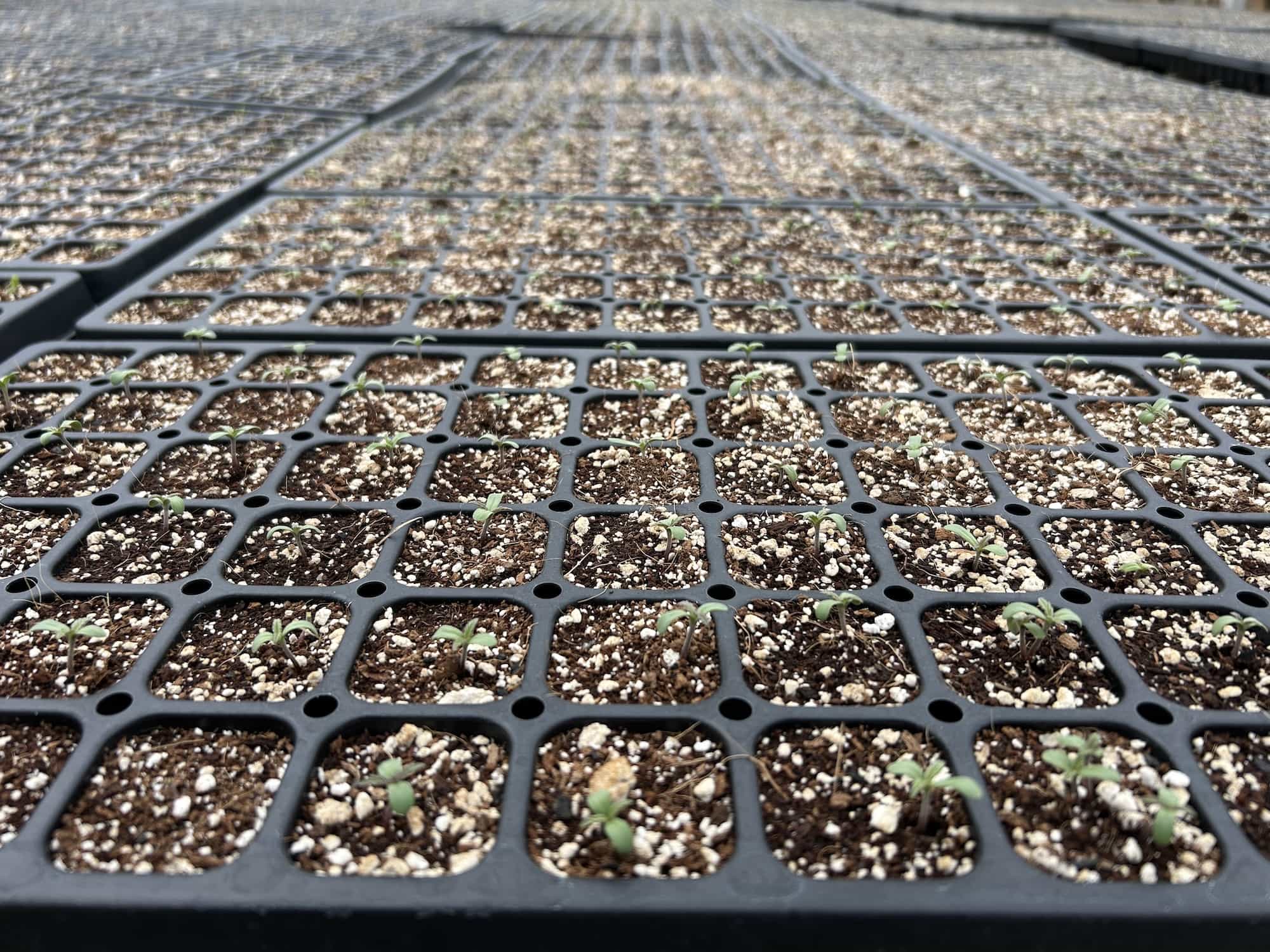
By germinating representative samples from a production lot and analyzing the resulting seedlings, breeders can evaluate whether the offspring have the expected ploidy.
Sampling also helps identify unexpected variation that might otherwise go unnoticed.
But there's an important distinction here: testing a sample provides evidence about the lot; it doesn't prove the chromosome count of every individual seed.
The confidence of any seed-lot claim depends on the sampling method, number of seedlings tested, and consistency of the results.
For commercial growers purchasing large quantities of triploid seeds, this is an important consideration.
Does Germination Testing Prove Seeds Are Triploid?
No.
Germination testing and ploidy testing measure two completely different things.
A germination test determines how many seeds successfully germinate under specified conditions.
Ploidy testing determines the relative DNA content of the plants produced from those seeds.
A seed lot can have excellent germination rates and still contain diploid plants.
Likewise, a verified triploid seed lot can have poor germination if the seeds are immature, improperly stored, or affected by dormancy.
At GTR Seeds, we consider both germination performance and ploidy verification important parts of seed quality control.
We've also found that certain triploid varieties can take longer to overcome seed dormancy than conventional diploid varieties.
That makes proper storage, testing, and seedling evaluation particularly important.
Does Being Triploid Guarantee a Plant Will Be Seedless?
Not entirely.
Triploid cannabis generally exhibits reduced fertility because having three sets of chromosomes can interfere with normal chromosome segregation during meiosis.
This can substantially reduce the production of functional reproductive cells.
For flower growers, that means triploids can be considerably less likely to produce mature seeds following pollen exposure.
But reduced fertility isn't the same as complete sterility.
Different triploid varieties can exhibit different levels of residual fertility.
And even a confirmed triploid plant isn't guaranteed to outperform a diploid in yield, cannabinoid production, or flower quality.
Those characteristics still depend on the genetics.
That's why we believe triploid verification is only one part of a much larger breeding and testing program.
Growers need plants that are not only triploid but also productive, consistent, and capable of producing excellent flowers.
What Should Growers Ask Before Buying Triploid Cannabis Seeds?
If you're purchasing triploid cannabis seeds, particularly for commercial production, there are a few questions worth asking your breeder.
1. How do you verify that your plants are triploid?
Look for a breeder using an established laboratory method such as flow cytometry rather than relying on plant appearance or claims about seedlessness.
2. Are the tetraploid parents tested for stability?
Stable parent plants are essential for reliable production.
3. Do you test the offspring?
Verifying the parent plants is important, but testing seedlings from the resulting seed lots provides additional confidence.
4. Are germination rates independently tested?
A verified triploid seed isn't particularly useful if it doesn't germinate reliably.
5. Have the varieties been evaluated under real growing conditions?
Triploidy alone doesn't guarantee good yields, desirable flower characteristics, or reduced seed production under pollen pressure.
Breeders should be able to discuss how their varieties perform beyond the laboratory.
These questions can help growers distinguish between a carefully developed triploid breeding program and a product that's simply being marketed as triploid.
GTR Seeds and Triploid Cannabis Research
At GTR Seeds and Oregon CBD, we've invested years into developing the breeding techniques, equipment, and genetic resources needed to produce commercial triploid cannabis seeds.
Our work involves much more than simply crossing a tetraploid with a diploid.
We develop carefully selected parental lines, verify chromosome-set levels using flow cytometry, evaluate seed germination, and test our genetics for commercial agricultural performance.
We've also contributed to peer-reviewed research on polyploid cannabis, helping advance scientific understanding of these breeding techniques.
You can explore our university research and scientific collaborations to learn more about the work behind our breeding program.
And as triploid cannabis becomes more widely available, we hope growers increasingly recognize the importance of proper testing and verification.
Because there's a big difference between claiming a cannabis seed is triploid and having the science to back it up.
Interested in growing verified triploid genetics? Explore our triploid cannabis seeds, including THC, CBD, CBG, and other rare cannabinoid varieties.