
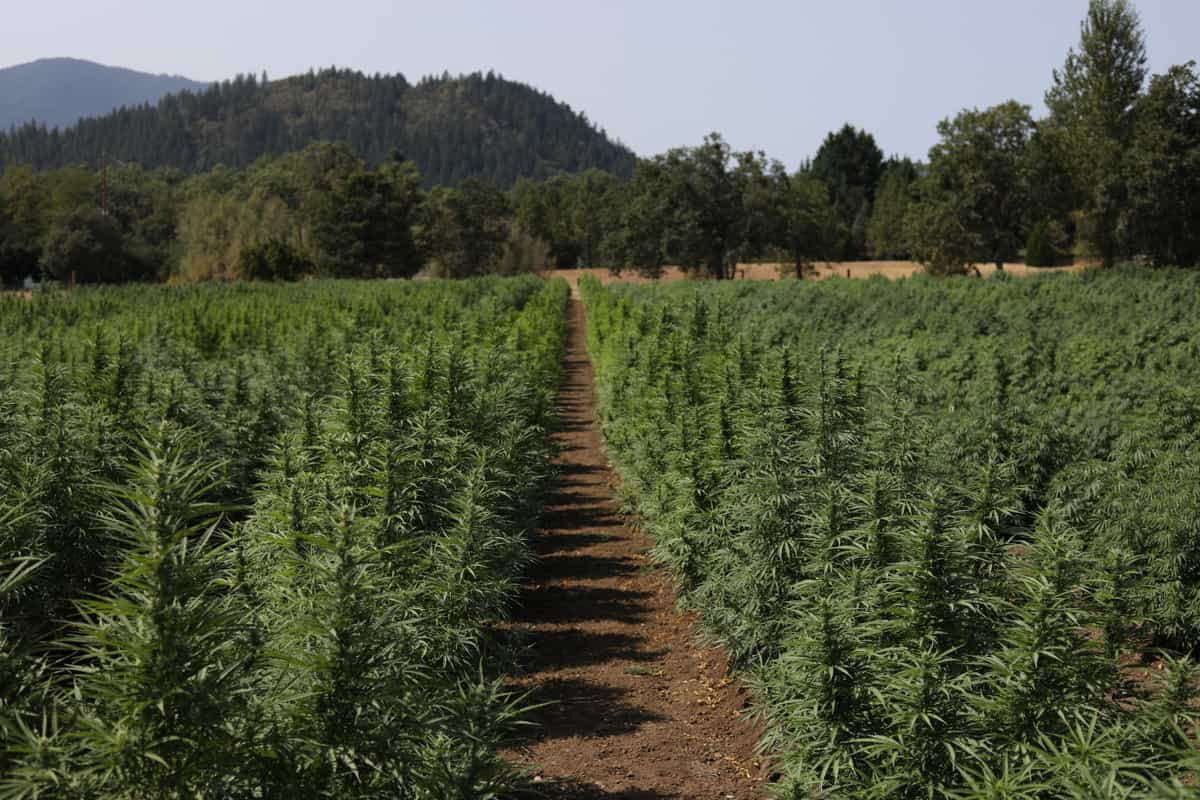
One of the most common questions we hear from commercial hemp growers is how many CBD or CBG seeds they should plant per acre.
The answer depends on the variety, planting date, climate, and whether you're growing for smokable flower or biomass extraction.
After more than a decade of working with farmers across the United States and around the world, we've learned a few things about maximizing production. And one thing is certain: planting more seeds doesn't always mean producing more hemp.
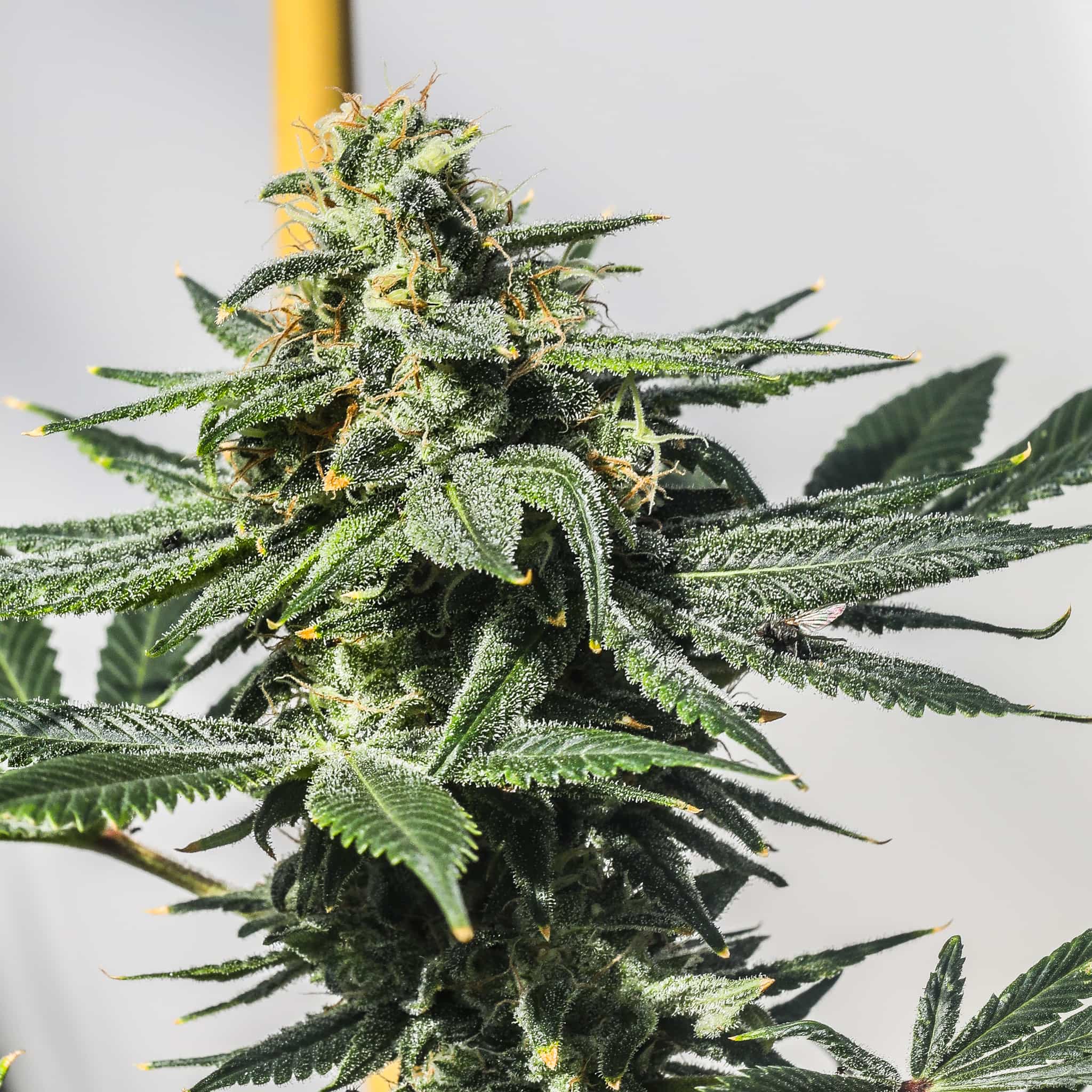
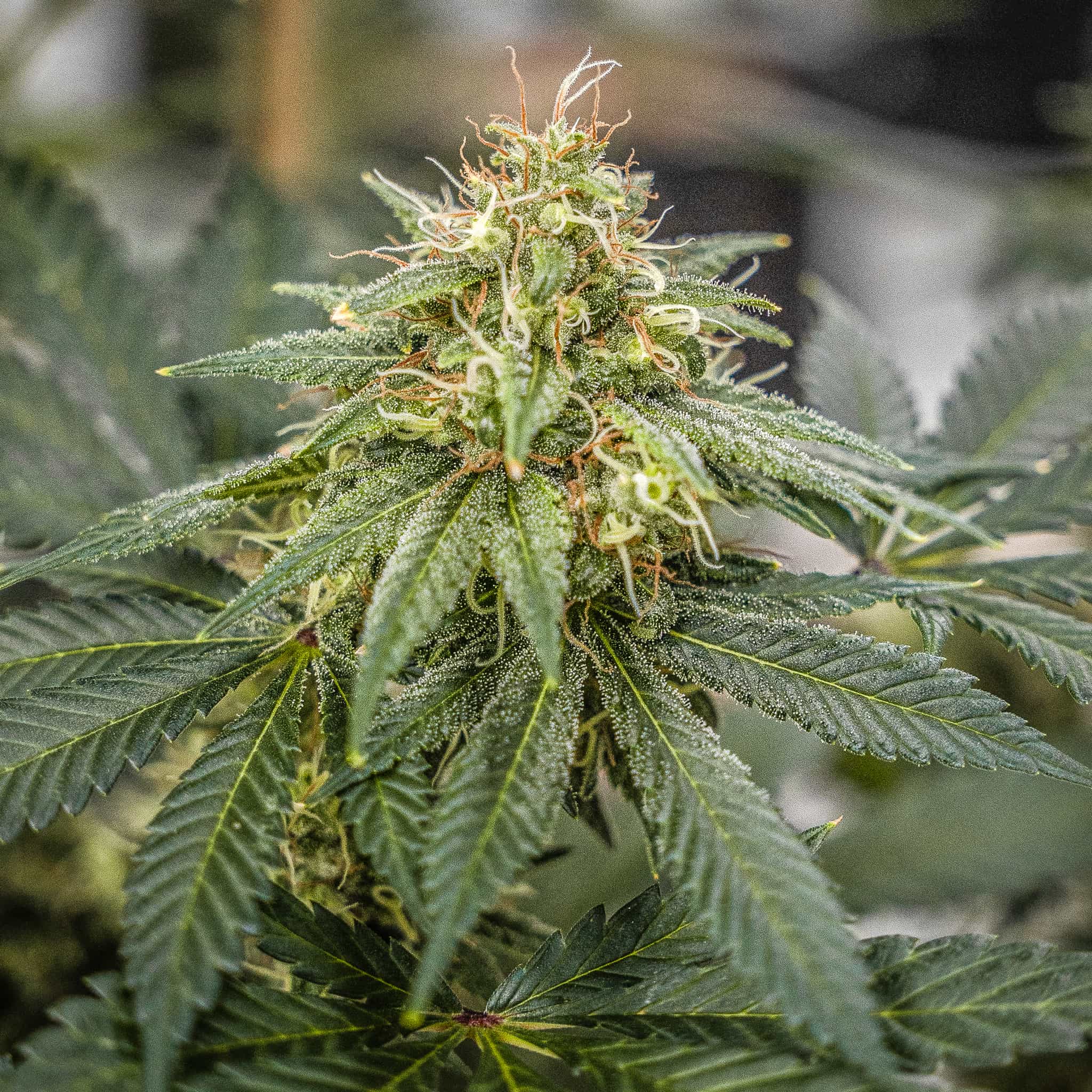
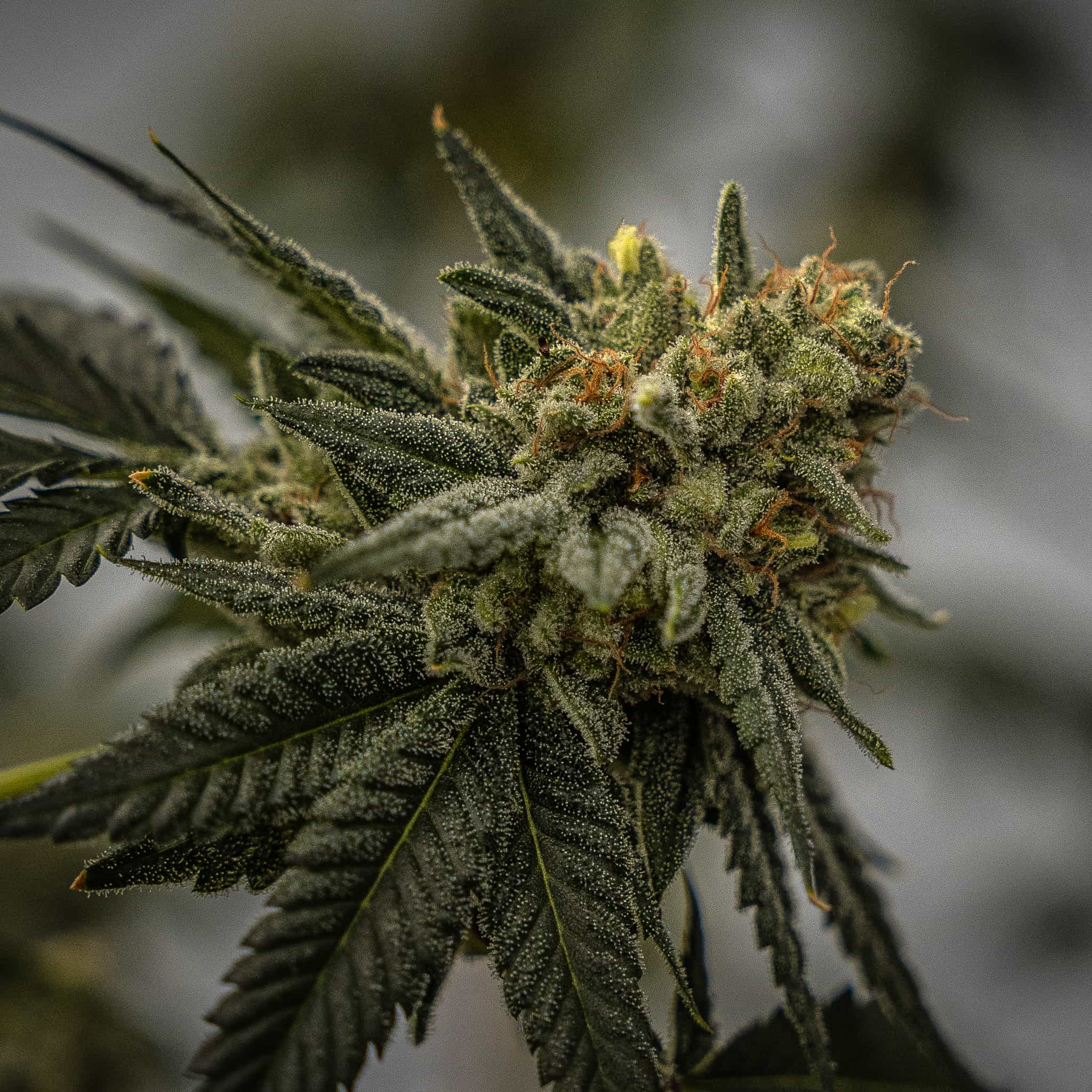
Our full-season CBD and CBG varieties can grow into enormous plants, particularly when transplanted early. Plant them too close together and they'll compete for sunlight, nutrients, and airflow. Plant them too far apart and you may leave valuable growing space unused.
Here's how we recommend determining the right planting density for your farm.
How Many CBD or CBG Hemp Plants Should You Plant Per Acre?
For most of our full-season photoperiod CBD and CBG varieties, we recommend approximately 2,000–3,000 established plants per acre, depending on planting date and growing conditions.
Farmers transplanting in late May or early June generally need fewer plants because each has more time to grow.
Later plantings require higher densities to compensate for smaller plants.
Recommended Hemp Planting Density by Date
These recommendations are based on our experience with full-season GTR Seeds genetics in temperate Northern Hemisphere growing regions.
| Field planting date | Recommended plants per acre |
|---|---|
| May 21 – June 7 | 2,000–2,500 |
| June 8 – June 21 | 2,500–3,500 |
| June 22 – July 15 | 3,500–4,000 |
| July 16 – August 1 | 4,000–5,000 |
| Direct seeding | 7,000–10,000 seeds per acre |
These are starting points, not universal rules. Plant size, latitude, soil fertility, irrigation, and harvesting equipment can all influence the ideal population.
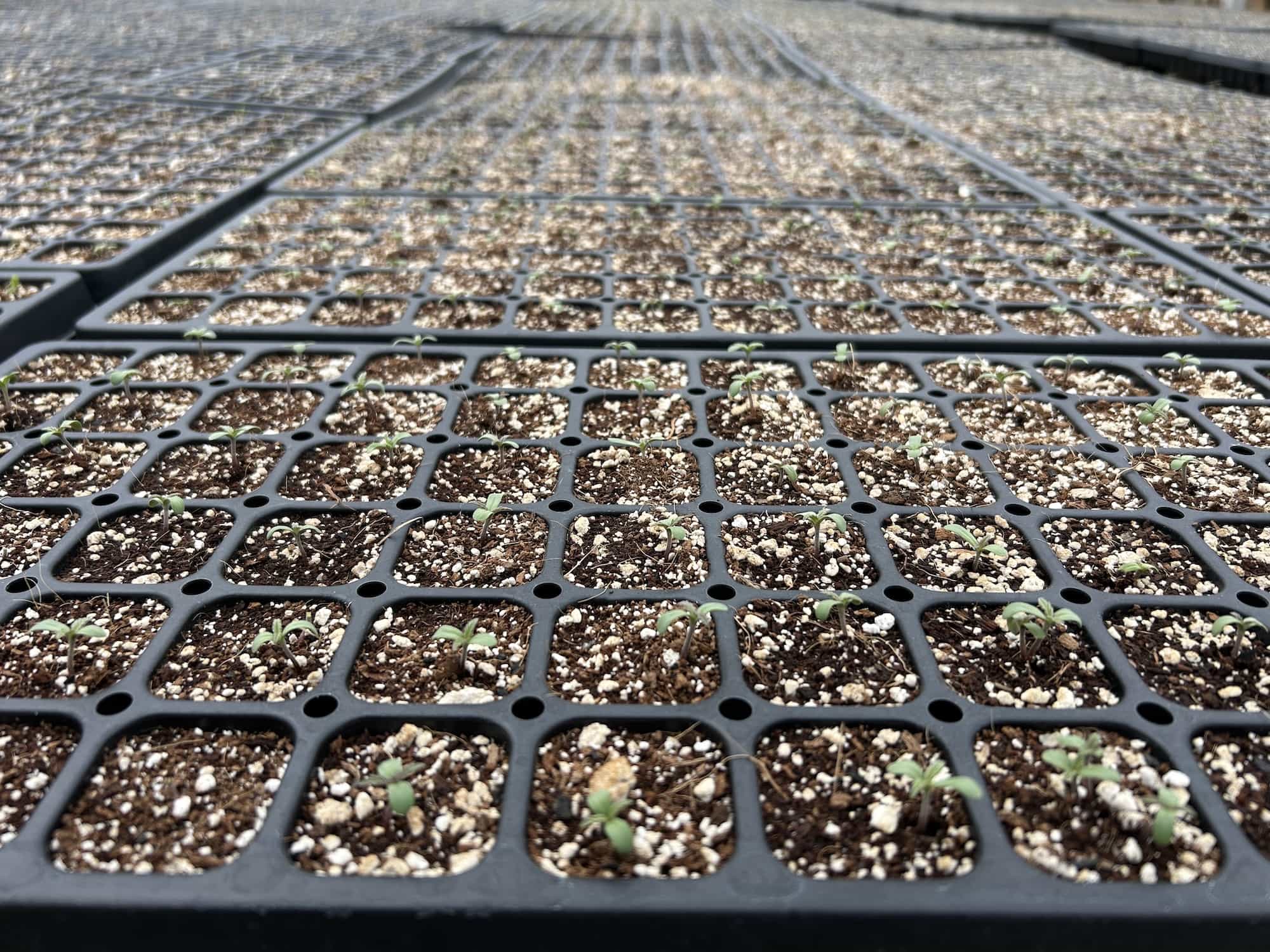
And remember, the number of seeds you plant isn't necessarily the number of plants you'll establish. Growers starting seedlings in greenhouses should account for germination and transplant losses when ordering seeds.
Hemp Plant Spacing: How Far Apart Should Plants Be?
For full-season CBD and CBG production, our most common recommendation is approximately 6 feet between rows and 4 feet between plants.
This provides room for large plants while maintaining access for irrigation, field maintenance, and harvesting.
At that spacing, you'll establish approximately 1,815 plants per acre.
Here are some common spacing configurations:
| Row spacing | Plant spacing | Plants per acre |
|---|---|---|
| 6 feet | 6 feet | 1,210 |
| 6 feet | 5 feet | 1,452 |
| 6 feet | 4 feet | 1,815 |
| 5 feet | 4 feet | 2,178 |
| 5 feet | 3 feet | 2,904 |
| 4 feet | 3 feet | 3,630 |
| 4 feet | 2 feet | 5,445 |
Actual plant counts may be slightly lower after accounting for headlands, access roads, irrigation infrastructure, and other nonplanted areas.
Growers using mechanical harvesting equipment should choose row spacing based on the equipment they'll be using before deciding how many plants to establish.
How Planting Date Affects Hemp Plant Density
One of the biggest factors influencing plant size is when seedlings are transplanted into the field.
Cannabis is sensitive to day length, and our full-season photoperiod varieties generally grow vegetatively through much of the summer before transitioning into flowering as days shorten.
Plants transplanted in late May or early June have considerably more time to develop large root systems and branches than plants transplanted in July.
That's why we recommend lower densities for early plantings.
For late June and early July transplants, around 3,000–4,000 plants per acre is often a better starting point.
For very late plantings in suitable climates, growers may need 4,000–5,000 plants per acre to fill the available canopy.
Planting later doesn't necessarily mean producing less biomass per acre, provided the increased plant population compensates for smaller individual plants. However, this depends on growing conditions, cultivar, and harvest timing.
CBD and CBG Biomass vs. Smokable Flower
Your intended market also influences planting density.
Hemp Biomass for Extraction
Most of our commercial biomass growers aim to maximize recoverable cannabinoid production per acre.
They aren't particularly concerned about producing individually perfect flowers. They want heavy yields, high CBD or CBG content, and efficient harvesting.
Many of our biomass customers plant approximately 2,500–3,500 plants per acre, adjusting density according to planting date.
For additional recommendations, see our high-CBD biomass seed collection.
Premium Smokable Hemp Flower
Growers producing premium smokable flower may prefer more room between plants.
Greater spacing can improve access for pruning, scouting, and harvesting while allowing air to move through the canopy.
We've also seen more flower growers transplant later in the season to produce smaller, more manageable plants.
There isn't one perfect density for premium flower. The goal is to produce healthy plants with excellent flower quality while keeping labor costs under control.
Do Triploid Hemp Plants Need More Space?
They certainly can.
Many of our triploid cannabis varieties are extremely vigorous and capable of producing very large plants.
In some growing environments, triploids can quickly fill the space between plants, particularly when transplanted early.
Growers working with especially vigorous triploid varieties may benefit from wider spacing.
However, triploidy alone doesn't guarantee larger plants. Plant size still depends on the specific genetics and growing environment.
We recommend evaluating the expected growth habit of each variety rather than using one spacing recommendation for every triploid.
How Many Autoflower Hemp Seeds Per Acre?
Autoflower, or day-neutral, cannabis varieties generally require different planting densities than full-season photoperiod plants.
Because they transition into flowering based primarily on age rather than seasonal day length, they typically have less time to develop large vegetative structures.
For some of our autoflower genetics, our historical recommendations have been:
-
Sour RNA Seedless and Auto Skunk THCV: Approximately 3,000–4,000 plants per acre.
-
Auto CBG: Approximately 4,000–8,000 plants per acre.
These recommendations are variety-specific and should be adjusted for growing conditions and production goals.
Autoflower varieties can be particularly sensitive to setbacks during establishment because they have a limited vegetative growth period.
We've written more about their advantages and challenges in our guide to growing autoflower cannabis seeds.
Direct Seeding Hemp: How Many Seeds Per Acre?
Some commercial hemp growers prefer planting seeds directly into their fields rather than starting seedlings in a greenhouse.
Direct seeding can reduce transplanting labor and propagation expenses, but it introduces additional risks.
Cannabis seedlings are vulnerable to inconsistent soil moisture, soil crusting, weed competition, and poor emergence.
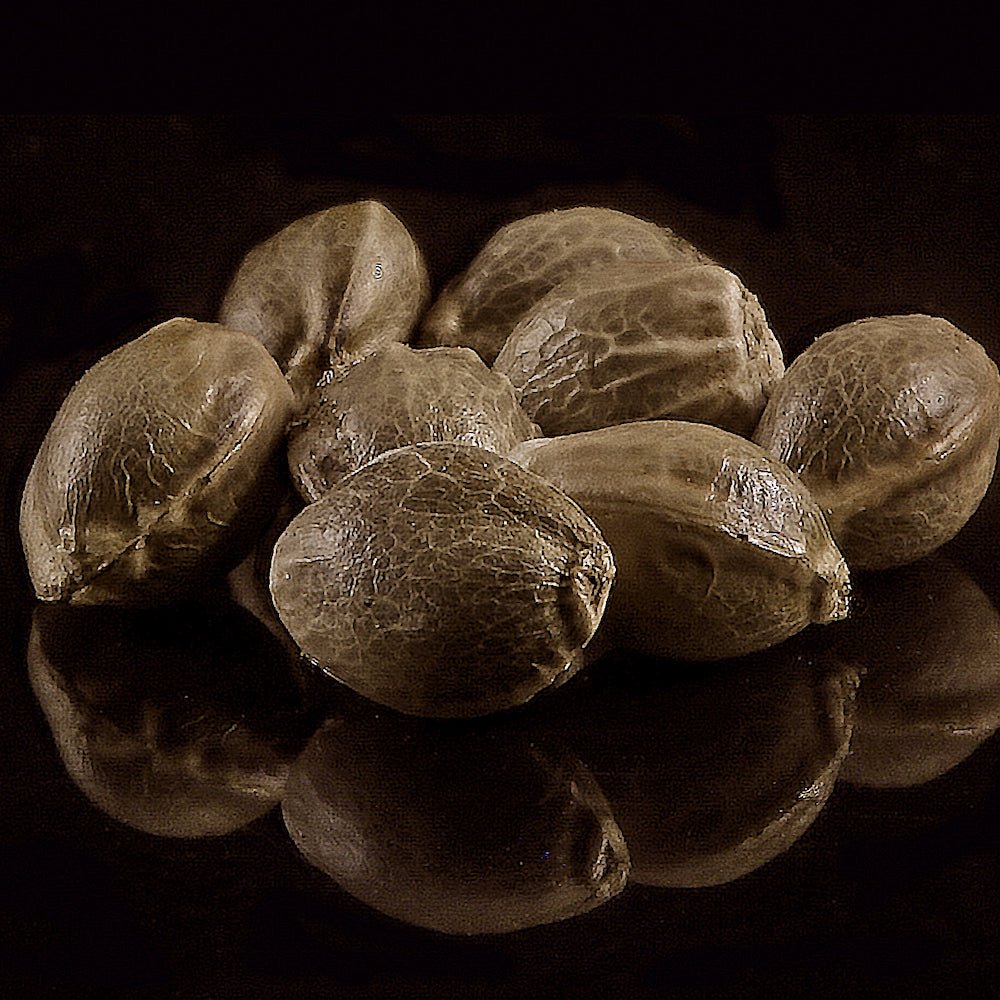
For our full-season varieties, we generally recommend starting around 7,000–10,000 seeds per acre when direct seeding, depending on expected establishment rates and desired final population.
This is a seeding-rate recommendation, not a target of 10,000 mature plants per acre.
For example, planting 10,000 seeds with a 70% field establishment rate would result in approximately 7,000 plants before any subsequent thinning or losses.
Growers should determine their desired final plant population, estimate realistic field establishment, and calculate their seeding rate accordingly.
Direct seeding requires experience, suitable equipment, and careful management. We generally recommend that growers unfamiliar with the method conduct smaller trials before committing large acreages.
Growing Hemp in Tropical and Subtropical Climates
Latitude is another important consideration that growers sometimes overlook.
Many of our photoperiod varieties were developed in temperate growing regions with relatively long summer days.
When grown closer to the equator, where day length varies much less throughout the year, these same genetics can begin flowering at a much smaller size.
In some tropical environments, plants may behave somewhat like autoflowers, with a relatively short vegetative period followed by flowering.
For these growing regions, we often recommend approximately 4,000 plants per acre as an initial target.
Depending on the cultivar and local photoperiod, growers may be able to produce multiple crops annually.
However, planting schedules and flowering behavior vary substantially by latitude, season, and variety. We strongly recommend conducting small trials before establishing large commercial fields in tropical environments.
Other Factors That Influence Hemp Plant Density
Soil Quality and Fertility
Healthy, well-drained soils can support large, vigorous cannabis plants.
Poor soils may produce smaller plants that fail to fill the canopy at wider spacing.
However, increasing plant density doesn't necessarily solve poor soil fertility. More plants can also mean greater competition for limited nutrients and water.
Improving soil conditions should generally take priority over simply planting more seeds.
Irrigation
Reliable irrigation is particularly important for dense plantings.
When plants are closely spaced, competition for water can increase substantially during hot weather.
Fields with limited irrigation capacity may benefit from lower densities, depending on soil water-holding capacity and plant size.
Climate and Disease Pressure
Growers in humid regions should pay particular attention to airflow.
Dense canopies can retain moisture and create favorable conditions for Botrytis, powdery mildew, and other pathogens.
Wider spacing, appropriate cultivar selection, and good canopy management can help reduce disease pressure.
In drier climates, plants may be able to fill the canopy more aggressively without creating the same level of moisture-related disease risk.
Harvesting Equipment
Before planting thousands of acres—or even a few dozen—make sure your spacing works with your harvesting equipment.
Mechanical harvesters, tractors, sprayers, and cultivation equipment all have specific requirements.
We've seen growers create unnecessary headaches by establishing fields that their equipment couldn't efficiently navigate.
How to Calculate Hemp Plants Per Acre
If you're considering a different spacing arrangement, the calculation is simple:
Plants per acre = 43,560 ÷ (row spacing in feet × plant spacing in feet)
For example, with rows spaced 6 feet apart and plants spaced 4 feet apart:
43,560 ÷ (6 × 4) = 1,815 plants per acre
This calculation assumes the entire acre is planted. For commercial field planning, remember to account for headlands and other nonproductive space.
Our Recommendation: Start With Your Planting Date
After years of working with commercial hemp farmers, we've found that planting date is one of the most useful starting points for determining density.
For most of our full-season CBD and CBG varieties, approximately 2,000 plants per acre is a good starting point for early June transplants.
Later plantings generally benefit from higher densities, while particularly vigorous varieties may require more space.
But there's no substitute for knowing your genetics and growing environment.
The goal isn't to grow the most plants per acre. It's to produce the greatest amount of high-quality, valuable cannabis from the land you're farming.
And sometimes, fewer plants will get you there.
Explore All GTR Seeds Cannabis Growing Guides