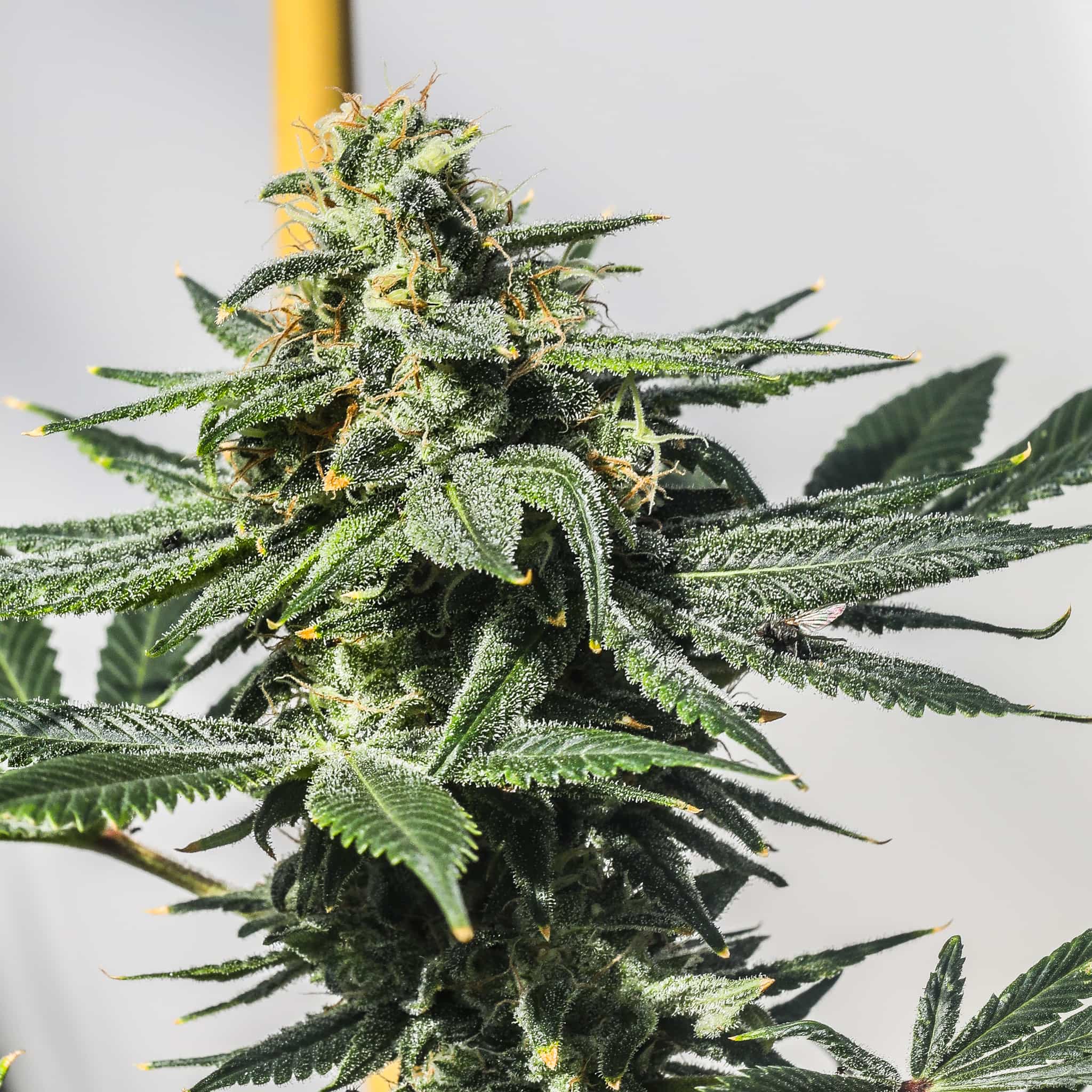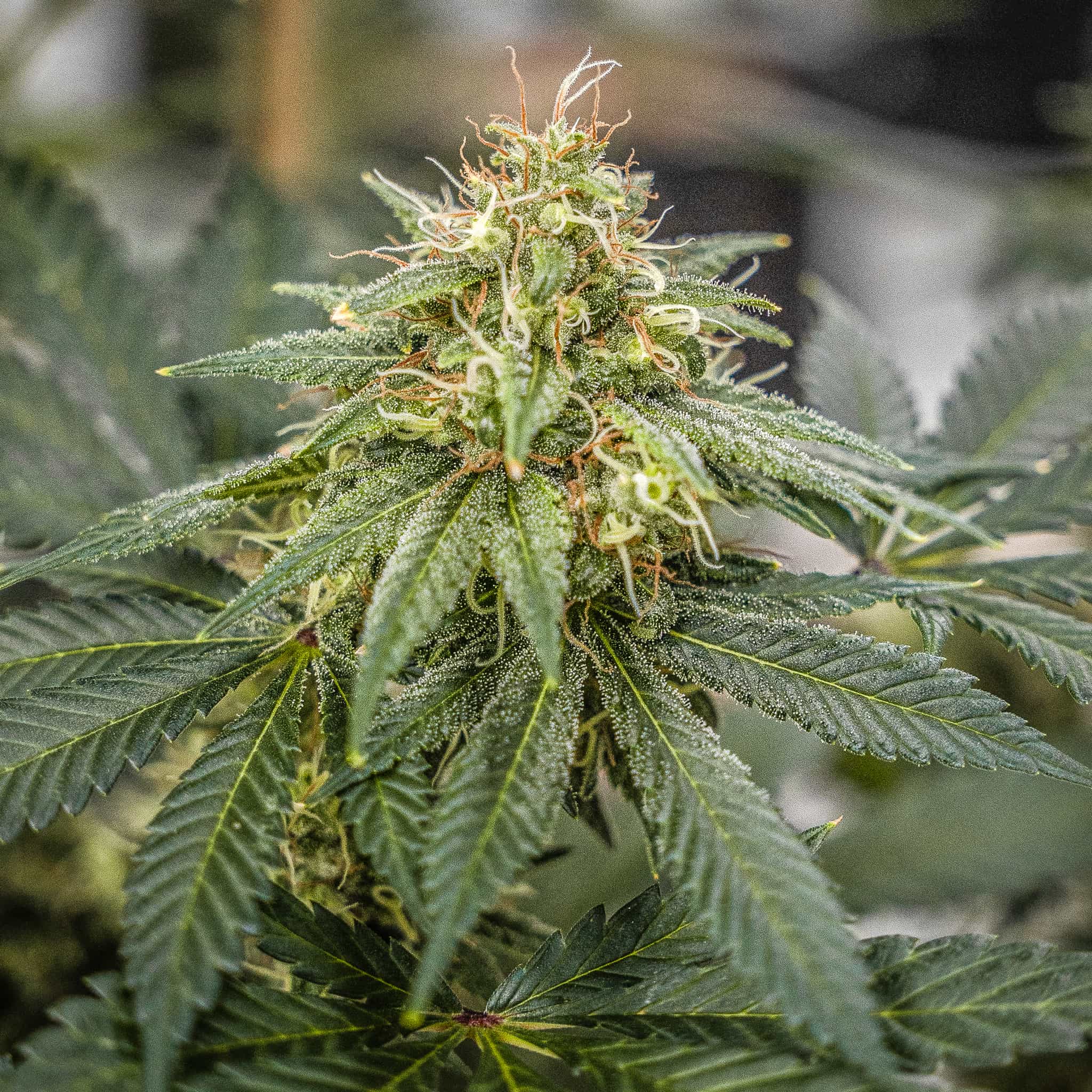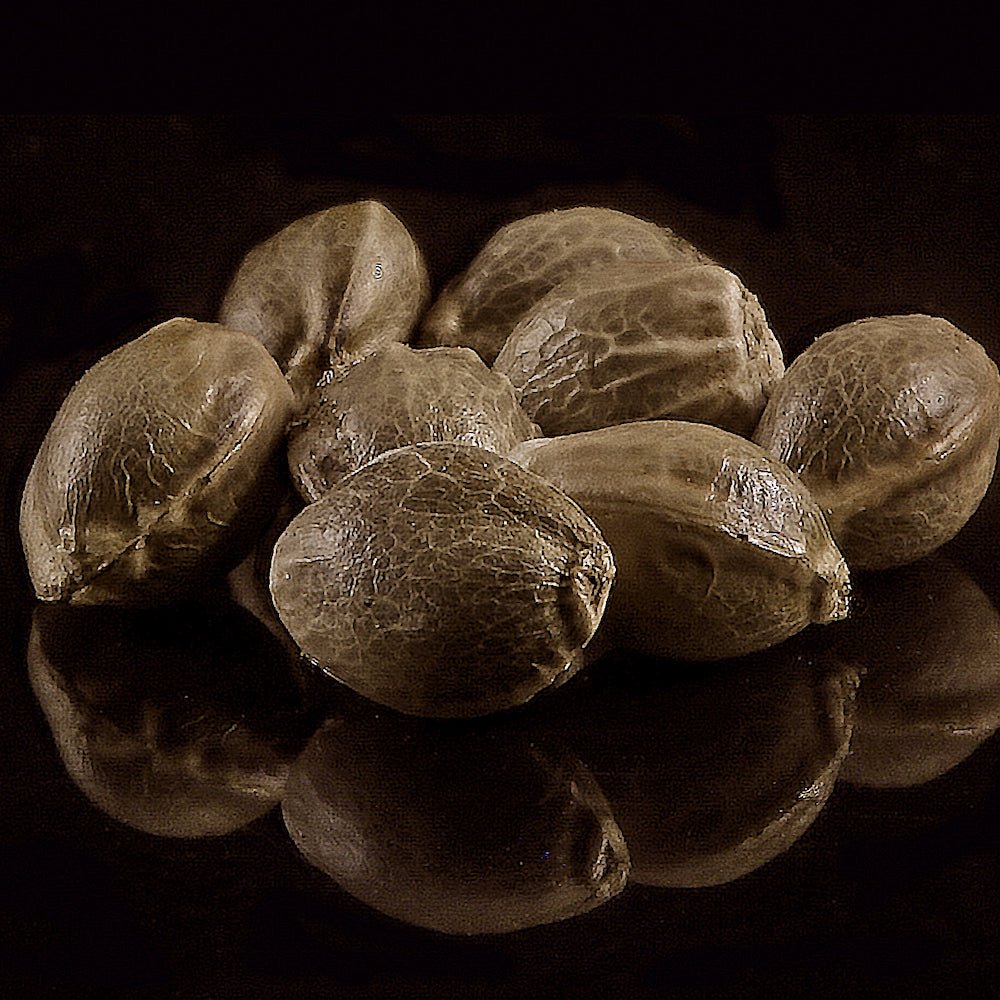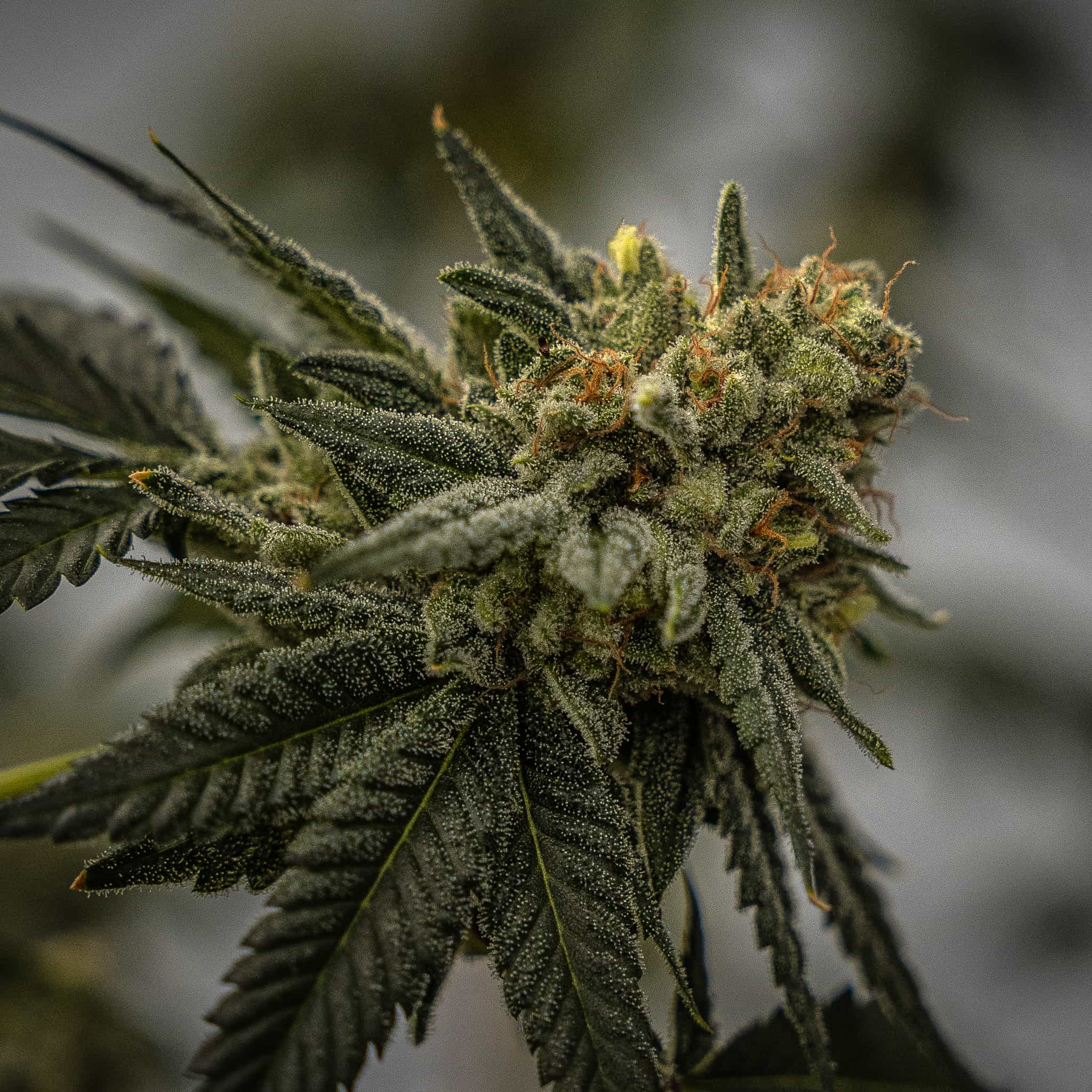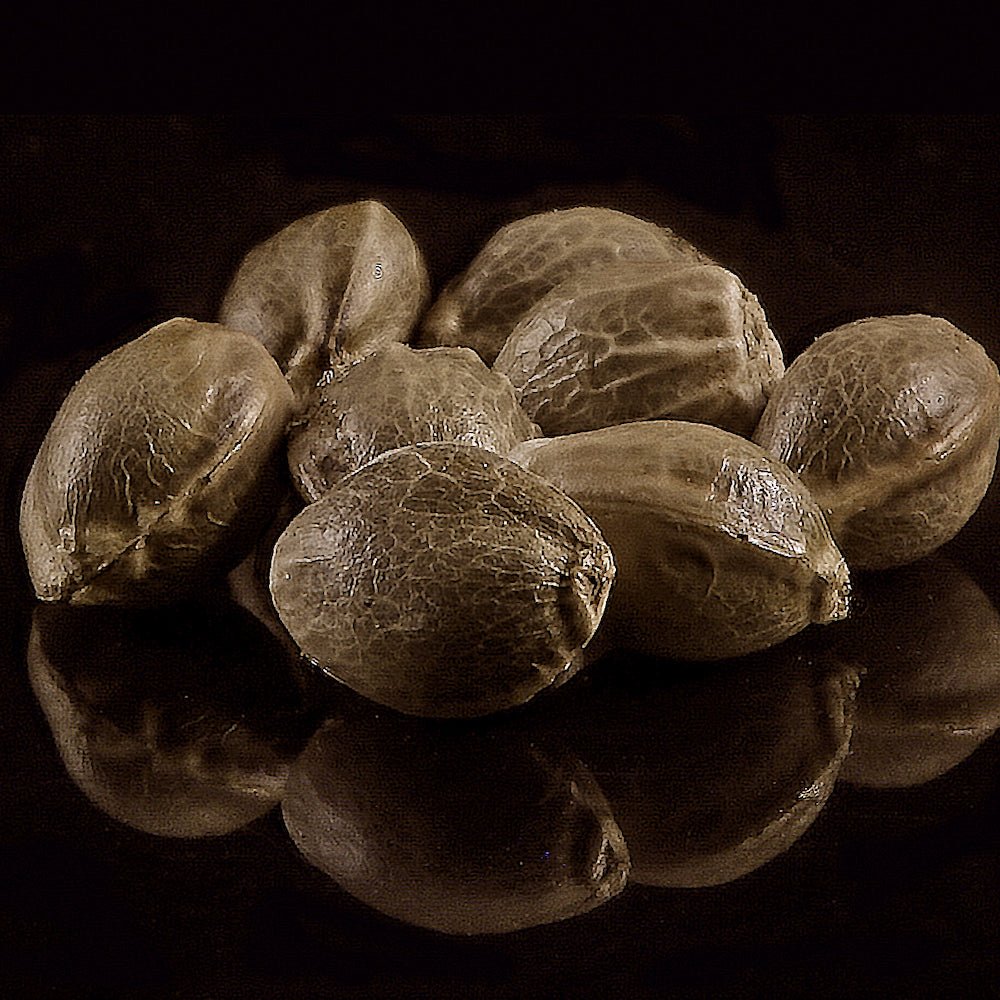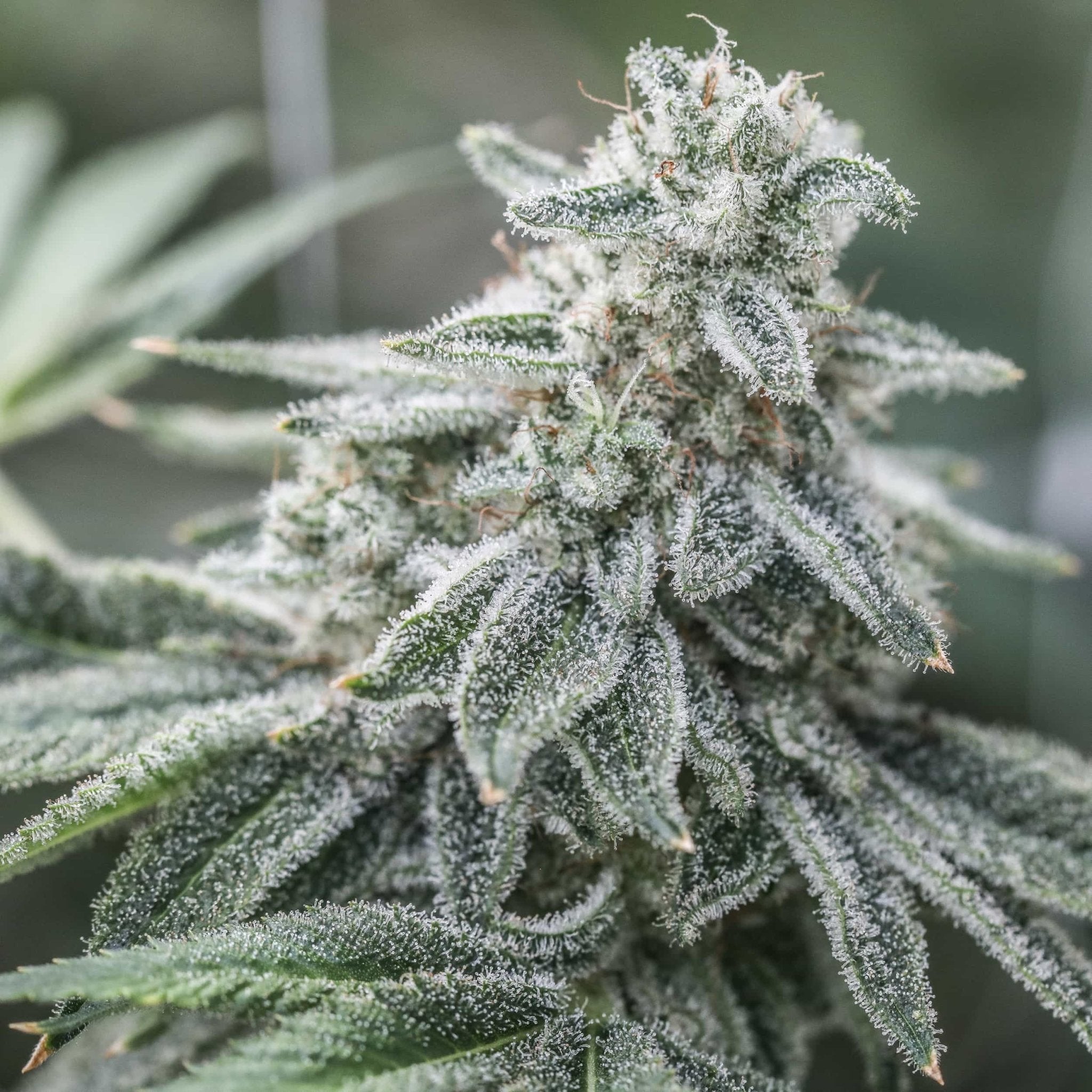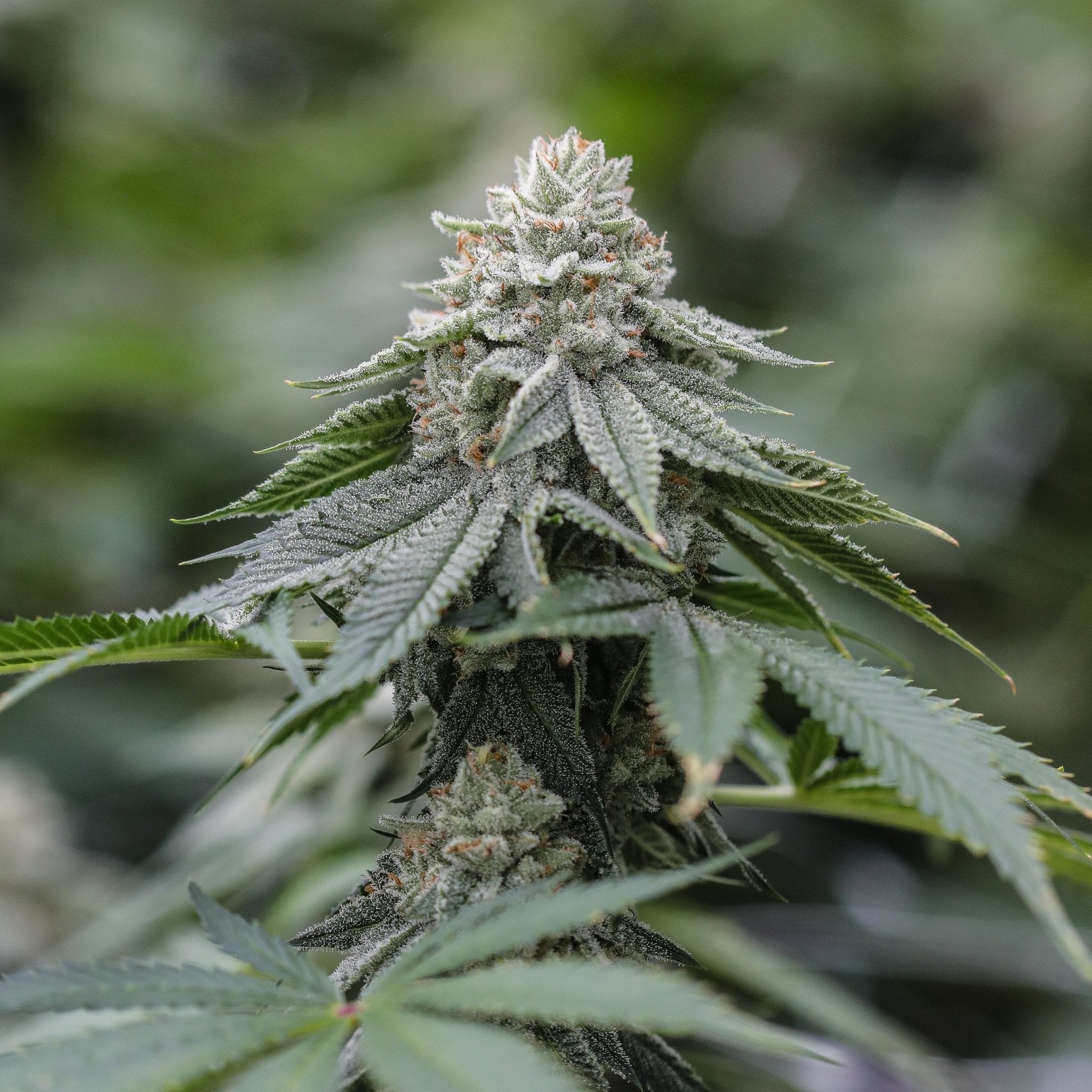


If you're growing our seeds outdoors in a dry climate, you can mostly skip topping and training. The plants are bred to hold themselves up. Indoors it's a different story: plan on a trellis, and plan on little extra work if you're growing THCV.
The internet loves to make cannabis training sound mandatory. Top it, bend it, tie it, strip it, tuck it, whisper motivational quotes to it. Some of that helps. A lot of it is solving problems your plants don't have.
Here's when training earns its keep, when it creates more work than it saves, and how to do it right when you need it.
The three techniques at a glance
|
Technique |
What it is |
What it does |
Best for |
|---|---|---|---|
|
Topping |
Snipping off the main growing tip |
Splits one main cola into two or more, for a wider, bushier plant |
Indoors, where height is limited |
|
LST (low-stress training) |
Gently bending and tying branches outward |
Opens the canopy and evens out the tops, with no cutting involved |
Indoors and small spaces |
|
Defoliation |
Removing select leaves |
Improves airflow and light reaching lower bud sites |
Dense indoor canopies and humid climates |
All three are tools, not requirements. The trick is knowing which problem you're actually solving.
Outdoors in a dry climate? Let them grow
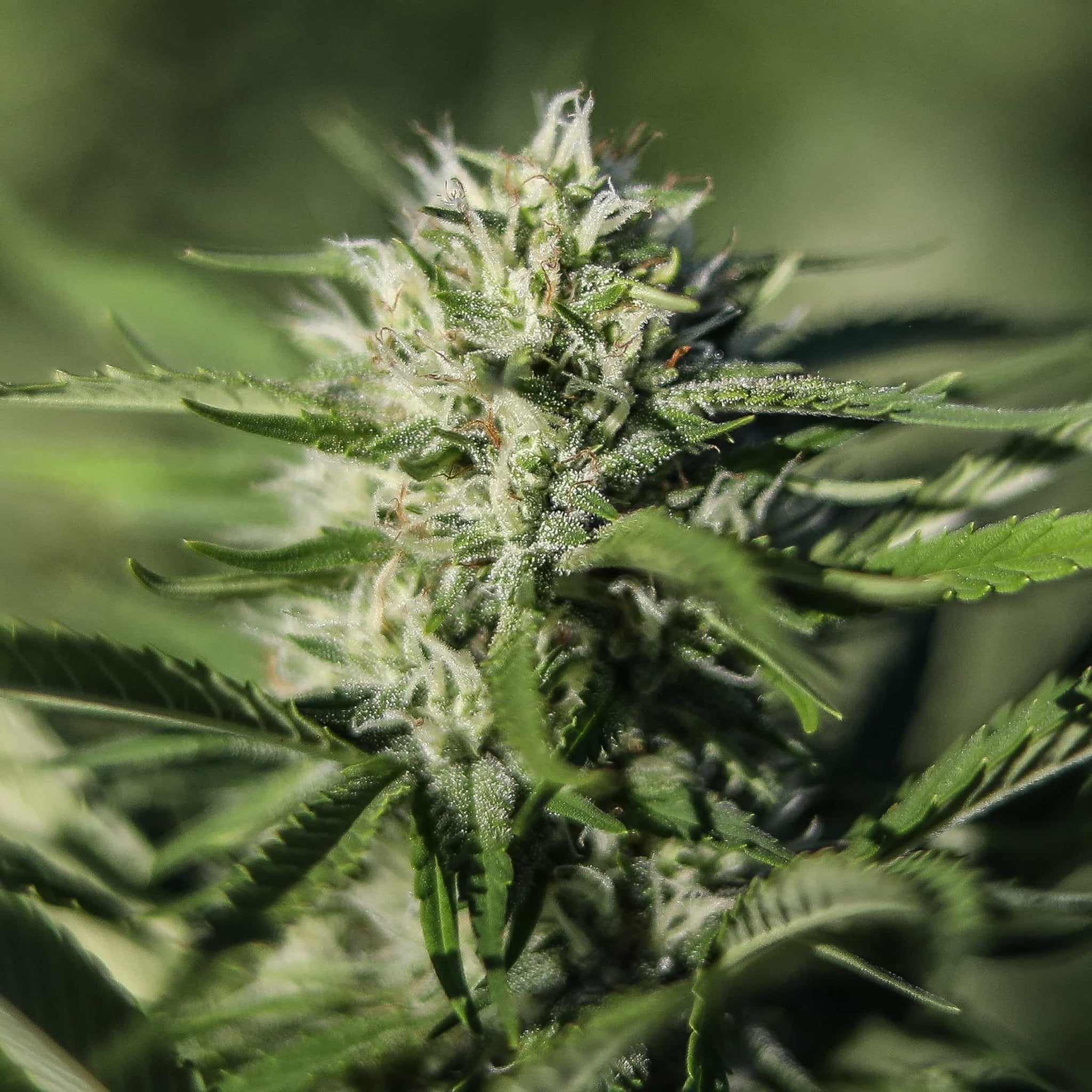
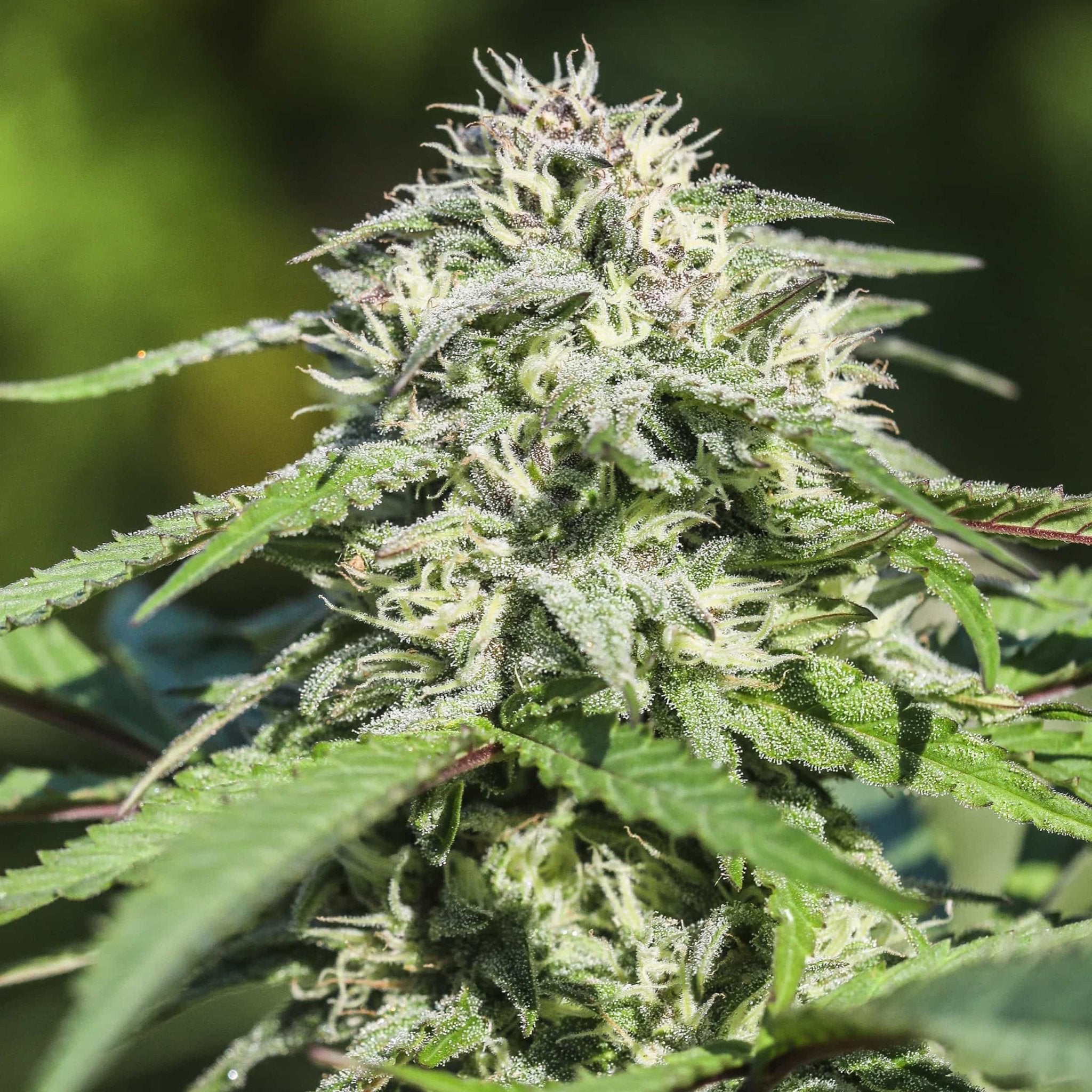
Plants from our seeds have been bred to build a strong structure that holds its own weight outdoors, so in a dry climate you can usually skip topping, training, and trellising.
We've spent years selecting our lines for field performance. Part of that is sturdy stems and a branch structure that carries a full flower load without folding over. Many of our breeding fields run thousands of plants at a time. If a plant can't stand up on its own, it doesn't make the cut. Literally.
In a dry climate, the usual reasons to train don't apply much either:
- Height isn't a problem. The sky is a pretty generous ceiling.
- Airflow is already good. Dry air and wind keep the canopy from turning into a mold incubator.
- Sunlight comes from everywhere. An untrained outdoor plant gets light from all angles as the sun moves.
So plant them, feed them, water them, and let them do what they were bred to do. Spend the time you saved on something else. Like staring at your plants, which is basically a hobby anyway.
In humid climates, some light thinning of interior leaves can help airflow (more on that in the defoliation section). The plants still don't need topping to hold themselves up.
Why everyone says to top: blame the clones
A lot of topping wisdom comes from growers who work with clones. Clones don't have a taproot, so they grow differently from plants started from seed.
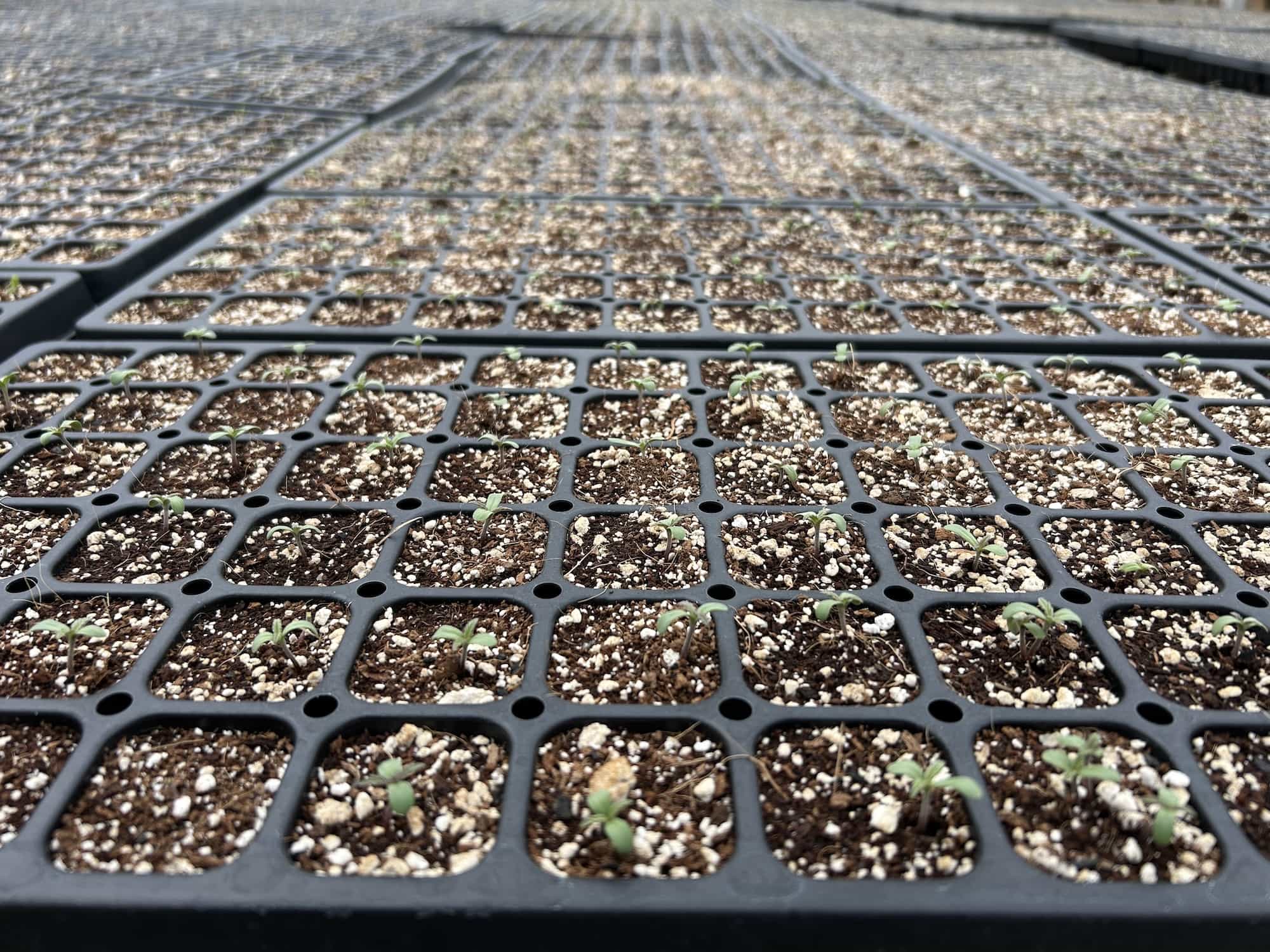
When a seed sprouts, the first thing it does is send a taproot straight down. That deep central root anchors the plant and supports a strong main stem. It's the plant's foundation, and it's a big part of why a seed-grown plant can stand up to wind and a full flower load on its own.
A clone is a cutting from a mother plant. It grows roots out of its stem, and those roots come out as a fibrous mat with no central taproot. Clone-grown plants tend to be shallower-rooted. For decades, much of the cannabis world, especially indoors, ran on clones, so the standard advice grew up around plants that benefited from extra shaping and support.
That advice got passed around forums, grow shops, and YouTube until it sounded like a universal law. But a vigorous F1 plant from seed, with a taproot underneath it, is a different animal. Topping it outdoors is often fixing a problem it doesn't have, and then creating a new one that needs a trellis to solve.
That's not to say clone growers are wrong. They're just growing a different plant. Use the advice that fits what's actually in your garden.
The catch: top it, and now you need a trellis
Topping outdoors trades a plant that supports itself for one that needs support. Once you top, plan on trellising.
An untopped plant has a strong central stem that acts like a spine. Every branch hangs off it, and the whole thing is balanced. Top that plant and you replace the spine with several competing leaders, each carrying its own heavy cola, all pulling away from the center.
Add a late-season rainstorm, some wind, and a few pounds of wet flower, and the results are predictable: branches splay out, crack at the crotch, or snap right off. Nothing ruins a September morning like finding your best cola lying in the dirt.
So if you top outdoors, commit to it:
- Get support in place early, before flowers put on weight. Trellis netting, cages, or stakes all work.
- Use a sturdy trellis. Outdoor plants get big. That cute tomato cage isn't going to cut it.
- Check ties and netting as plants grow, so nothing cuts into the stems.
Or skip the topping and skip the trellis. Your call, but one of those options involves a lot less zip-tying.
Indoors: the trellis is not optional
Indoors, trellising is a necessity. Topping and LST also become genuinely useful, because your light and your ceiling set the rules.
Without sun, wind, and open sky, indoor plants grow differently. Stems tend to be softer, plants stretch toward the light, and flowers still pack on weight. Meanwhile your light only reaches so far down, and your tent or room only goes so high. That combination is why indoor growers train.
- A trellis keeps colas upright and spreads branches into an even layer under the light. One or two layers of netting stretched across the tent is the standard setup.
- Topping creates more tops at the same height, so more of the plant sits in the strongest light instead of one tall cola hogging it.
- LST bends taller branches outward and down, evening out the canopy without cutting anything.
Put your first trellis layer up in late veg, before you flip to flower. Plants stretch hard in the first couple of weeks of flower, and it's much easier to guide branches through netting as they grow than to wrestle them in later. Trust us. Wrestling a stretched plant into netting is like putting a fitted sheet on a bed: technically possible, spiritually draining.
THCV varieties indoors: top more, trellis more
Our THCV lines need extra topping and extra trellising indoors. They grow bigger and stretchier than our THC lines, and they will happily outgrow your tent if you let them.
Our THCV genetics trace back to a founder plant with a strong sativa-style growth habit: long stretch, big frames, and lots of space between nodes. We've bred toward more manageable plants over the years, but some of that wild streak is still in there. Outdoors, it just means a big plant. Indoors, it means a plant that thinks your ceiling is a suggestion.
What to do differently with THCV indoors:
- Top more than once. Topping two or three times in veg builds a wide, flat plant instead of a tall one.
- Flip earlier. Switch to flower when the plant is smaller than you'd normally flip, because it'll stretch a lot.
- Use two trellis layers. Put the first layer up before you flip, and add a second as the stretch kicks in.
- Keep up with LST through early flower to pull new growth outward.
- Plan for a longer flowering time than our THC lines, so the plants spend more weeks carrying weight.
For more on what to expect from these plants, see our guide to high-THCV strains.
Defoliation: a haircut, not a buzz cut
Defoliation helps when your canopy is too dense for air and light to get through, which mostly means indoors and in humid climates. Outdoors in a dry climate, leave the leaves alone.
Leaves are the plant's solar panels. They make the sugars that build flowers. Strip too many and you're cutting your own power supply. But when a canopy gets so thick that air can't move, damp pockets form, and that's where powdery mildew and bud rot like to set up shop.
When it helps:
- Indoors, in dense canopies where big fan leaves shade the bud sites below them
- In humid climates, to open up the plant's interior for airflow
- On lower branches that won't get enough light to make good flowers anyway (often called "lollipopping")
How to do it without overdoing it:
- Remove only big fan leaves that block bud sites or touch other leaves in the middle of the plant.
- Take a little at a time. A light pass at the end of veg and another early in flower is plenty for most plants.
- Never strip a plant bare. If you're unsure whether to pull a leaf, leave it.
- Skip it on stressed or slow-growing plants. They need every leaf they've got.
How to top and LST, step by step
Topping
- Wait for 4–6 nodes. Topping a tiny seedling stresses it more than it helps.
- Use clean, sharp scissors. Clean cuts heal faster.
- Snip the main tip just above the newest node, leaving the two small side shoots below it. Those become your new main branches.
- Give it a few days to recover before topping again or doing any other training.
- Stop topping before you flip to flower. Topping in flower costs you yield and time.
LST (low-stress training)
- Start in veg while stems are still flexible.
- Gently bend the main stem or tall branches outward and down, and tie them to the pot rim or a stake with soft plant ties.
- Adjust every few days as new growth turns back up toward the light.
- Aim for an even, flat canopy, so all the tops sit at about the same height.
Go slow. If you hear a crack, you've moved from low-stress to high-stress training. (Most cracked stems recover if you tape them up, but your heart rate may not.)
The bottom line
|
Where you grow |
Topping |
LST |
Trellis |
Defoliation |
|---|---|---|---|---|
|
Outdoors, dry climate |
Not needed |
Not needed |
If they get really big |
Not needed |
|
Outdoors, humid climate |
Not needed |
Not needed |
If they get really big |
Light thinning for airflow |
|
Indoors |
Recommended |
Recommended |
Required |
Light, as needed |
|
Indoors, THCV |
Top two or three times |
Recommended |
Required, two layers |
Light, as needed |
Start with genetics that already have a solid structure, and you'll spend less time fighting your plants. Browse our feminized seeds, or email us with your setup and we'll help you pick a variety that fits your space.