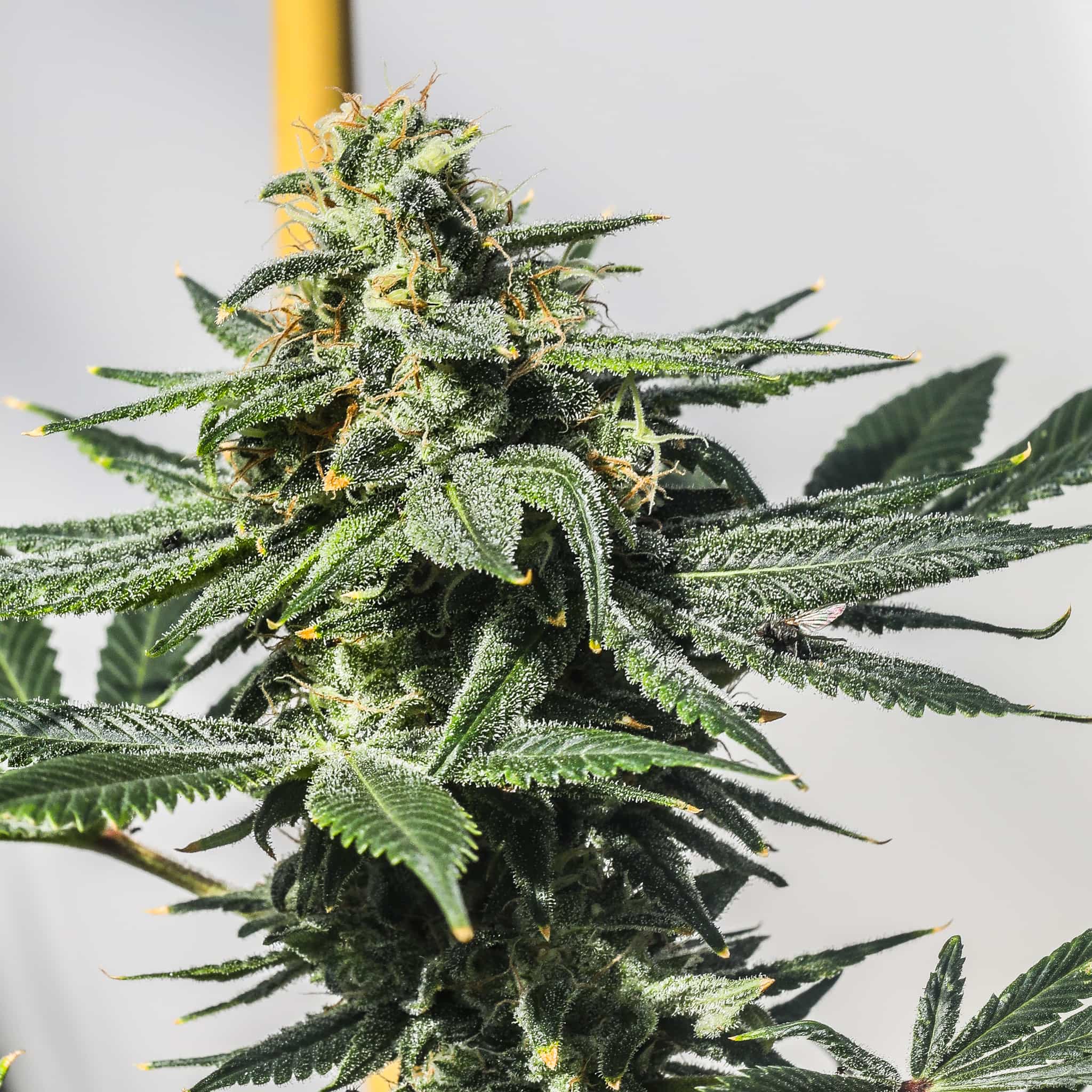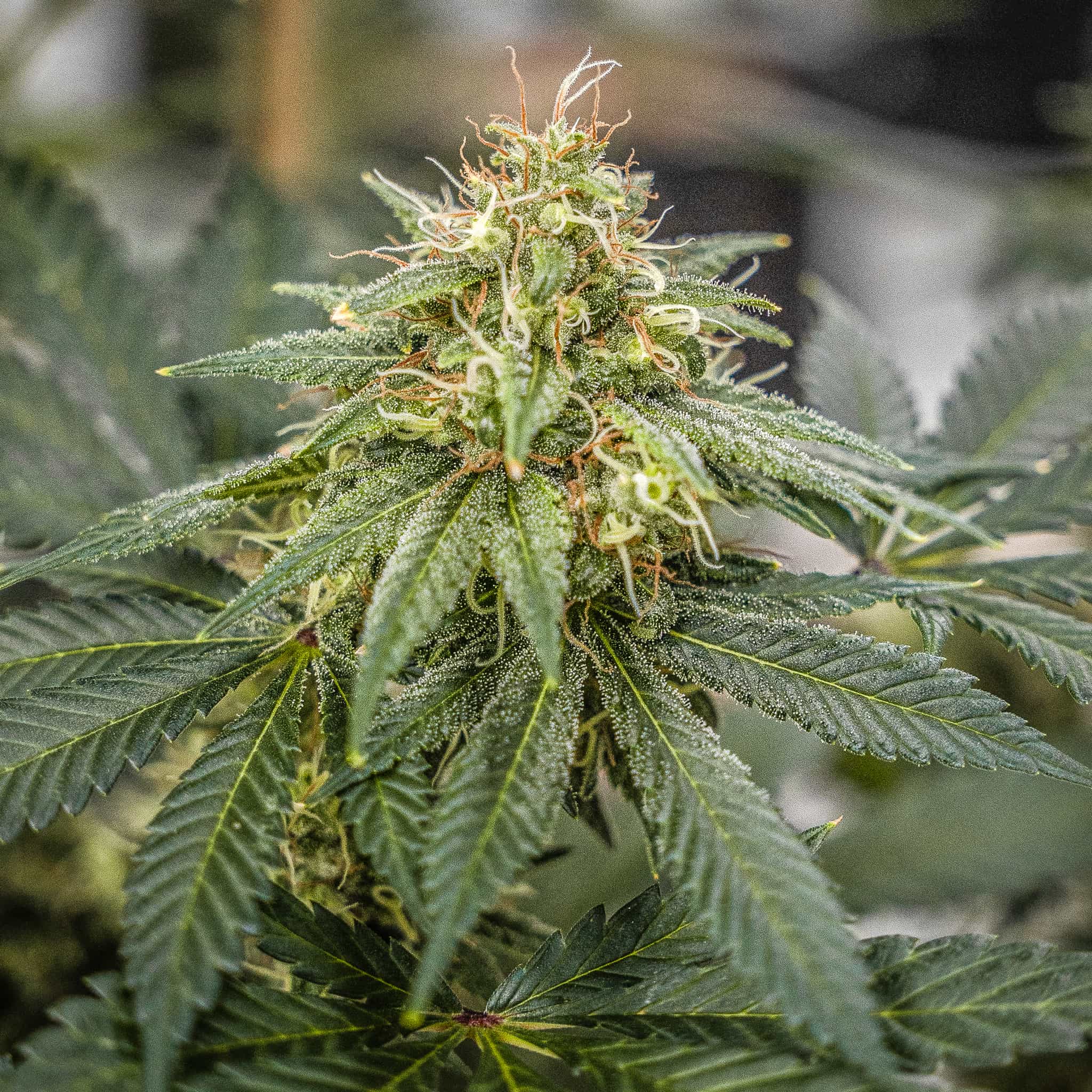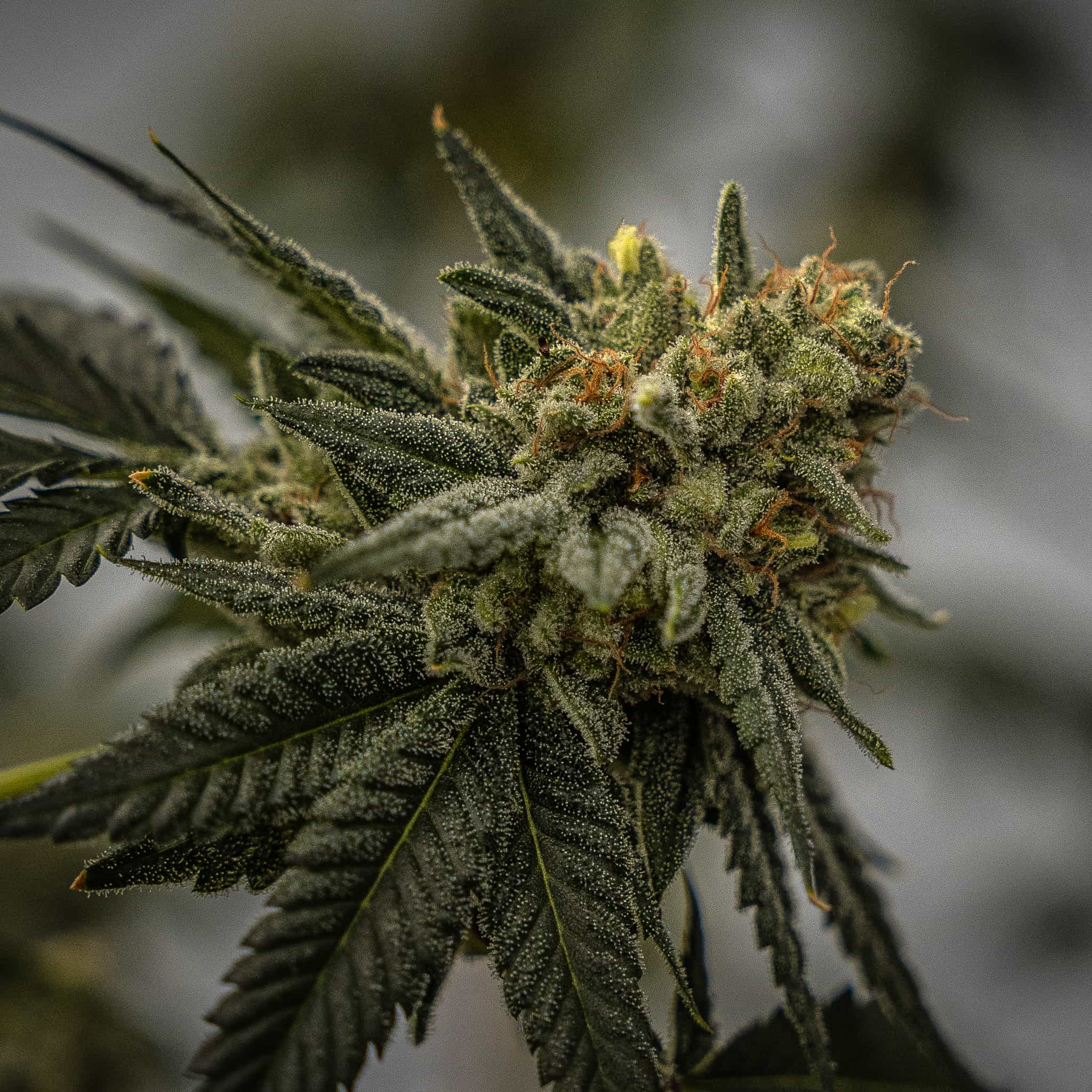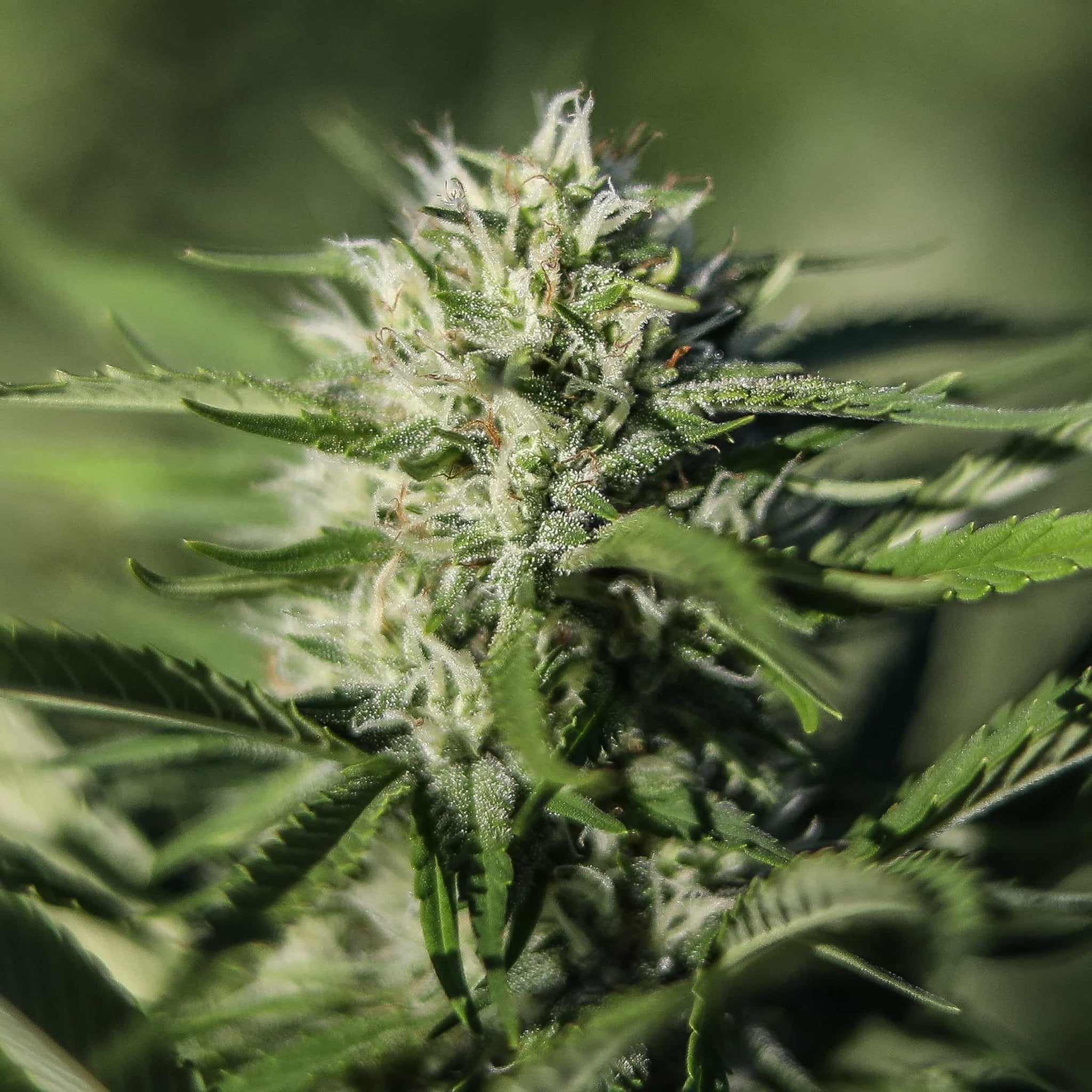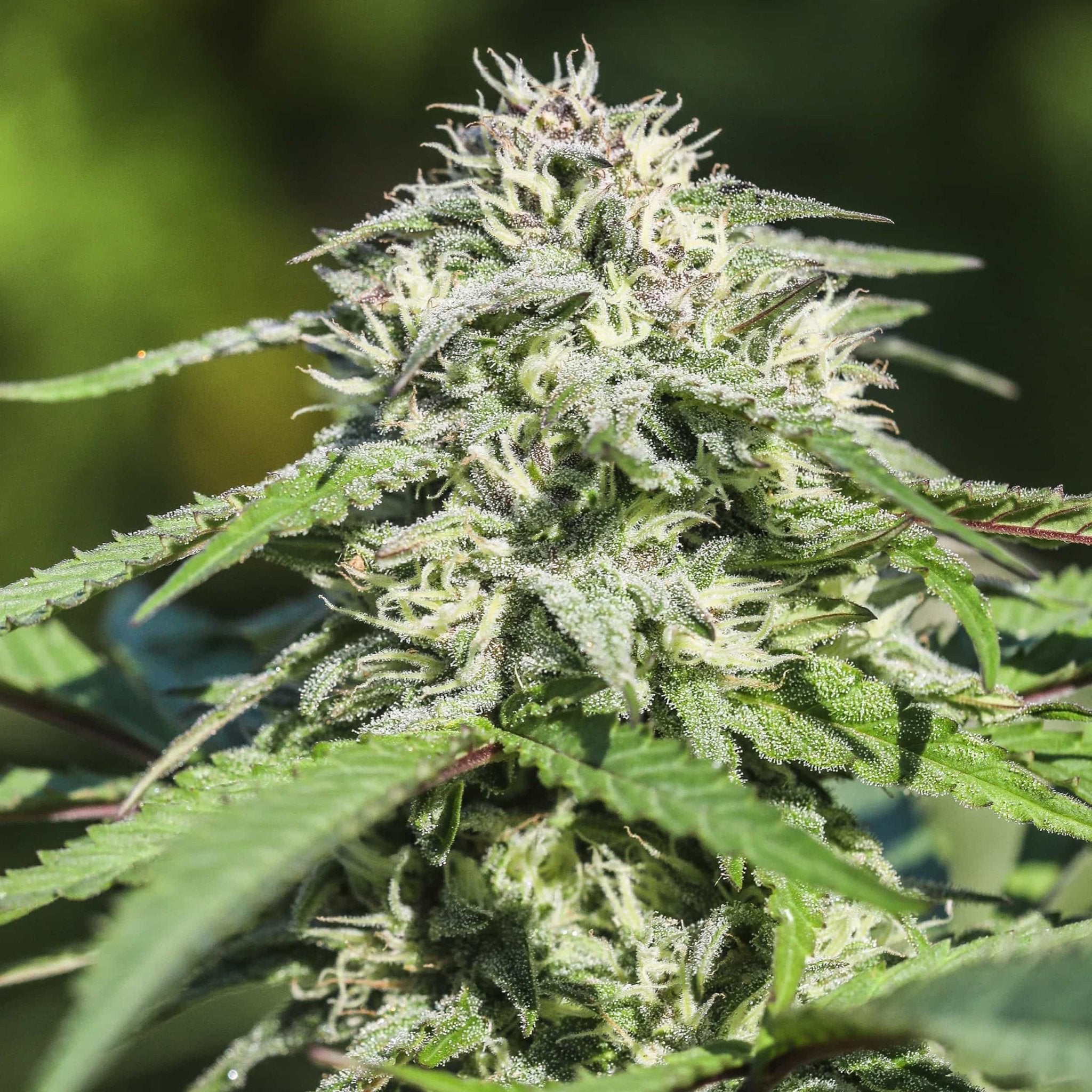


The best way to dry and cure cannabis is slow and steady: about 10–14 days in a cool, dark, humid room, then at least two to four weeks in sealed jars. Rush it and you lose the aroma you spent all season growing.
Terpenes are volatile and start evaporating the moment you cut. In one study by Samir Ross and Mahmoud ElSohly, about 31% of terpenes were gone after a single week of drying (Cannabis Business Times). You can't stop that loss entirely, but good drying keeps it to a minimum.
Genetics set the ceiling on flavor and potency. Drying and curing decide how much of it ends up in the jar. Here's how we do it, from harvest day to finished flower.
The target conditions at a glance
|
|
Drying |
Curing |
|---|---|---|
|
Temperature |
60–68°F |
60–70°F |
|
Humidity |
55–62% RH in the room |
58–62% RH inside the jar |
|
Light |
Dark |
Dark |
|
Airflow |
Gentle, moving air in the room, never blowing on buds |
Sealed jars, opened ("burped") on a schedule |
|
How long |
7–14 days, until small stems snap |
2 weeks minimum; 4–8 weeks for best flavor |
|
Done when |
Outside of the bud feels dry and small stems snap instead of bending |
Jar humidity holds steady at 58–62% without burping |
Many growers use the "60/60 rule" as a shorthand: about 60°F and 60% humidity. A $10 digital hygrometer is the most important tool you'll buy for this stage. Put one in the drying room and one in each curing jar.
Ranges reflect common grower practice. Leafly recommends 60–70°F and 55–65% RH for drying (Leafly).
Harvest prep: wet trim or dry trim?
If you can control your drying room, dry trim. Wet trim if humidity is high or your buds are very dense, or already showing signs of botrytis.
|
|
Wet trim (trim right after harvest) |
Dry trim (trim after drying) |
|---|---|---|
|
Best for |
Humid climates, dense colas, limited space |
Controlled rooms, growers who want the best flavor |
|
Drying speed |
Faster, since less leaf holds moisture |
Slower, since the leaves slow drying down |
|
Aroma and flavor |
Some terpene loss from faster drying |
Better terpene retention |
|
Trimming work |
Easier: sticky but leaves stand out |
Harder: brittle leaves, more trichomes knocked off |
|
Mold risk |
Lower |
Higher if the room is too humid |
Whole plant or branches? Hanging whole plants, or big branches, slows drying the most. That's good in a dry room and risky in a damp one. Cutting into smaller branches speeds things up. In any case, remove the big fan leaves at harvest. They hold a lot of water and add nothing.
Big, dense colas need extra care. Heavy-yielding genetics, including our triploid Seedless lines, can produce rock-hard flowers that hold moisture deep inside. Break the largest colas into smaller pieces, give them more space, and check the cores for dampness before jarring.
Drying methods compared
For most growers, hang drying in a controlled room is the best balance of quality, cost, and simplicity.
|
Method |
How it works |
Best for |
Watch out for |
|---|---|---|---|
|
Hang drying |
Branches hung upside down on lines or hangers |
Most home and small commercial grows |
Needs space and steady humidity |
|
Mesh drying racks |
Trimmed buds laid flat on stacked mesh screens |
Wet-trimmed buds, small spaces |
Flat spots on buds; turn them daily |
|
Grow tent as dry room |
Tent with a small fan and a humidifier or dehumidifier |
Growers with no spare room |
Easy to overdry; watch the hygrometer |
|
Freeze drying |
Machine removes water at very low temperature |
Hash and rosin makers, high-volume operations |
Costly; flower texture differs |
|
Climate-controlled cure chambers |
Units that hold temperature and humidity tightly |
Commercial operations focused on terpenes |
Cost |
What to avoid: ovens, microwaves, food dehydrators, and direct fans. They dry the outside before the inside, leaving harsh, hay-smelling flower that still holds moisture at the core.
Room setup basics:
- Keep it dark. Light degrades cannabinoids and terpenes.
- Move the air gently with an oscillating fan pointed at a wall, not the buds.
- Space branches so they don't touch.
- Hold steady conditions. Big swings in temperature or humidity cost more terpenes than a slightly off but stable room.
How to cure cannabis, step by step
Curing evens out the moisture left in the bud and smooths out harshness. Most of the flavor improvement happens in the first two to four weeks.
- Check that buds are ready. Small stems should snap, not bend. The outside of the bud should feel dry, with a little give when squeezed.
- Fill jars about 75% full. Use airtight glass jars and pack loosely. Don't crush the buds.
- Add a hygrometer and check after a few hours. Readings above 65% mean the buds need another day or two out of the jar. Readings below 55% mean they're overdried, so add a 58–62% two-way humidity pack.
- Burp daily for the first 1–2 weeks. Open each jar for 10–15 minutes once or twice a day to release moisture and gases. Smell each jar. Ammonia or a musty odor means the buds are too wet.
- Then burp weekly. Once humidity stays steady at 58–62%, opening jars once a week is enough.
- Wait at least two weeks. Four to eight weeks gives the smoothest, most complete flavor, and some growers cure for months.
Storing long term: Keep jars cool, dark, and sealed, with a 58–62% humidity pack in each. Avoid plastic bags, which build static and pull trichomes off the buds.
Don't want to trim it all at once? Leave it on the stem
You don't have to trim your whole harvest right away. Dried flower left on the stem, with its sugar leaves on, can be stored in a controlled environment and trimmed months later with its quality and color intact.
The leaves and stems do more than you'd think. Sugar leaves cradle the bud and shield the trichomes from handling, light, and air. The stem keeps the flower intact. Trim everything at once and every bud is exposed. Trichome heads get knocked off when buds are handled and moved, and more of the flower's surface is exposed to air. That degradation is gradual: the buds look fine in the jar at first, but color, aroma, and frost fade faster than in flower left on the stem and trimmed when you need it.
How to store untrimmed flower:
- Dry as usual until small stems snap, with the leaves still on.
- Cut branches to a manageable size, but don't buck the buds off the stem.
- Store in sealed bins or bags in a cool, dark room. Hold the humidity in the 58–62% range, with a hygrometer inside each container or in the room.
- Check monthly for moisture spikes or any sign of mold.
- Trim in batches as needed. Pull out only what you'll jar, sell, or use in the next few weeks, then cure the trimmed flower as described above.
This is especially useful after a big outdoor harvest, when trimming labor is the bottleneck. Instead of rushing a whole season's trim, or paying for it all at once, you can spread the work over the winter without giving up quality.
Common mistakes and how to fix them
|
Problem |
Likely cause |
Fix |
|---|---|---|
|
Hay or grass smell |
Dried too fast or too warm |
Slow down the next dry. A long cure in jars with humidity packs can recover some flavor. |
|
Buds crumble to dust |
Overdried |
Add a 62% humidity pack to the jar for several days. |
|
Jar humidity jumps above 65% |
Jarred too early |
Spread buds out for 12–24 hours, then jar again. |
|
Ammonia smell in the jar |
Too wet, bacteria at work |
Take buds out immediately and dry them longer. |
|
White fuzz or gray spots |
Mold, usually botrytis |
Throw out affected buds. Don't smoke moldy flower. |
|
Harsh, burning smoke |
Too short a cure |
Give it more time in the jar. |
|
Outside dry, inside damp |
Fans on buds, or oversized colas |
Break colas up, slow the dry, and sweat buds in a jar for a few hours to pull moisture outward. |
Mold is the one that can't be fixed. If you see it, check every bud in that batch. Spores spread quickly in a sealed jar.
Tips for outdoor and large harvests
Outdoor harvests in places like western Oregon often come in during fall rain, which is exactly when drying is hardest.
- Harvest dry plants. If you can, wait a day after rain, and cut in the afternoon once dew has burned off.
- Plan drying space before harvest day. A big outdoor plant can fill a small room alone. If you don't have the space, stagger harvests or wet trim to cut bulk.
- Run a dehumidifier. In a damp fall climate, a dehumidifier sized for the room is usually the difference between a clean dry and botrytis.
- Choose early finishers. Varieties that come down in mid to late September miss more of the heavy rain. Most of our Type I seeds are bred to finish early for this reason.
- For commercial volume, measure water activity. A water activity meter tells you when flower is truly stable, which a hygrometer alone can't confirm in large batches.
Good drying starts with genetics that finish before the weather turns. Browse our early-finishing feminized seeds, or email us with your climate and we'll help you choose.