
If you've grown cannabis for any amount of time, you've probably dealt with bugs. And if you haven't, you will.
From aphids and spider mites to caterpillars that can destroy entire fields of flower, cannabis has no shortage of pests looking to make a meal out of your plants.
At GTR Seeds, we've encountered plenty of these pests over the years, both in our greenhouses and commercial outdoor fields. Some are relatively easy to manage when caught early. Others can turn into an absolute nightmare before you even realize they're there.
And we're certainly not alone. In a statewide assessment of Oregon's hemp industry, Oregon State University researchers documented growers' concerns about caterpillars, mites, aphids, thrips, and the limited pesticide options available for hemp production.
The good news? Most pest problems can be managed with proper prevention, early detection, and a little knowledge about what you're dealing with.
Here are seven common cannabis pests every grower should know about.
1. Aphids
Aphids are among the most common pests found on cannabis plants, particularly in greenhouses and indoor growing environments.
These small, soft-bodied insects can be green, yellow, brown, or nearly transparent. They typically congregate on new growth and the undersides of leaves, feeding on plant sap.
Large populations can cause yellowing, curled leaves, stunted growth, and reduced plant vigor.
Aphids also produce a sticky substance called honeydew, which can encourage sooty mold. Outdoors, you may even notice ants tending aphid colonies because they're attracted to the honeydew.
Fortunately, aphids have plenty of natural enemies.
Researchers at Oregon State University have documented hoverfly larvae feeding on hemp aphids in Oregon fields. These beneficial insects can help keep populations under control and are a great example of why identifying insects before spraying pesticides is so important.
You can read more in OSU's Southern Oregon Hemp Newsletter.
Prevention and control: Inspect new growth regularly, remove heavily infested plant material when practical, and encourage beneficial insects such as lacewings, hoverflies, lady beetles, and parasitic wasps. Insecticidal soaps may also be useful when legally permitted and applied according to the label.

2. Broad Mites
Broad mites are tiny, destructive pests that are extremely difficult to see without magnification.
Unlike spider mites, which often produce obvious stippling on leaves, broad mites tend to damage the newest plant growth.
Symptoms can include twisted leaves, distorted shoots, blistered foliage, and a wet or shiny appearance on young leaves.
Their feeding can also cause growth tips to become severely deformed, making the damage easy to mistake for nutrient problems, herbicide exposure, or other environmental stresses.
By the time symptoms become obvious, the mites may already be well established.
Prevention and control: Carefully inspect incoming clones and young plants. Use magnification to examine suspicious new growth, and consider predatory mites suited to broad mite management. Early detection is critical because damaged growing tips may not recover even after the mites are controlled.

3. Caterpillars and Corn Earworms
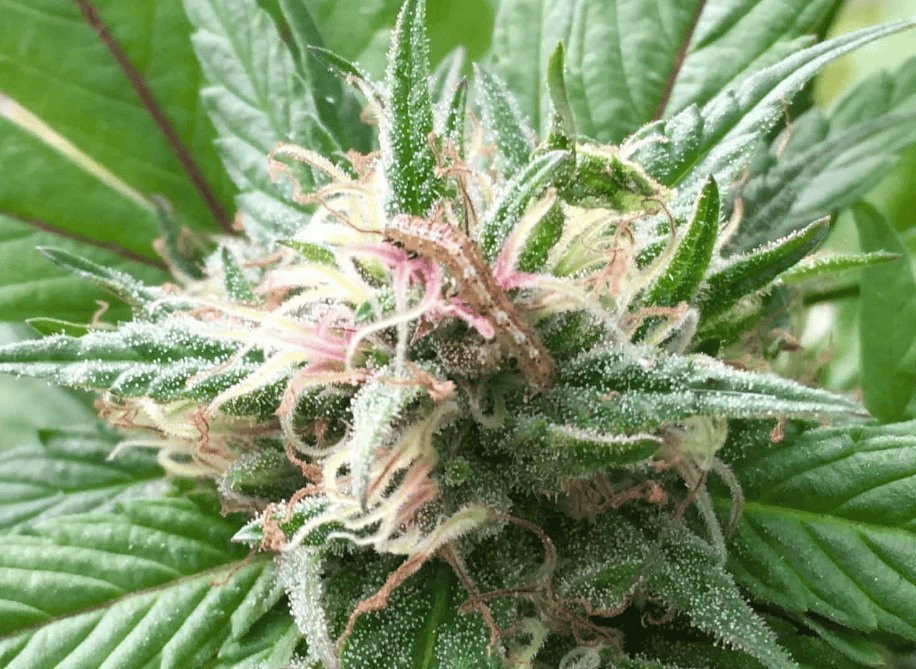
Caterpillars are among the most destructive pests we've encountered in outdoor cannabis production.
One of the worst offenders is the corn earworm, Helicoverpa zea.
These caterpillars become particularly troublesome during late summer and flowering. They burrow into developing cannabis buds, feeding on flower tissue and leaving behind waste.
The resulting damage can create ideal conditions for secondary infections, including Botrytis, commonly called bud rot.
It's not unusual to find a beautiful flower that looks healthy from the outside but is rotting from the inside.
Once caterpillars are buried deep inside dense flowers, controlling them becomes much more difficult.
Researchers at Oregon State University have done some excellent work investigating corn earworm management in hemp. Their Corn Earworm Management in Hemp guide covers pest identification, monitoring moth populations, scouting developing flowers, and biological control strategies.
In another OSU study conducted in Southern Oregon, researchers evaluated a biological insecticide containing a virus that specifically targets corn earworms.
The results were encouraging, with substantially fewer surviving caterpillars on treated hemp plants compared with untreated plants. It's great to see this kind of research focused specifically on cannabis rather than relying entirely on data from other crops.
Prevention and control: Monitor plants for eggs and young caterpillars before they enter flowers. Certain Bacillus thuringiensis (Bt) products, particularly those containing strains effective against caterpillars, can be useful when approved for the crop and applied according to their labels.
We've found that early intervention is far more effective than trying to rescue flowers after caterpillar damage has already occurred.

4. Hemp Russet Mites
Hemp russet mites are some of the nastiest pests in cannabis cultivation.
They're microscopic, making them virtually impossible to identify without significant magnification. Unlike spider mites, they don't produce the obvious webbing that alerts growers to an infestation.
Common symptoms include curled or canoe-shaped leaves, bronzing, brittle foliage, distorted growth, and declining plant vigor.
The damage can easily be confused with nutrient burn, heat stress, or other growing problems.
Hemp russet mites reproduce rapidly under favorable conditions, and populations can become enormous before growers realize what's happening.
Researchers at Colorado State University have studied insects and mites associated with cannabis production, including hemp russet mites. Their research on insect pests associated with cannabis provides additional information about the pests growers may encounter.
Prevention and control: Quarantine and inspect new plants, regularly examine suspicious foliage under magnification, and avoid introducing uninspected clones into clean growing environments.
Certain sulfur-based treatments and biological control options may be useful in appropriate situations, but product legality, crop stage, and application restrictions must be considered. We strongly discourage sulfur applications during flowering.

5. Spider Mites
Spider mites are probably one of the most familiar pests to indoor cannabis growers.
The two-spotted spider mite is particularly common, although other species can also affect cannabis.
These tiny arachnids feed on plant cells, producing small pale spots or stippling across the leaves.
As infestations progress, leaves may yellow, lose vigor, and eventually die.
Heavy infestations can produce extensive webbing across leaves and flowers. At that point, things have usually gotten pretty ugly.
Spider mites thrive in many warm, dry growing environments and can reproduce extremely quickly.
Prevention and control: Regularly inspect the undersides of leaves, particularly in hot spots around the grow room or greenhouse. Predatory mites can be highly effective when introduced early and managed properly.
Avoid relying repeatedly on the same pesticide, as spider mite populations can develop resistance to certain treatments.

6. Garden Symphylans
Garden symphylans are a less familiar pest to many home growers, but they can be a serious problem in commercial outdoor production.
These small, white, centipede-like arthropods live in the soil and feed on tender roots and other underground material.
Unlike many aboveground pests, symphylans can be difficult to detect because the damage happens below the surface.
Affected plants may grow slowly, appear nutrient deficient, or wilt despite adequate irrigation.
In heavily infested fields, growers may notice distinct patches of stunted plants surrounded by healthier growth.
We've encountered symphylans in agricultural soils, and they can be incredibly frustrating to manage.
Oregon State University has an excellent guide to identifying and managing garden symphylans, including photographs and information about the root damage they cause.
These pests aren't unique to cannabis, and much of what researchers have learned from other agricultural crops applies to hemp production as well.
Prevention and control: Inspect fields before planting, especially those with a history of symphylan problems. Soil sampling, crop rotation, soil management, and other site-specific practices may help reduce damage, but established populations can be extremely difficult to control.
In severe cases, growers may need to reconsider planting susceptible crops in affected areas.

7. Thrips
Thrips are another common pest in indoor cannabis production, although they can also cause problems outdoors.
These tiny, slender insects feed by piercing plant cells and removing their contents.
Their feeding often produces silvery, white, or bronze-colored scarring on leaves. You may also notice tiny black specks of insect waste near damaged areas.
Young plants can be particularly vulnerable, and heavy infestations may reduce growth and overall plant health.
Thrips are also notorious for hiding in tight spaces and reproducing quickly.
Prevention and control: Use sticky traps to help monitor adult populations, inspect leaves regularly, and consider appropriate predatory mites or other beneficial insects.
Good sanitation and early intervention can prevent relatively small populations from becoming major infestations.

Starting from Seeds vs. Clones: Keep It Clean!
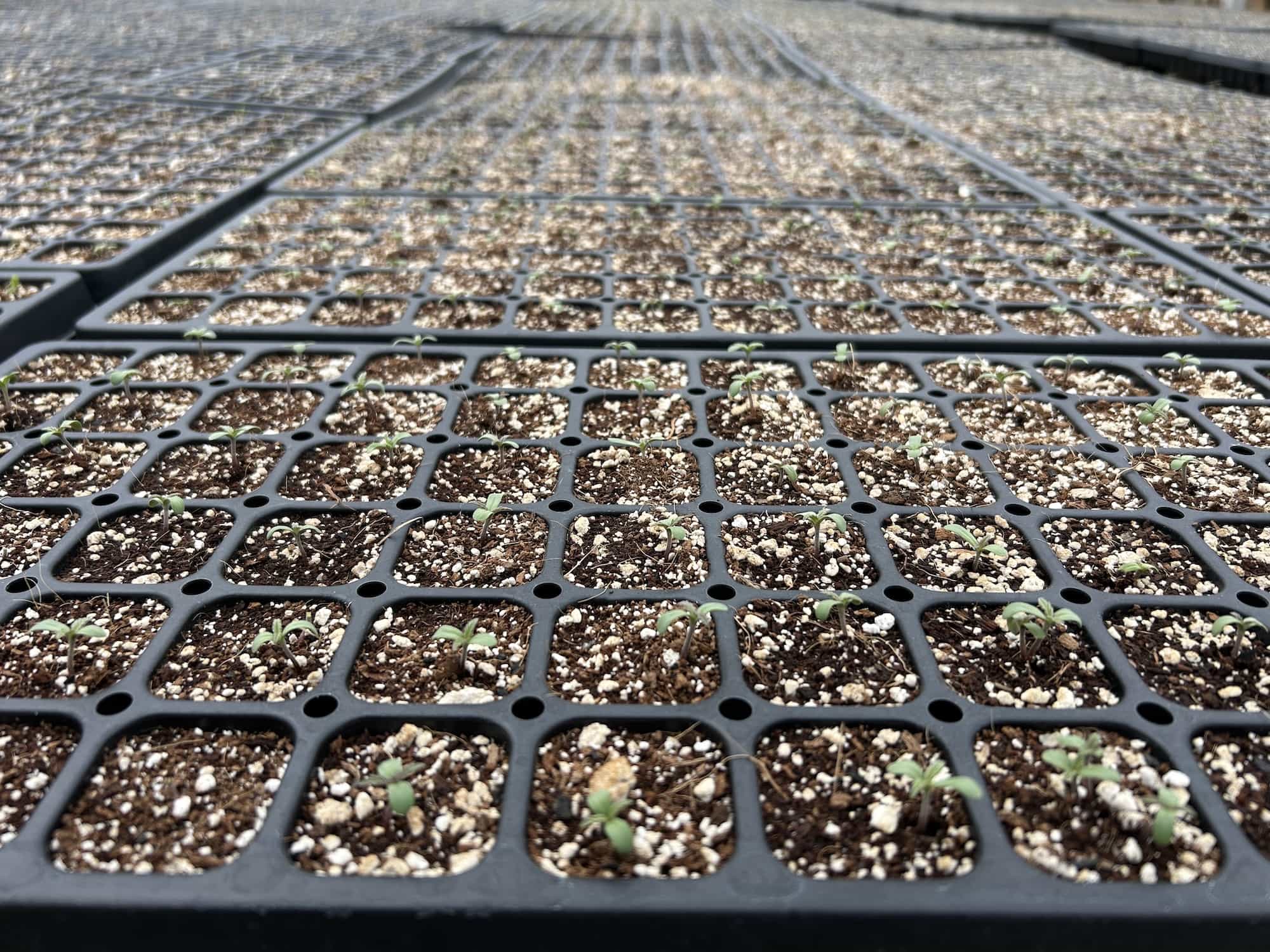
One of the advantages of growing cannabis from seed is reducing the risk of introducing established insect populations into your garden.
Clones can carry aphids, spider mites, broad mites, russet mites, and other unwanted passengers, sometimes without any obvious signs of infestation.
They can also introduce plant pathogens, including Hop Latent Viroid.
That doesn't mean seeds are guaranteed to be free of every pest or disease, but they can provide a cleaner starting point than bringing in uninspected plants from another facility.
If you're growing from clones, we strongly recommend quarantining new plants and inspecting them thoroughly before introducing them to your existing crop.
For more information on common plant diseases, check out our guide to cannabis pathogens.
Integrated Pest Management: Prevention Is Your Best Tool
Whether you're growing a few plants in your backyard or acres of cannabis commercially, a good Integrated Pest Management (IPM) program is essential.
The basics are pretty simple:
-
Start with healthy seeds or thoroughly inspected clones.
-
Keep your greenhouse, grow room, or field as clean as possible.
-
Inspect plants regularly, including the undersides of leaves and new growth.
-
Use sticky traps and magnification to help identify pests early.
-
Encourage or introduce beneficial insects when appropriate.
-
Avoid excessive pesticide use that can harm beneficial populations or contribute to resistance.
-
Learn which pests are common in your region and when they're most active.
And perhaps most importantly, don't assume every problem is caused by insects.
Nutrient deficiencies, herbicide drift, environmental stress, and plant pathogens can produce symptoms that look remarkably similar to pest damage.
Proper identification is essential before deciding how to treat a problem.
A Word About Pesticides on Cannabis
There are plenty of products capable of killing insects, but not all are legal or appropriate for cannabis cultivation.
This is particularly important when producing smokable flower or material intended for extraction.
Some pesticides can leave residues on harvested flowers, and certain compounds may become concentrated during extraction.
Even naturally derived or organically approved products aren't automatically safe for cannabis.
We strongly encourage growers to research any pesticide before applying it, verify that the exact product is legally permitted for their crop, and pay close attention to label restrictions.
The Oregon Department of Agriculture's cannabis pesticide resources are a useful starting point.
Healthy Cannabis Starts with Prevention
We've dealt with our fair share of pest problems over the years, and one lesson has remained consistent: catching a problem early is almost always easier than trying to eliminate a well-established infestation.
Some pests are relatively easy to manage. Others, particularly hemp russet mites, broad mites, and soil-dwelling symphylans, can be incredibly persistent.
There's no single treatment that works for everything.
But starting with healthy planting material, maintaining a clean growing environment, regularly inspecting your plants, and understanding the pests you're dealing with will go a long way toward keeping your crop healthy.
And remember, not every bug is your enemy. Plenty of insects and other arthropods are out there helping you keep the bad ones in check.