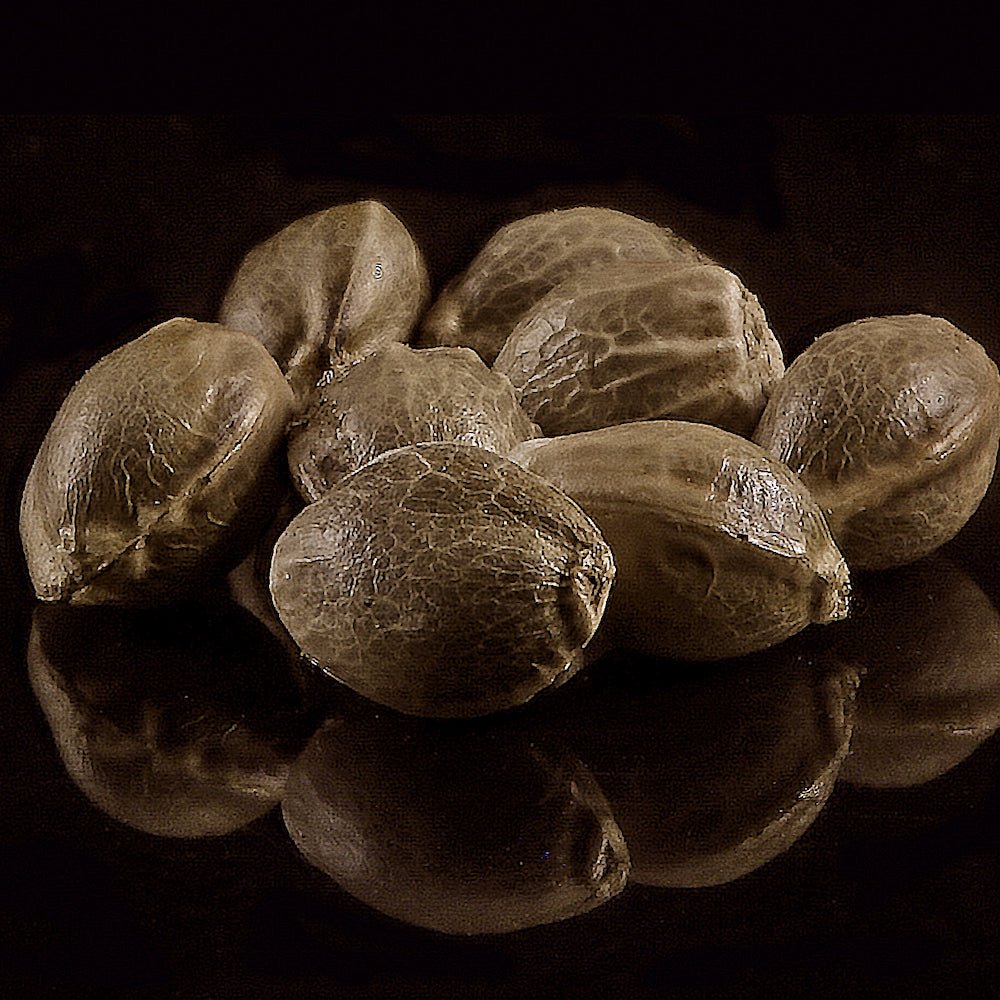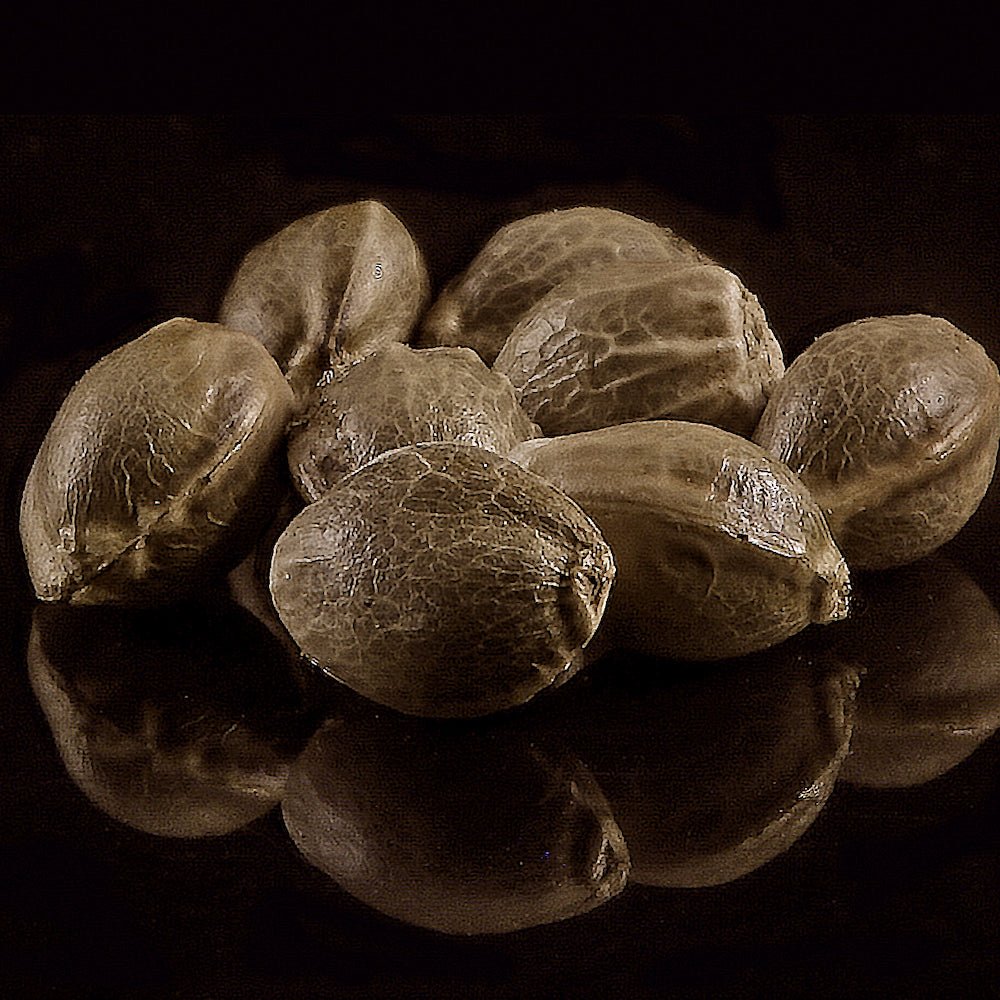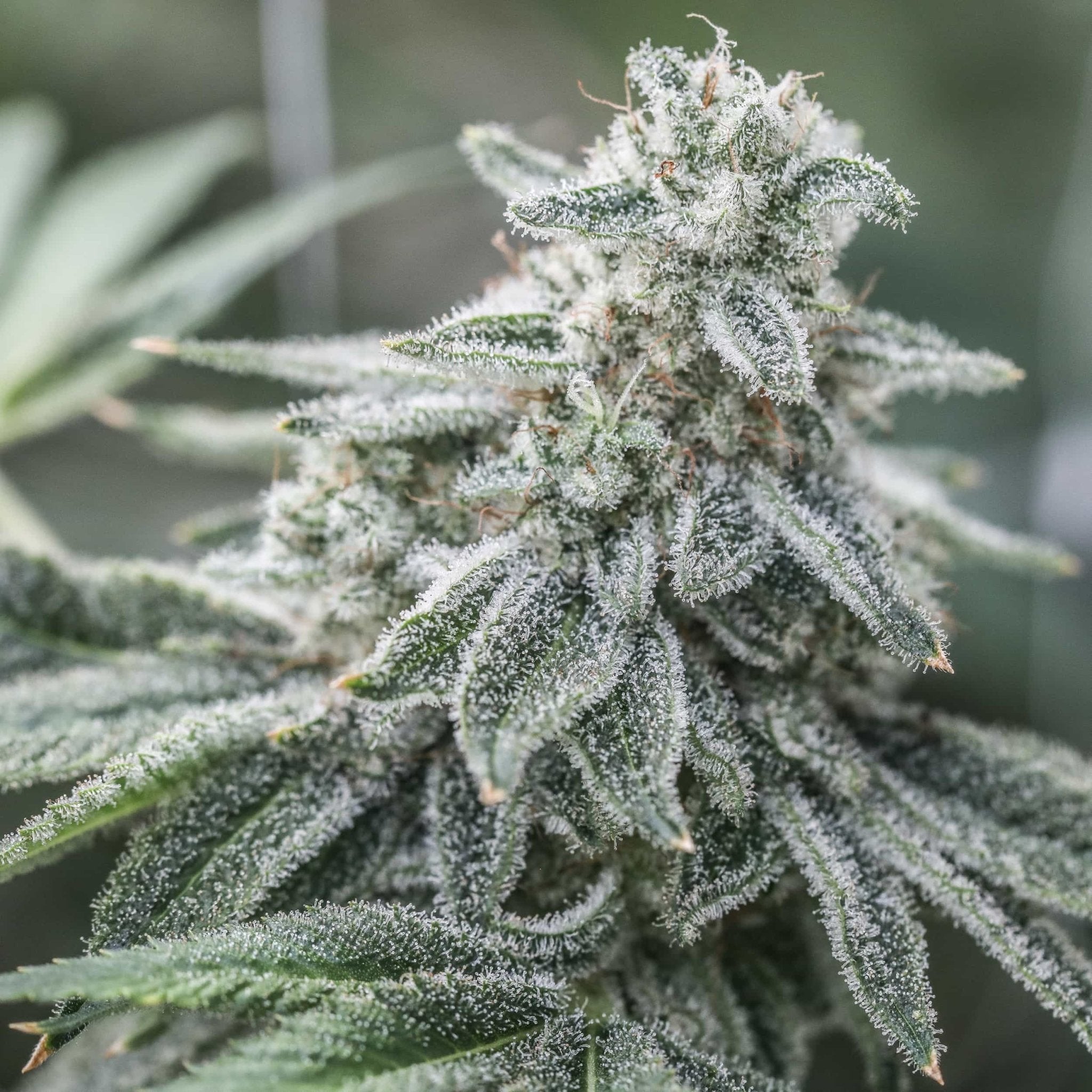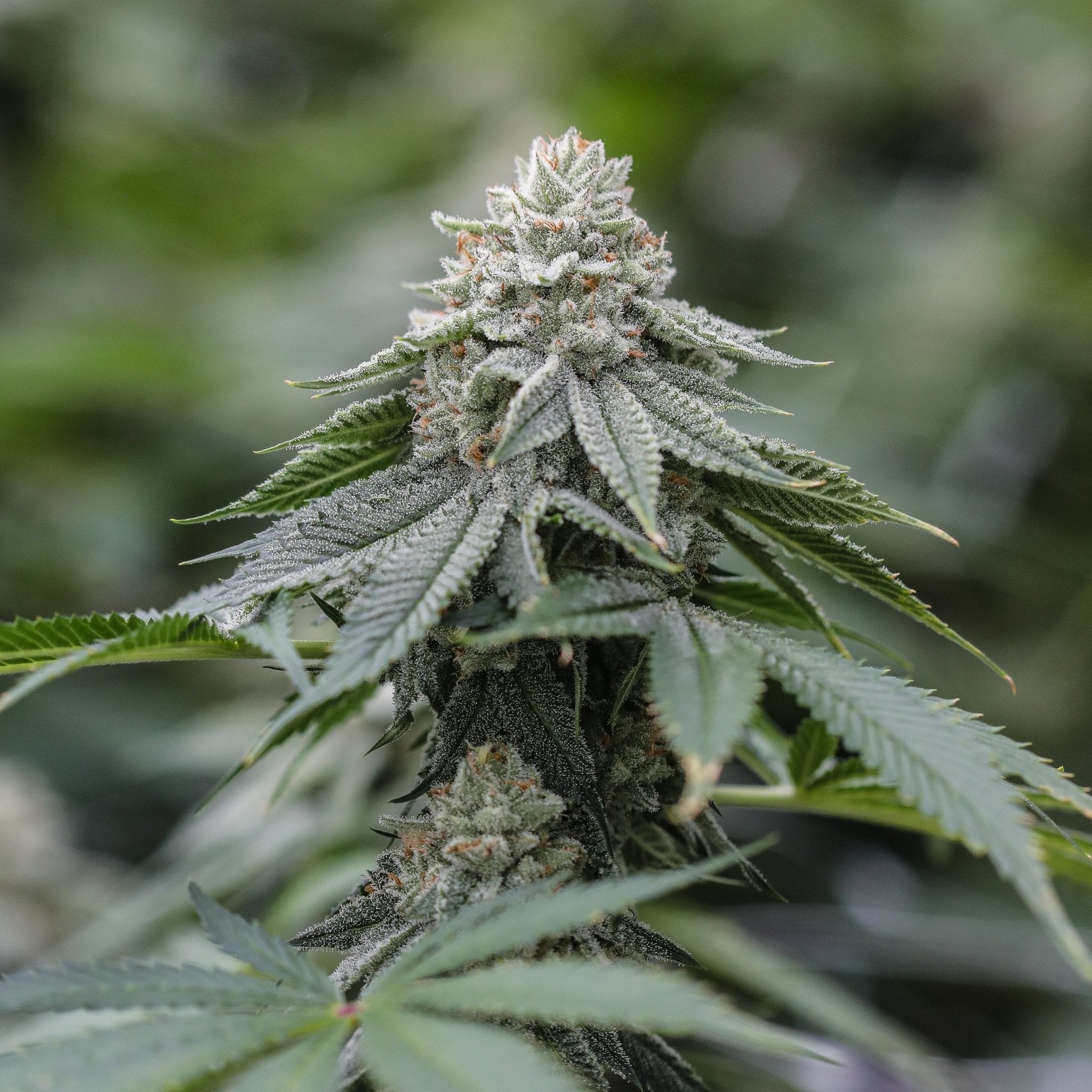

Planting cannabis seeds directly into the soil where they will grow and flower is, theoretically speaking, one of the best methods possible. Plants never experience transplant shock, growers save the time, money, and labor involved in starting seedlings and moving them into the field, and direct-sown plants can develop incredibly vigorous root systems.
Sounds great, right?
The problem is that direct sowing cannabis seeds is much easier said than done. While we've seen some incredible results from direct-seeded fields, we've also seen some spectacular failures. We generally don't recommend large-scale direct sow planting to growers without experience.
Whether you're looking to plant a few beans in your backyard or a few million across hundreds of acres, here are some basics to help improve your chances of success.
What Is Direct Sow Planting?
Direct sowing is simply planting seeds directly into the soil or containers where they will remain throughout their lives, rather than starting them in trays or smaller pots and transplanting them later.
It's common practice for many agricultural crops, but growing cannabis this way presents some unique challenges.
For home growers planting a few seeds in pots, direct sowing is relatively straightforward. For commercial growers planting hundreds of acres, it requires careful soil preparation, precise planting equipment, reliable irrigation, and a whole lot of attention.
We've heard reports from farmers achieving 85% seedling emergence in some parts of their fields and just 20–30% in others. Under favorable conditions, experienced direct-sow growers may target 60–80% field establishment, although results vary considerably.
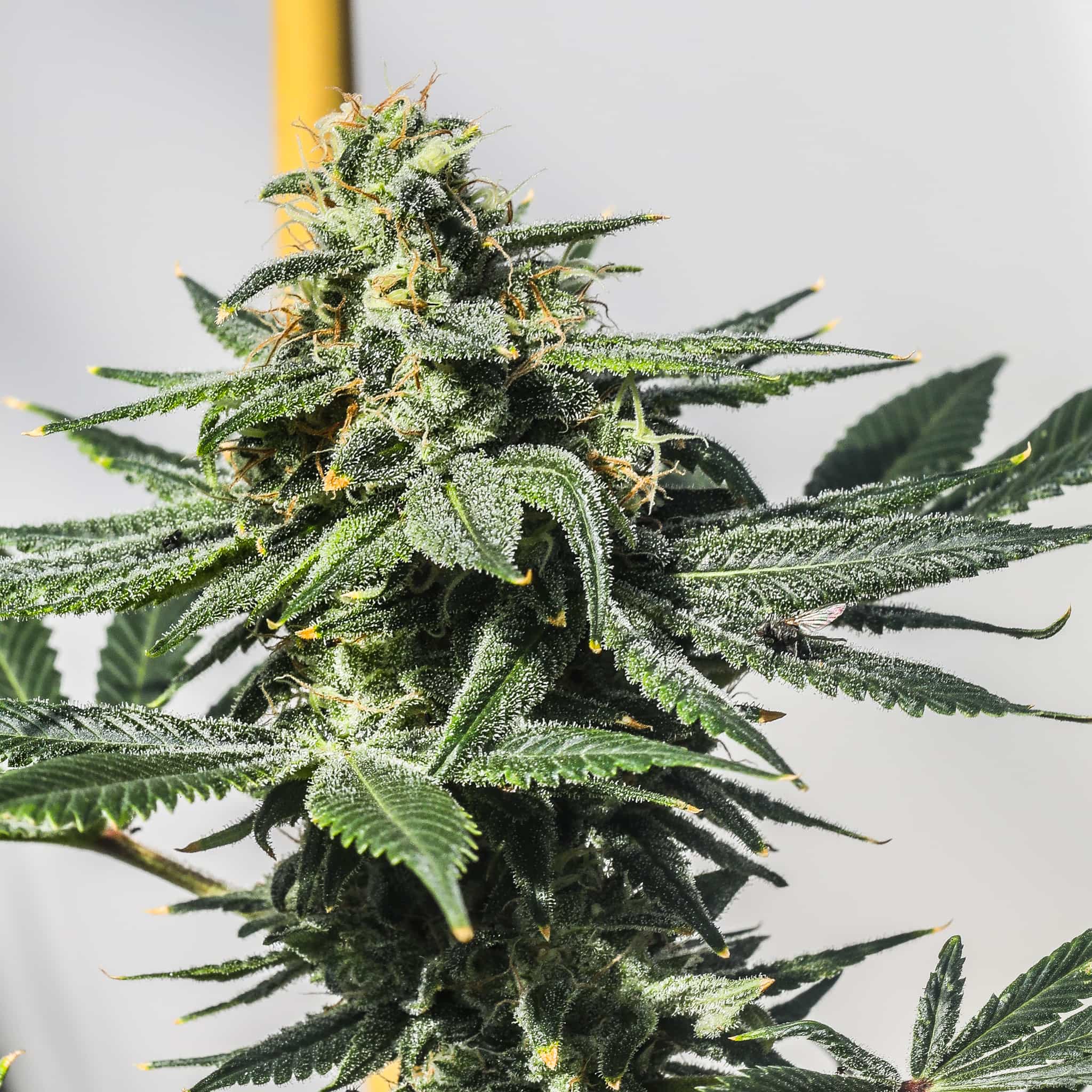
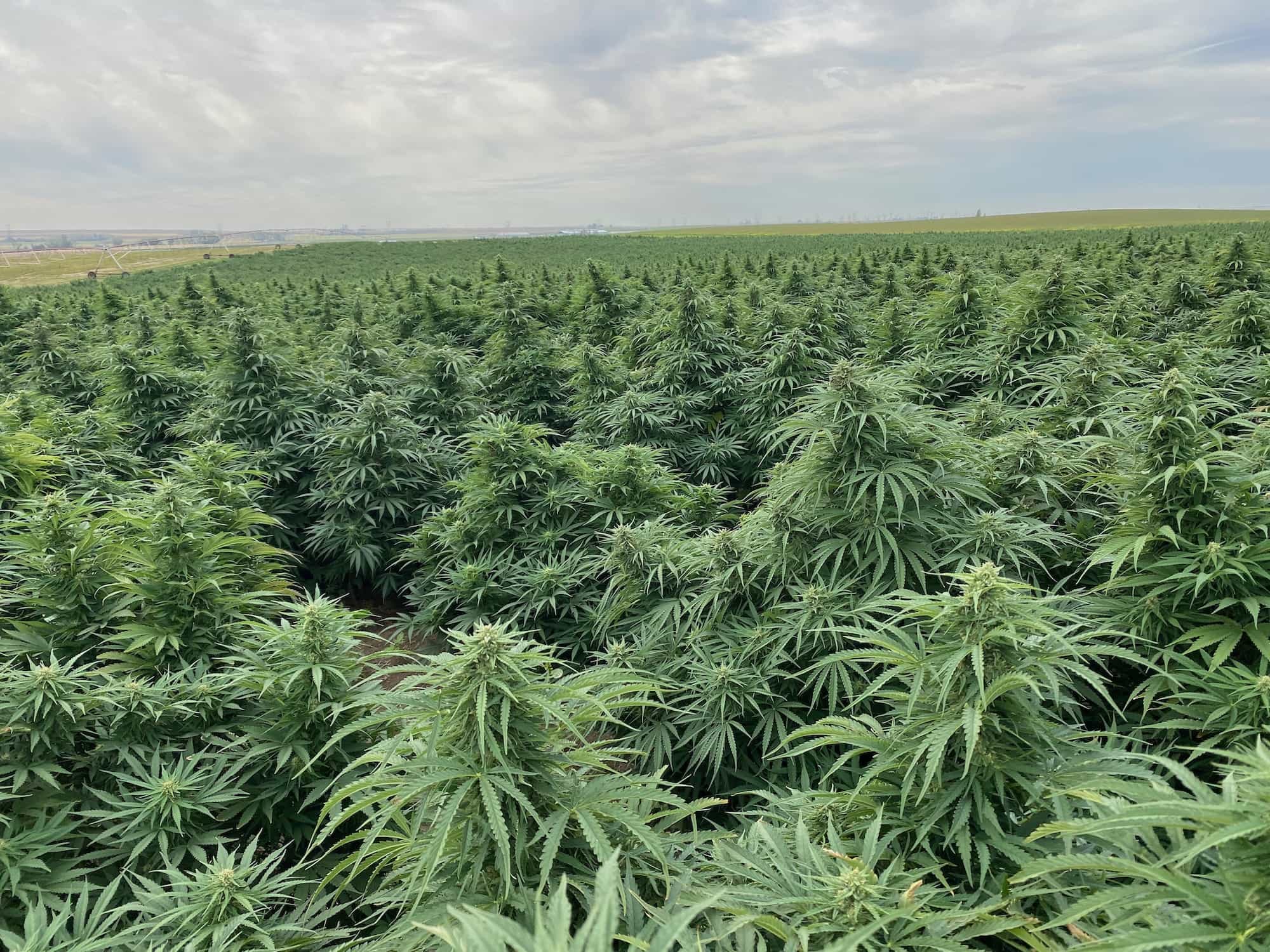
The photo below comes from Horn Creek Hemp, where they conducted a direct-seeding trial in mid-June. Their direct-sown plants eventually grew significantly larger than their transplants, despite achieving only around 65% emergence.

1. Choose the Right Time to Plant Cannabis Seeds Outdoors
Timing is everything when direct sowing cannabis seeds.
Soil Temperature: We recommend waiting until soil temperatures are consistently above 60°F (16°C), with approximately 65–70°F (18–21°C) providing more favorable conditions. Cold, wet soils slow germination and increase the risk of seeds rotting before emergence.
Planting Season: In most climates, late spring through early summer is ideal, once the risk of frost has passed.
Planting in midsummer can be especially challenging because hot soil dries quickly, potentially killing newly germinated seedlings before they emerge.
Heavy rainfall, hail, strong winds, and sudden temperature swings can also wreak havoc on young seedlings. Unlike established transplants, newly emerging plants have very little protection from the elements.
For more information on outdoor planting dates and seasonal conditions, check out our guide on when to plant cannabis outdoors.
2. Prepare Your Soil Carefully
Soil preparation is arguably the most important part of successful direct sowing.
Soil Structure and Drainage
Cannabis seedlings need loose, well-draining soil that allows their delicate roots to develop and their shoots to break through the surface.
For commercial growers, sandy loam soils generally provide excellent conditions. Home growers can use a light, well-draining potting mix.
The biggest challenges are:
-
Compaction: Dense soils restrict root growth and make emergence difficult.
-
Crusting: Soil that forms a hard surface after watering or rainfall can prevent seedlings from breaking through.
-
Poor Drainage: Saturated soils deprive roots of oxygen and encourage seed rot.
-
Rapid Drying: Seeds that begin germinating and then dry out may die before emerging.
Consistent field conditions are essential for consistent establishment. Commercial growers often use ripping, tilling, or discing where necessary to prepare an appropriate seedbed, while home growers can generally accomplish the same goal with much less disturbance.
If your soil packs down or crusts easily, we strongly recommend against direct sow planting.
For a closer look at how we prepare our commercial fields, check out our guide to preparing hemp fields for biomass and flower production, including a video from our farm.
Soil Fertility
Cannabis is a heavy feeder once established, but young seedlings don't need particularly rich soil.
Excessive fertilizer, especially concentrated nutrients placed directly around the seeds, can damage delicate roots.
We typically amend our fields with Nutri-Rich 4-3-2, incorporating it into the soil before planting. Compost and other organic amendments can also help improve soil structure and fertility when applied appropriately.
3. Planting Cannabis Seeds Directly Into Soil
Once your soil is prepared and temperatures are favorable, it's time to plant.
Plant Spacing
Some of the most successful commercial direct-sow farmers we've worked with plant approximately 7,000–10,000 seeds per acre, depending on their field layout and desired plant population.
Spacing depends heavily on row width, equipment, and whether you're growing for flower or biomass production.
For more information on selecting varieties and planning commercial production, read our guide to high-CBD biomass seeds.
For home growers hoping to produce enormous outdoor plants, we recommend allowing at least six feet between plants, and often considerably more.
Planting Depth
We recommend planting cannabis seeds approximately 1/4–1/2 inch (6–12 mm) deep.
Sandy soils may allow for slightly deeper placement, but we generally don't recommend exceeding half an inch.
Planting too deep makes emergence difficult, while planting too shallow increases the risk of seeds drying out.
For large-scale production, a precision planter capable of maintaining consistent depth and spacing is extremely valuable.
Home growers can simply use a stick or small tool marked at the desired planting depth.
Irrigation
This is where things can go terribly wrong.
The most successful commercial direct-sow operations we've seen generally use overhead irrigation systems, such as center pivots, which provide relatively uniform moisture across the planting area.
Flood irrigation can cause problems with soil saturation, compaction, and crusting.
Drip irrigation presents its own challenges because the water needs to reach the exact location where the seeds are planted.
We learned this lesson the hard way.
One year, we hand-planted approximately 15 acres of cannabis seeds and carefully positioned our drip irrigation lines over the planting locations.
Everything looked great until we turned on the irrigation.
As the lines pressurized and expanded, they shifted away from where we'd planted the seeds. Suddenly, our irrigation was watering the wrong spots.
Our germination and emergence rates were AWFUL.
It's a mistake we won't make again, and one worth keeping in mind if you're considering direct sowing with drip irrigation.
For home growers, gentle watering with a fine spray can work well. The goal is to moisten the soil around the seed without washing it away or saturating the growing medium.
4. Caring for Cannabis Seeds During Germination
Once your seeds are in the ground, the real work begins.
Keep Moisture Consistent
Cannabis seeds need consistent moisture to germinate successfully.
Too much water can cause seeds to rot. Too little water can kill a seedling almost immediately after germination begins.
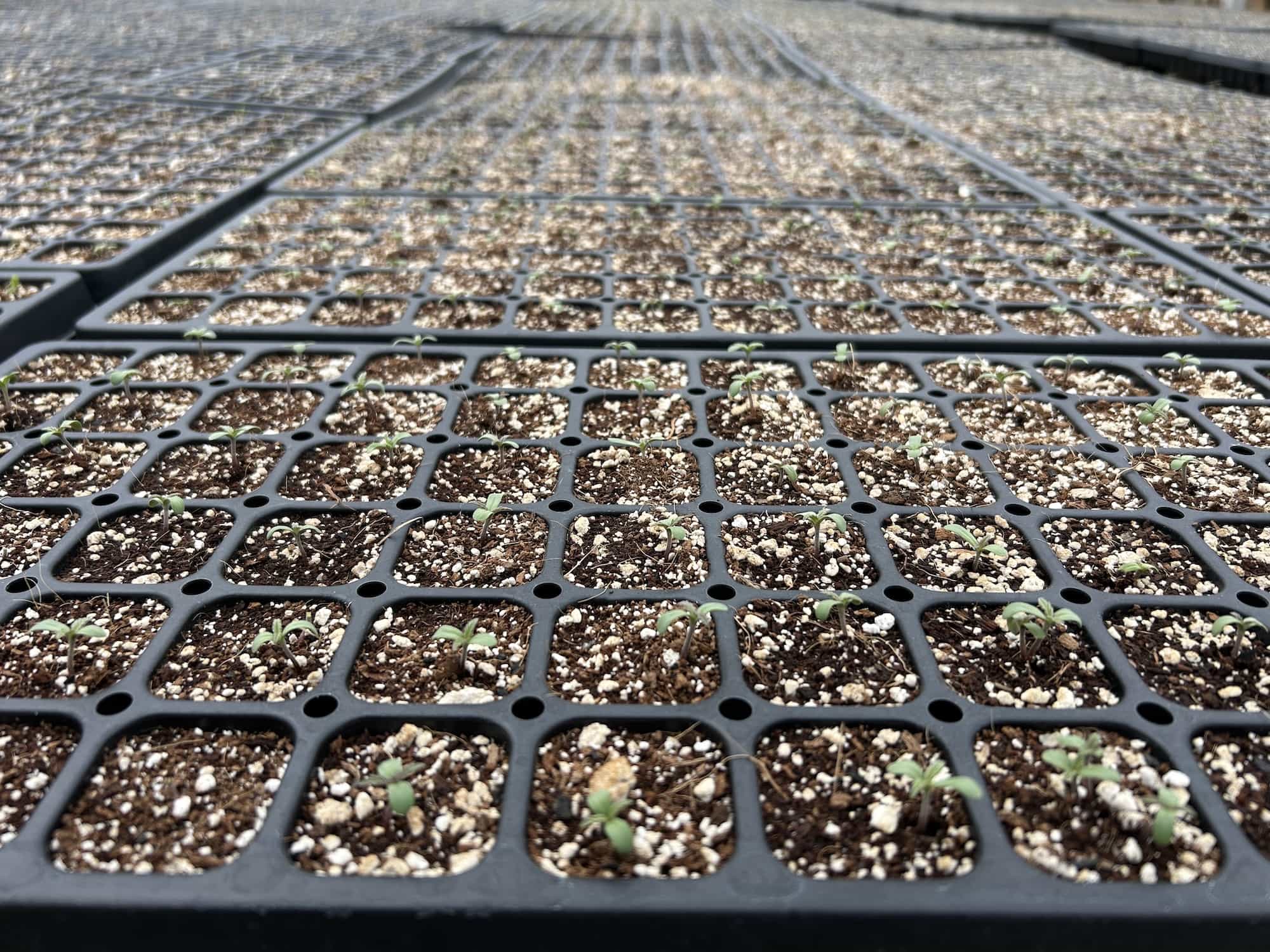
Under favorable conditions, cannabis seeds can germinate within several days, but outdoor field emergence often takes longer. Depending on soil temperature, moisture, and planting depth, seedlings may take approximately 7–14 days to appear above ground.
Some seeds may emerge sooner, while others take longer.
Check soil moisture regularly, especially across larger fields where conditions can vary significantly.
Low areas that collect water frequently experience poor establishment, while exposed, sandy areas may dry out too quickly.
For home growers, checking moisture at seed depth is more reliable than simply misting the surface once or twice a day.
If you're new to growing cannabis from seed, our beginner's guide to starting cannabis seeds covers the basics of germination and early seedling care.
Weed Control Is Critical
One of the most labor-intensive aspects of direct sowing cannabis is weed management during the first few weeks.
Tiny cannabis seedlings are easily overwhelmed by faster-growing weeds. In some fields, weeds can become so thick that it's difficult to even find the cannabis plants.
This is especially problematic for commercial growers planting thousands or millions of seeds.
Some farmers are experimenting with advanced technologies such as laser weeding equipment from Carbon Robotics, although traditional cultivation and mechanical weed control remain common approaches.
We can't overstate how important early weed management is.
The good news is that once cannabis plants become established, their rapid growth and expanding canopy can help suppress competing vegetation, significantly reducing weed pressure later in the season.
5. Is Direct Sowing Cannabis Seeds Worth It?
For the right grower, absolutely.
We've seen direct-sown cannabis plants develop enormous root systems, impressive vigor, and exceptional growth. Eliminating transplanting can save considerable labor and equipment costs, particularly for large agricultural operations.
But there are tradeoffs.
When you start seeds in trays or a greenhouse, you have considerably more control over temperature, moisture, and early plant development. You can also select healthy seedlings before moving them into the field.
With direct sowing, every seed is exposed to whatever Mother Nature decides to throw at it.
Poor emergence can leave large gaps in your field, and replanting those gaps creates uneven plant maturity and additional expenses.
For home growers with a handful of seeds, direct sowing can be a great option, especially in large containers or well-prepared garden beds.
For commercial growers, we recommend starting with a small trial before committing an entire field.
If you're weighing direct sowing against starting seedlings indoors, our guide to starting seeds for outdoor grows offers another approach.
Our advice? If you're new to direct sowing cannabis, start small, pay close attention to your soil and irrigation, and learn from the results. Under the right conditions, the results can be spectacular. Under the wrong conditions, you can lose a whole lot of seeds in a hurry.