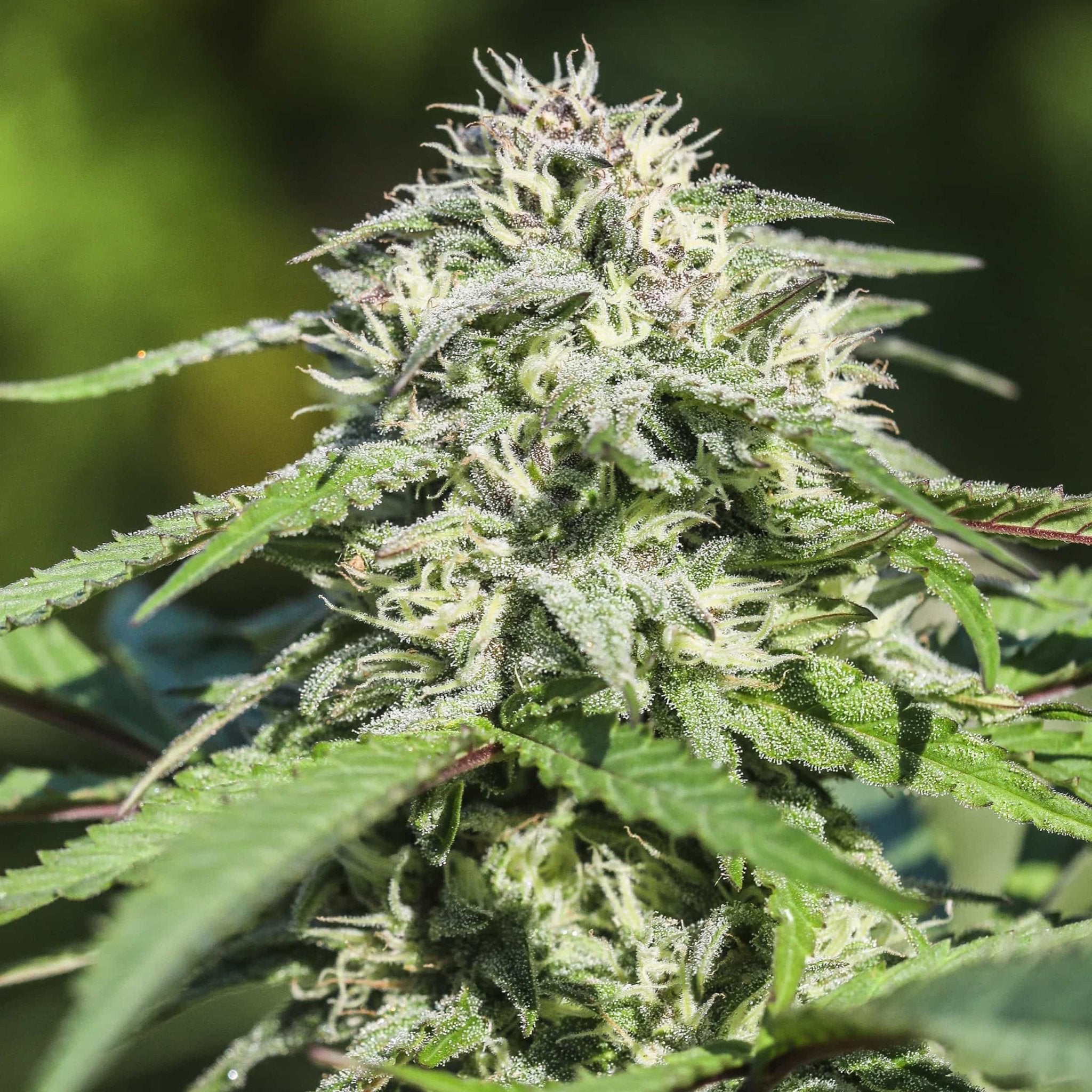


Let's face it. A whole lot of cannabis seeds on the market are the product of pollen chucking.
Find two plants you like, cross them, give the offspring a catchy name, slap some colorful artwork on the packaging, and suddenly you're a cannabis breeder.
But did anyone actually grow out the offspring? Test for consistency? Evaluate hermaphroditism? Determine whether the cross produces anything worth growing?
Far too often, the answer is no.
At GTR Seeds, we spend years developing and refining our genetics, so watching untested crosses flood the market can be pretty frustrating.
But what exactly is pollen chucking, and why does it piss us off?
Let's break it down.
What Is Pollen Chucking?
Pollen chucking is a term used in the cannabis industry to describe crossing plants without a meaningful breeding plan, extensive selection, or proper evaluation of the resulting offspring.
Essentially, someone finds two plants they like, collects pollen from one, pollinates the other, and produces a batch of seeds.
There's nothing inherently wrong with making a cross. In fact, that's how virtually every breeding program begins.
The problem is when the breeder skips the work that comes afterward.
Without growing out and evaluating the offspring, there's no reliable way to know whether a cross produces consistent plants, desirable cannabinoid profiles, good yields, or problematic traits.
Many of these crosses involve highly heterozygous parents, producing polyhybrid offspring with tremendous genetic variation.
Sometimes that variation produces something incredible. Other times, it produces a field full of headaches.
At GTR Seeds, our approach focuses heavily on developing true-breeding parental lines and using them to produce predictable F1 hybrid cannabis seeds.
That takes considerably more time, but the goal is simple: growers should have a pretty good idea of what they're going to get before they ever plant a seed.
Why Is Pollen Chucking So Common?
There are several reasons untested cannabis crosses have become so widespread.
1. It's Fast and Easy
Producing cannabis seeds isn't particularly difficult.
Developing stable, reliable genetics is an entirely different story.
Professional breeding involves selecting parents, evaluating offspring, identifying desirable traits, eliminating undesirable ones, and repeating the process over multiple generations.
For some of our breeding projects, that means years of inbreeding and selection before we ever produce a commercial hybrid.
Pollen chucking skips much of that work.
2. There's Money to Be Made
The cannabis seed market has created plenty of opportunities for people looking to make a quick buck.
A breeder can produce thousands of seeds from a relatively small number of plants, create an appealing strain name, and bring those seeds to market without ever conducting a meaningful progeny trial.
And when growers are constantly searching for the newest exotic genetics, there's plenty of incentive to keep pumping out new crosses.
3. Everyone Wants the Next Big Thing
Cookies crossed with Runtz crossed with Gelato crossed with whatever happens to be popular this month.
Sound familiar?
Social media has created an environment where novelty often gets more attention than actual breeding accomplishments.
There's nothing wrong with exploring new genetic combinations. We do it constantly.
But a new cross isn't automatically a new variety worth selling.
Without testing and selection, it's little more than an experiment that customers are paying to conduct.
4. Breeding Takes Knowledge and Patience
Many growers get into breeding because they love cannabis and want to create something unique.
We have no problem with that. Some incredible genetics have come from small-scale hobby breeders.
But breeding requires more than selecting two plants with impressive flowers.
Understanding inheritance, segregation, homozygosity, heterozygosity, and the expression of complex traits is essential for developing predictable varieties.
And even with extensive knowledge, there's no substitute for growing out large populations and evaluating the results.
The Biggest Problems With Pollen Chucking
1. Unpredictable Offspring
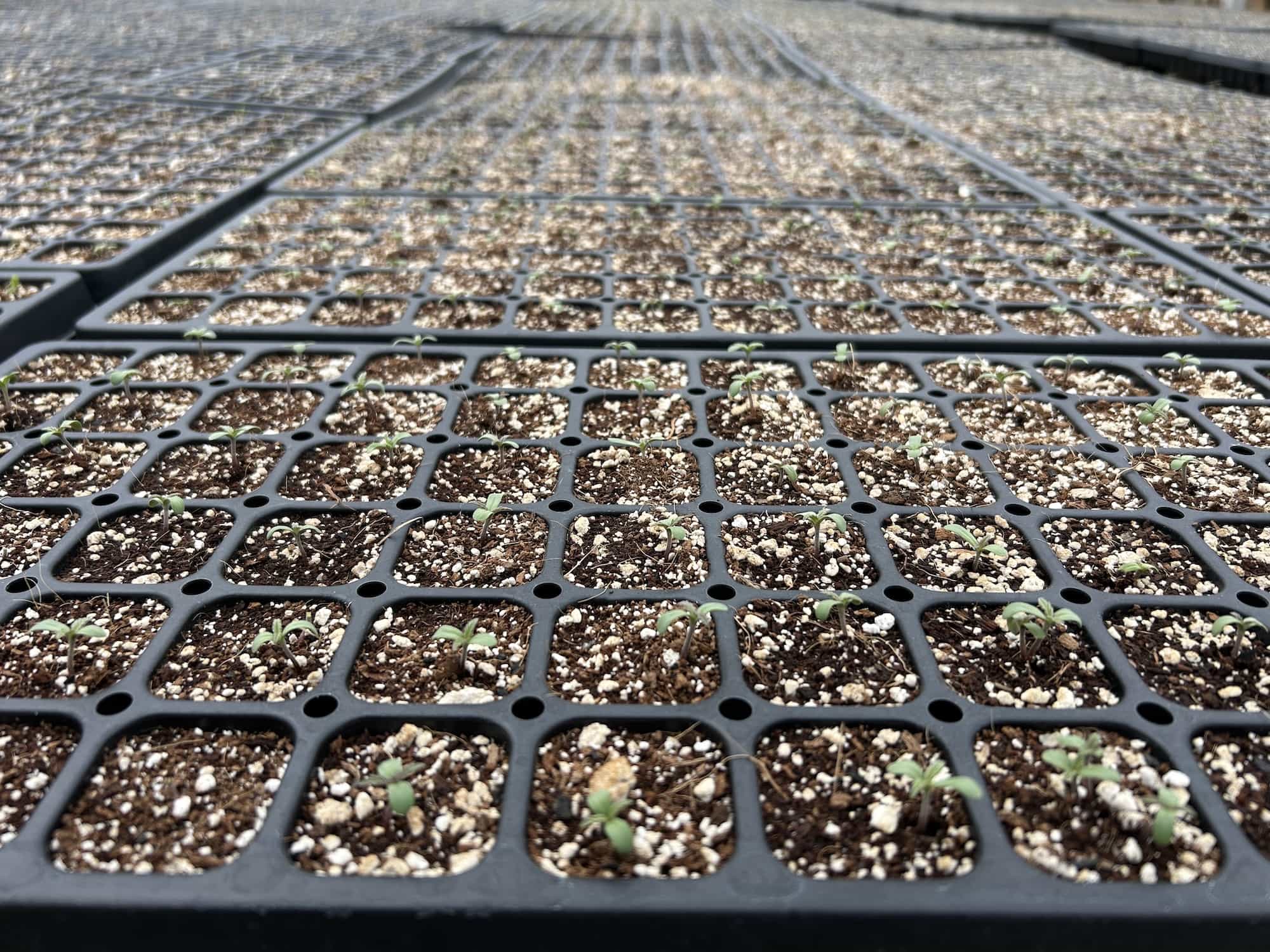
One of the most frustrating aspects of poorly planned crosses is the enormous variation between individual plants.
You might buy a ten-pack of seeds and find one incredible keeper, three decent plants, and six that you'd never consider growing again.
For a home grower hunting for something unique, that might be perfectly acceptable.
For a commercial grower planting thousands of seeds, it's a disaster.
When highly heterozygous parents are crossed, their offspring can inherit dramatically different combinations of traits.
Plant height, flowering time, cannabinoid production, aromas, yields, and flower structure can vary substantially.
This is why we put so much effort into developing inbred parental lines for our F1 hybrid breeding program.
By increasing homozygosity in the parental lines, we can produce hybrids that are much more genetically uniform and predictable.
2. Hermaphroditism and Other Unwanted Traits
Here's where things can get particularly ugly.
Cannabis has a tendency to produce intersex flowers under certain genetic and environmental conditions.
Some plants are far more susceptible than others.
When breeders fail to evaluate parental lines and their offspring for intersex expression, they risk passing undesirable tendencies into future generations.
And those problems don't always reveal themselves immediately.
A plant might appear perfectly stable under one set of conditions but develop male flowers when exposed to environmental stress or during later stages of flowering.
For growers producing seedless cannabis flowers, unwanted pollen can be a serious problem.
It's important to recognize that pollen chucking doesn't automatically cause hermaphroditism. The problem is that inadequate testing makes it much easier for susceptible genetics to reach customers.
3. Inconsistent Flowering Times, Yields, and Cannabinoids
Imagine planting an acre of cannabis expecting everything to finish around the same time.
Instead, some plants finish in eight weeks, others take ten, and a handful seem determined to flower forever.
Now imagine trying to harvest that field efficiently.
This is one of the biggest differences between breeding for commercial agriculture and breeding for novelty.
Growers need consistency.
Flowering time, plant structure, yield, cannabinoid ratios, and disease susceptibility all matter.
For example, a CBD grower needs confidence that their plants will produce the expected cannabinoid profile, not a wildly segregating population with unpredictable THC concentrations.
The same applies to THC, CBG, THCV, and other cannabinoid-dominant varieties.
A beautiful photograph of one exceptional plant tells you very little about the performance of the thousands of seeds produced by its parents.
4. Too Many Names, Not Enough Actual Varieties
The cannabis industry has become obsessed with naming every cross.
Combine two popular varieties, invent a clever name, and market it as the next revolutionary strain.
But how different is it, really?
Has anyone demonstrated that the offspring consistently express the characteristics being advertised?
Or are we simply adding another name to an already confusing marketplace?
There's a big difference between creating a genetic cross and developing a commercially reliable variety.
We'd love to see the industry spend more time demonstrating the performance of its genetics and less time inventing names.
Is Pollen Chucking Always Bad?
Absolutely not.
In fact, there's a place for it.
Making experimental crosses is one of the most enjoyable aspects of cannabis breeding. You never know what incredible combination of traits might emerge.
Some of the world's most influential cannabis varieties originated from relatively simple crosses, chance discoveries, and small-scale breeding projects.
We make experimental crosses all the time.
The difference is that we don't consider every experimental cross a finished commercial variety.
A new cross is the beginning of a breeding project, not necessarily the end.
Grow it out. Evaluate the offspring. Identify the exceptional plants. Determine which traits are heritable. Test the stability and consistency of the resulting genetics.
And if the cross doesn't meet expectations?
Move on.
Not every combination deserves to become a product.
What Makes a True F1 Cannabis Hybrid Different?
One of the major focuses of our breeding program is producing true F1 hybrid cannabis seeds.
There's an important distinction here because the term F1 is frequently misused throughout the cannabis industry.
Technically, the first generation of offspring from any cross between two parents can be called an F1 generation.
But a true-breeding F1 hybrid developed from carefully selected, highly homozygous parental lines is very different from a cross between two genetically variable plants.
Developing those parental lines takes multiple generations of selfing, inbreeding, and selection.
Once we have stable parental lines with desirable characteristics, we can cross them to produce highly uniform hybrid offspring.
This also allows us to take advantage of heterosis, commonly called hybrid vigor, where hybrids can outperform their parents for certain traits.
It's a process widely used in commercial agriculture, from corn to tomatoes, and one we've spent years adapting to cannabis.
The result is a more predictable crop, which is particularly important for commercial growers.
You can learn more in our guide to understanding F1 hybrid cannabis seeds.
Cannabis Breeding Should Be About More Than Marketing
We're fortunate to work with an incredible team of scientists and breeders who have dedicated their careers to understanding cannabis genetics.
Our breeding work has also contributed to university research and peer-reviewed publications, including a major cannabis pangenome study published in Nature.
You can explore some of our collaborations on our University Hemp Research page.
But scientific publications and fancy equipment aren't what make someone a good breeder.
What matters is doing the work.
Selecting plants thoughtfully. Growing out offspring. Evaluating performance. Identifying weaknesses. And being willing to discard genetics that don't meet expectations.
That work can happen in a university laboratory, a commercial breeding facility, or someone's backyard.
The important thing is that it happens.
Our Take on Pollen Chucking
We love seeing people experiment with cannabis genetics.
We love the creativity, curiosity, and enthusiasm that drive growers to make their own crosses.
And we're certainly not suggesting that every worthwhile cannabis variety needs to come from a large breeding company.
But there's a difference between experimenting with genetics and selling untested seeds as finished, reliable varieties.
If you're going to charge growers good money for cannabis seeds, you should have a pretty good idea of what those seeds are going to produce.
That means growing out your crosses, evaluating the offspring, and putting in the time to develop something worth growing.
Cannabis breeders should be breeding for growers, not just for Instagram.
And that's why pollen chucking pisses us off.