


One common misconception among cannabis growers is that plants displaying fasciation are polyploids or triploids. This belief has spread across growing forums and social media, but there's no scientific basis for assuming a fasciated cannabis plant is polyploid.
So what's the difference?
What Is Fasciation in Cannabis?
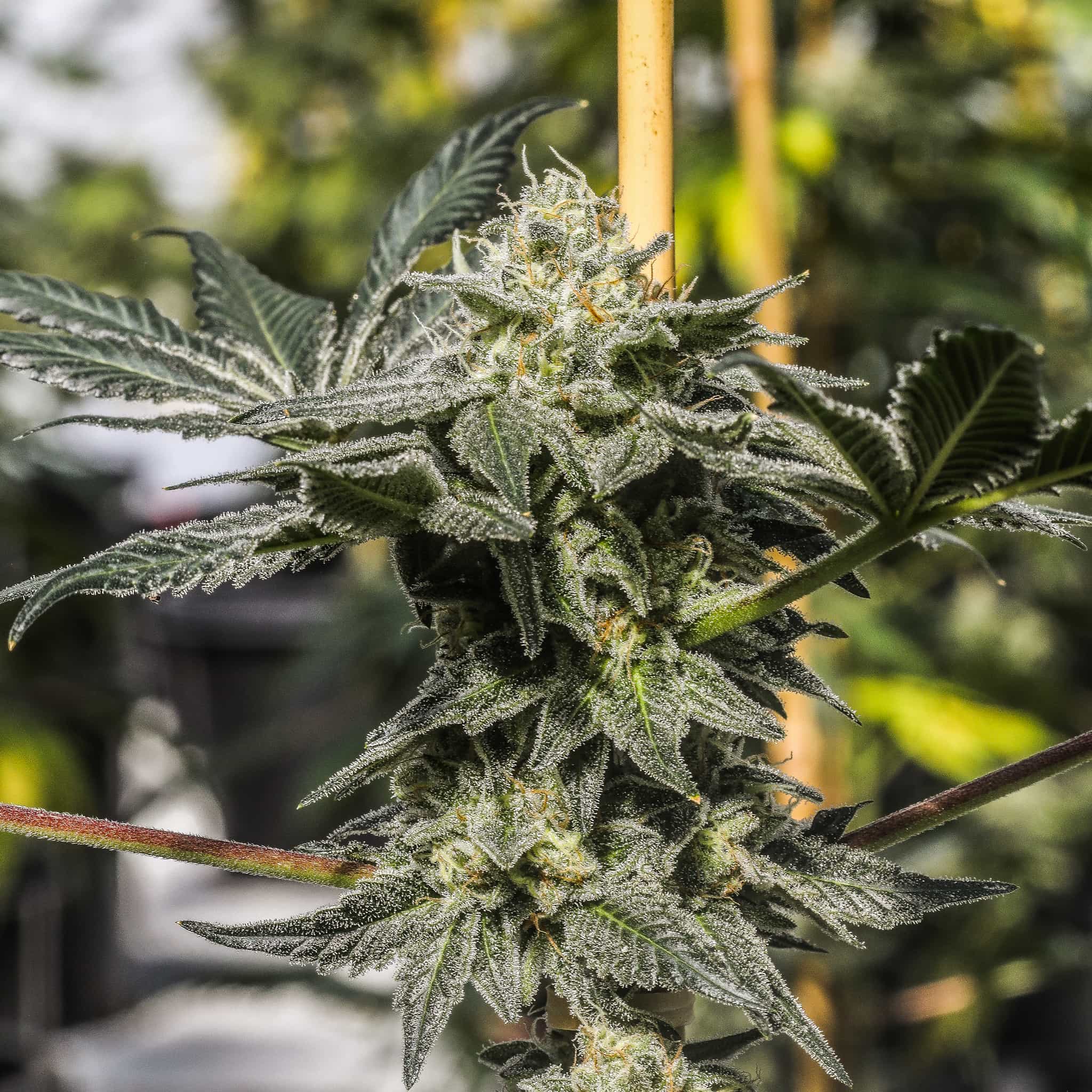
Fasciation is an abnormal growth pattern that affects the stems and flowers of cannabis plants. Instead of growing normally, stems become unusually wide, flattened, or ribbon-like, sometimes appearing as though several stems have fused together.
Fasciation can result from genetic changes, developmental abnormalities, or environmental factors. It typically affects only a few branches and is relatively rare.
In the video above, you can see examples from one of our R&D fields in 2020, where we discovered an unusually high occurrence of fasciation in a CBDV variety trial. We see it some what often in large fields of all of our CBDV lines - but never at any problematic rate.
Curious about other unusual growth patterns? Check out our guide to common cannabis mutations.
What Is Polyploidy in Cannabis?
Most cannabis plants are diploid (2x), meaning they have two complete sets of chromosomes. Polyploid cannabis plants have three or more complete chromosome sets, including triploids (3x) and tetraploids (4x).
Polyploidy occurs naturally in many agricultural crops and can also be produced through specialized breeding techniques.
Some familiar examples include:
-
Wheat: Commonly hexaploid (6x)
-
Strawberries: Commercial varieties are typically octoploid (8x)
-
Potatoes: Many cultivated varieties are tetraploid (4x)
-
Seedless watermelons: Typically triploid (3x)
Polyploid plants can exhibit differences in growth, flower size, and fertility, but you cannot reliably identify a triploid cannabis plant by appearance alone.
Fasciation Looks Cool, But Ain't That Great
Fasciation is not evidence that a cannabis plant is triploid or polyploid, although fasciation can occur in polyploid plants.
Those enormous, flattened cannabis buds might look impressive, but they're often more fluff than substance. Their unusual structure can also restrict airflow and trap moisture, increasing the risk of mold and bud rot.
Fun to look at? Absolutely. Great for commercial flower production? Usually not.

How Can You Tell if Cannabis Is Really Triploid?
The most reliable way to verify a cannabis plant's ploidy is through flow cytometry, a laboratory technique that measures the DNA content of plant cells. Chromosome counting is another method, although it's considerably more labor-intensive.
Flow cytometry requires specialized equipment and trained technicians. It's not something you can determine by looking at a fat stem or an unusually large flower.
Our advice? Before ordering triploid cannabis seeds, ask your breeder how they verify ploidy. Reputable breeders should be able to explain their testing procedures.
We've Got Real Triploid Cannabis Seeds
At GTR Seeds, we develop triploid cannabis genetics through controlled breeding and ploidy verification, not guesswork.
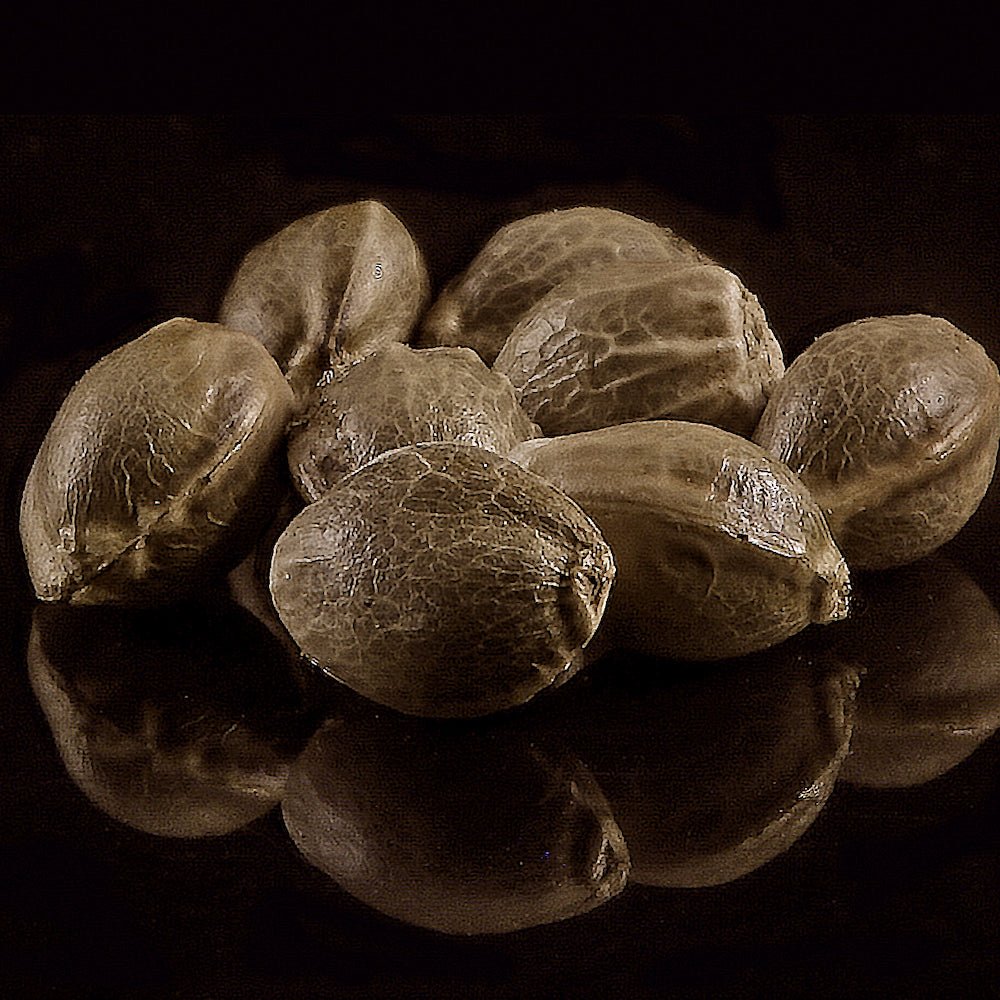
Our triploid cannabis seeds are bred for vigorous growth, exceptional flower production, resin development, and significantly reduced seed formation when exposed to pollen.
Want to understand the science? Read our guide to triploid cannabis and its benefits.
And just for reading this far, use discount code Fasciation at checkout for 15% off your order!
The more you know. :)
Triploid THC
Triploid CBD, CBDV, & CBG
All Seeds






commentaire
Interesting article (Fasciation in Cannabis Plants and Polyploidy), I was wondering about the polyploid identification part. While up till now I’ve not much wondered about the subject (although 40 or so years ago I’d read about it), but recently a CBG seedling put out three leaves instead of two at each node. I’d never seen this before, and wondering if it could be a natural triploid. It has outgrown all its siblings. However your article indicates you can’t depend on these factors to identify polyploids. I guess my question would be is it a polyploid? How can I tell.
A Google search on polyploids showed my your site, and I’m actually liking what I see.
Thanks
-Rick