


Cannabis is full of "bro-science" terms that have somehow become accepted as fact. Some of the most common words thrown around by cannabis growers, consumers, and self-proclaimed connoisseurs aren't particularly accurate.
Sure, it sounds a little snobby to point this stuff out. It's just weed, after all. Who cares?
But since we're a team of plant breeders and science nerds, let's go over a few funky falsities the cannabis community just can't seem to kick, and some more accurate alternatives.
Plus, it would be fantastic if we could finally get cannabis legalized federally. Sounding like we know what we're talking about probably wouldn't hurt.
Cannabis Strains vs. Cultivars vs. Varieties
Let's start with one of the most commonly used words in cannabis: strain.
Outside of describing injuries, the word "strain" is frequently used in microbiology to distinguish genetic variants of microorganisms, including bacteria and viruses. It also has legitimate uses in other biological fields, but in horticulture, we generally have better terminology.
Cannabis enthusiasts have been using "strain" for decades, and it's probably not going anywhere. I'm guilty of using it myself. But the one that really grinds my gears is strand. Fabric, anyone?
So what should we call our beloved cannabis strains?
Cannabis Varieties
In the plant world, varieties are groups of plants with distinguishable characteristics. In formal botanical terminology, a variety is a naturally occurring subdivision within a species.
In everyday horticulture, however, "variety" is also commonly used to describe different cultivated plants.
Personally, cannabis varieties is my preferred terminology. It's straightforward, familiar, and generally more appropriate than strains.
Cannabis Cultivars
Technically, most named cannabis varieties developed and maintained through breeding are better described as cultivars.
The word cultivar comes from "cultivated variety" and refers to plants selected for particular characteristics that remain distinguishable when propagated through an appropriate method.
Cultivars can be maintained through seeds or clones, depending on the breeding system.
I get it. Cultivar sounds a little pretentious. But walk up to a tomato breeder who's spent a decade developing a new cultivar and call it a "strain." See how impressed they are.
Plus, you might sound cooler at the dispensary asking which cultivar the budtender recommends.
Polyploidy vs. Fasciation: They're Not the Same Thing
One of the more persistent misconceptions floating around cannabis forums is that plants exhibiting fasciation are polyploids.
They're not the same thing. Not even close.
Fasciation is a developmental abnormality characterized by flattened, widened stems and sometimes unusually large, distorted flowers. It can result from genetic mutations, environmental stress, pathogens, or disruptions in normal plant development.
Polyploidy, on the other hand, refers to organisms possessing more than two complete sets of chromosomes. Our triploid cannabis varieties, for example, contain three sets of chromosomes instead of the usual two.
Polyploidy is widely used in commercial agriculture. Bananas, seedless watermelons, and many strawberry cultivars are familiar examples.
Although polyploidy can influence plant size and morphology, you cannot reliably identify a polyploid cannabis plant just by looking at it. Chromosome counts or techniques such as flow cytometry are needed to verify ploidy.
A wide, flattened stem doesn't mean you've discovered some magical polyploid superplant.
We've seen plenty of fasciation in our own breeding trials, including one CBDV population where nearly 80% of the plants exhibited the mutation.
Check out our video and article on fasciation in cannabis to see just how bizarre these plants can get.
Indica vs. Sativa: The Great Cannabis Marketing Gimmick
I've covered this misconception before, so I'll try to keep it short.
The cannabis industry loves dividing everything into Indica, Sativa, and Hybrid.
Indicas supposedly make you sleepy, sativas make you energetic, and hybrids fall somewhere in between.
Sounds simple, right?
Unfortunately, biology isn't that cooperative.
Historically, the terms indica and sativa have been used to distinguish different cannabis populations based on geography, plant morphology, and competing taxonomic classifications.
But modern commercial cannabis has undergone generations of hybridization. Genetics from different geographic regions have been crossed, selected, and crossed again, often with little documentation of their origins.
Short, squat plants with broad leaves aren't automatically "indicas," and tall, narrow-leafed plants with long flowering times aren't necessarily "sativas."
And neither description reliably tells you how the flower will make someone feel.
What Actually Determines Cannabis Effects?
Cannabis effects are influenced by its chemical composition, including cannabinoids and potentially terpenes, along with dose, consumption method, and individual physiology.
A more useful way to classify cannabis chemically is by its dominant cannabinoid profile:
-
Type I: THC-dominant cannabis
-
Type II: Mixed THC and CBD cannabis
-
Type III: CBD-dominant cannabis
-
Type IV: CBG-dominant cannabis
-
Type V: Cannabis producing little to no cannabinoids
These classifications tell us something measurable about the plant, unlike a dispensary label claiming a flower is "80% Indica and 20% Sativa."
Where did those percentages come from, anyway? Did someone run an ancestry test?
When describing effects, terms like uplifting, energizing, relaxing, or sedating are more useful than pretending geographic ancestry predicts someone's experience. Even then, those descriptions are subjective.
I've consumed supposedly heavy indicas that left me wide awake with my heart racing. But hey, the label said Indica, so I guess I should have been sleepy.
The bottom line? Indica and Sativa are poor predictors of cannabis effects, and the percentages printed on dispensary labels shouldn't be confused with meaningful genetic measurements.
Cannabis Phenotypes vs. Genotypes
Here's another favorite among cannabis growers: phenotype.
Spend enough time around breeders and you'll hear people talking about "pheno hunting," finding special phenotypes, or asking how many phenos they should expect from a pack of seeds.
There's nothing inherently wrong with the word, but it's frequently used without understanding the difference between a phenotype and a genotype.
What's a Cannabis Phenotype?
A phenotype is the collection of observable characteristics expressed by an organism.
In cannabis, that might include plant height, flowering time, flower structure, cannabinoid production, aroma, and dozens of other traits.
A phenotype results from the interaction between a plant's genetics and its environment.
The same clone grown in two different environments can express different phenotypes despite having essentially identical genetics.
What's a Cannabis Genotype?
A genotype refers to an organism's genetic makeup.
When you grow seeds produced by crossing two genetically diverse cannabis parents, each seed can contain a different combination of inherited genetic material.
In other words, the seedlings aren't simply different phenotypes. They're often genetically distinct individuals expressing different phenotypes.
That's an important distinction, especially when discussing cannabis breeding.
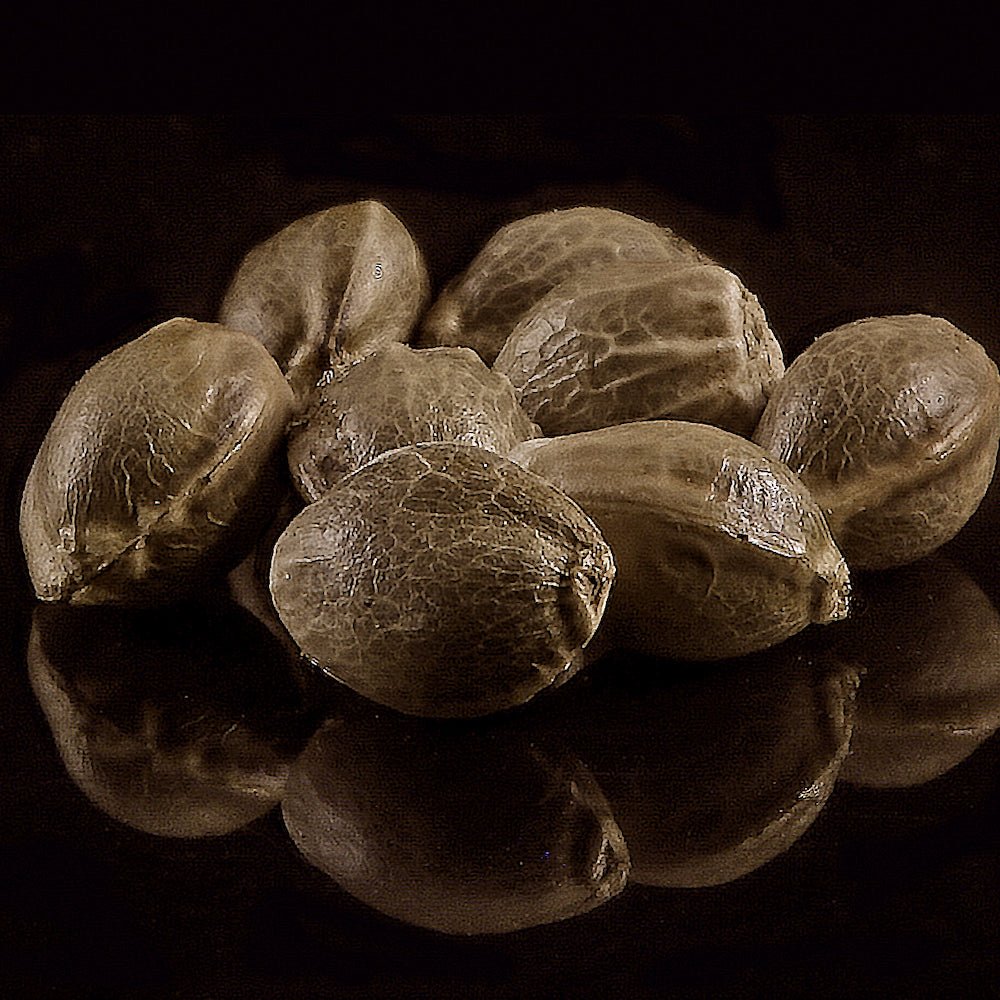
Why Do Cannabis Seeds Produce So Much Variation?
Let's use Runtz as an example.
Runtz is commonly described as a cross between Zkittlez and Gelato. Both parents come from complex breeding backgrounds involving multiple generations of hybridization.
Crossing two genetically diverse parents can produce offspring with tremendous variation. Some might resemble one parent, some the other, and some might express combinations of traits that haven't been obvious for generations.
Each seedling has its own genotype, and each expresses a phenotype influenced by both its genetics and growing environment.
Someone eventually finds an exceptional plant, keeps a clone, gives it a name, and suddenly everyone wants it.
But recreating that exact plant by repeating the original cross isn't necessarily possible. The genetic combinations are shuffled with every generation.
That's why a pack of seeds marketed under the same name as a famous clone doesn't guarantee you'll grow that exact clone.
And that's where proper breeding becomes important.
True F1 Hybrids vs. Cannabis Polyhybrids
This is one of the biggest differences between our breeding program at GTR Seeds and much of the commercial cannabis seed industry.
We breed true F1 hybrids.
The term F1 simply means the first filial generation, or the first generation of offspring from a cross between two parents. But not all F1 crosses produce genetically uniform offspring.
Crossing two highly heterozygous cannabis plants technically produces F1 offspring, but those seedlings can still exhibit substantial genetic variation.
Producing a uniform F1 hybrid is a different story.
How We Produce Uniform F1 Cannabis Seeds
At GTR Seeds, we spend years developing and selecting parental lines before crossing them to produce commercial seed.
Through multiple generations of inbreeding and selection, we reduce genetic variation within each parental line and stabilize desirable characteristics.
When two sufficiently uniform, genetically distinct parental lines are crossed, the resulting F1 offspring inherit predictable combinations of genes.
The plants aren't necessarily genetically identical, but they can be remarkably uniform in their growth, flowering time, structure, and cannabinoid profiles.
This is the foundation of modern hybrid breeding across much of commercial agriculture.
It takes time. It takes space. And it takes a tremendous amount of work that most cannabis consumers never see.
But the payoff is consistency.
For a commercial grower, having thousands of plants that mature at similar times and produce predictable yields is a pretty big deal.
For a home grower, knowing what to expect from a pack of seeds isn't such a bad thing either.
You can learn more about the process in our guide to F1 hybrid cannabis seeds.
Why Isn't Everyone Breeding This Way?
Because it's expensive, time-consuming, and requires a lot of patience.
It's much easier to cross two popular clones, give the offspring a catchy name, and release the seeds before anyone has had a chance to grow them.
And let's face it, most cannabis seed buyers won't discover whether their purchase was worthwhile until months later. By then, the next hyped-up "strain" has already hit the market.
I'm not saying there's anything wrong with hunting through genetically diverse populations. That's how exceptional plants are discovered, and it's an important part of breeding.
But there's a big difference between selling seeds intended for genetic exploration and selling seeds that are supposed to produce a consistent commercial crop.
Both have their place. Growers should know what they're buying.
And if you're a self-proclaimed "pheno hunter," congratulations. You're also hunting through genotypes.
Let's Get Cannabis Legalized
I know, I'm a hypocrite. I've used the word weed throughout this article, and I'm sure I'll continue saying "strain" from time to time.
Language evolves, and not every casual cannabis term needs to be banished from the dictionary.
But there's a difference between using familiar terminology and spreading scientific misconceptions as fact.
Cannabis is an incredibly complex plant, and we're still learning about its genetics, chemistry, and biology. The more we understand it, the better equipped we are to breed it, grow it, regulate it, and explain it to people outside our industry.
And with federal cannabis reform still an ongoing battle, a little scientific credibility certainly wouldn't hurt.
So the next time someone tells you they've discovered a polyploid because their plant has a flattened stem, or that their flower is exactly 90% Indica, feel free to share a little knowledge.
Just try not to sound like too much of a snob.
After all, it's just weed.







comentario
Great article.
So, you didn’t touch on what generation you get to to consider it a pure line for breeding stock to make the f1 hybrids, curious as to that.