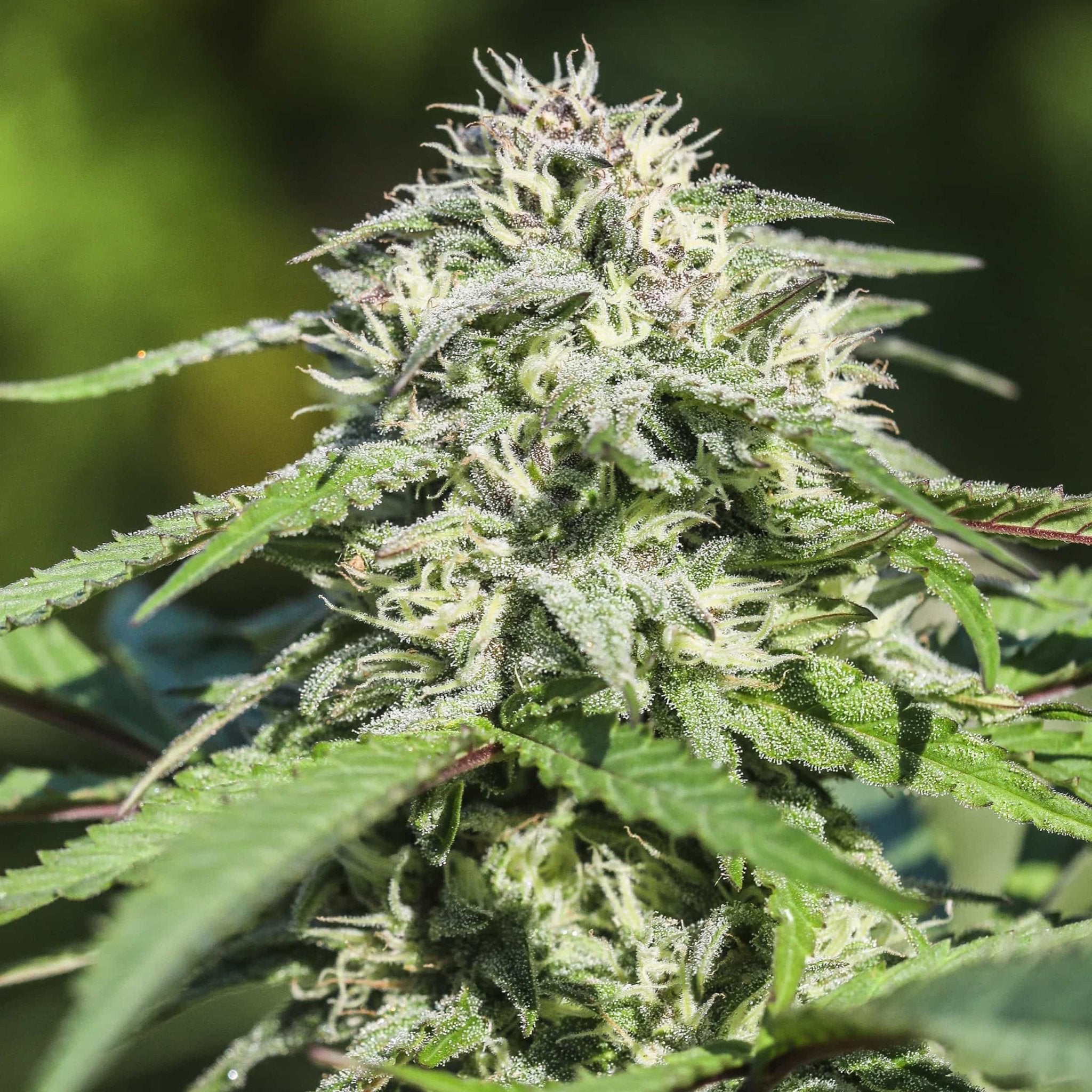


One of the most common misconceptions in hemp cultivation is that environmental conditions can dramatically change a plant's CBD-to-THC ratio. Growers often worry that excessive heat, drought, nutrient deficiencies, or other environmental stressors will cause their compliant hemp plants to suddenly produce disproportionately high levels of THC - or go "hot."
While growing conditions can significantly influence the total amount of cannabinoids a plant produces, the relationship between CBD and THC is primarily determined by genetics.
Understanding this distinction is essential for hemp farmers, breeders, and anyone looking into growing high-CBD seeds.
Understanding CBD-to-THC Ratios
Cannabis plants produce cannabinoids through a series of biochemical processes controlled by their genetics. Two of the most familiar cannabinoids are cannabidiol (CBD) and tetrahydrocannabinol (THC).
Although CBD and THC have very different effects, their biosynthetic pathways are closely related. Both originate from a common precursor, cannabigerolic acid (CBGA).
Specialized enzymes convert CBGA into different acidic cannabinoids, including:
-
CBDA synthase: Converts CBGA into CBDA, the precursor to CBD.
-
THCA synthase: Converts CBGA into THCA, the precursor to THC.
The genetic makeup of a cannabis plant largely determines the relative activity of these pathways and, consequently, the proportions of CBD and THC that accumulate.
For example, a well-bred CBD-dominant hemp variety might consistently produce approximately 25 parts CBD for every one part THC. At GTR Seeds, our CBD varieties commonly achieve ratios approaching 27:1 to 28:1 CBD to THC.
That relationship is known as its cannabinoid ratio.
Research has established that genetic variation in cannabinoid synthase pathways plays a central role in determining these ratios. A study published in Genetics, The Inheritance of Chemical Phenotype in Cannabis sativa L. (de Meijer et al., 2003), demonstrated predictable inheritance of CBD- and THC-dominant chemotypes.
Genetics Establish the Cannabinoid Ratio
One of the most important discoveries in cannabis breeding is that cannabinoid ratios are highly heritable traits.
A plant genetically predisposed to produce a 25:1 CBD-to-THC ratio will generally maintain a similar ratio across a wide range of growing conditions, although some variation is possible.
Consider a hypothetical hemp variety with a genetically established ratio of 25:1.
| Growing conditions | Total CBD | Total THC | CBD ratio |
|---|---|---|---|
| Low cannabinoid production | 5.0% | 0.20% | 25:1 |
| Moderate cannabinoid production | 7.5% | 0.30% | 25:1 |
| High cannabinoid production | 10.0% | 0.40% | 25:1 |
| Exceptional cannabinoid production | 12.5% | 0.50% | 25:1 |
These illustrative values demonstrate a constant cannabinoid ratio at different levels of production. They are not results from a specific field trial.
Notice that while the absolute concentrations of CBD and THC increase, their ratio remains unchanged.
This illustrates a critical distinction: A plant can produce more THC without becoming genetically more THC-dominant.
The THC concentration increases because overall cannabinoid production increases, not necessarily because the plant has changed how it allocates cannabinoid production between CBD and THC.
Additional research, including Cannabinoid Inheritance Relies on Complex Genetic Architecture (Campbell et al., 2020), demonstrates that cannabinoid production is influenced by multiple genetic factors. These findings help explain why breeding for both high cannabinoid content and favorable cannabinoid ratios requires careful genetic selection.
Genetic Limitations: Why CBD and THC Often Increase Together
One of the challenges facing CBD hemp breeders is developing plants that produce exceptionally high CBD concentrations while maintaining very low THC levels.
In conventional CBD-dominant (Type III) cannabis genetics, CBD and THC production are connected through closely related biosynthetic pathways.
CBD synthase primarily produces CBDA, but research suggests that cannabinoid synthase activity and genetic variation can contribute to the small amounts of THCA commonly found in CBD-dominant plants.
This creates a breeding challenge: increasing CBD production may also increase THC concentration, even when the overall CBD-to-THC ratio remains favorable.
At GTR Seeds, our breeding program has focused on developing CBD varieties that consistently approach 28:1 CBD to THC, an exceptionally favorable ratio for commercial CBD hemp production.
While 28:1 should not be considered an absolute biological maximum, achieving high and consistent CBD-to-THC ratios across a large population is an important breeding accomplishment.
The goal is to maximize CBD production while minimizing the accompanying THC accumulation.
How Environmental Conditions Influence Cannabinoid Production
Environmental factors can substantially affect cannabinoid accumulation. However, their influence is generally much greater on overall cannabinoid concentration than on the genetically established CBD-to-THC ratio.
Several factors contribute to these differences.
1. Light Intensity and Sunlight
Light provides the energy necessary for photosynthesis, which supports plant growth and the production of secondary metabolites, including cannabinoids.
Plants grown under different light intensities may develop different cannabinoid concentrations.
Under favorable conditions, increased light availability can support greater cannabinoid accumulation. Both CBD and THC concentrations may increase while their relative proportions remain similar.
2. Temperature
Temperature affects plant metabolism, enzyme activity, photosynthesis, and overall development.
Excessive heat can reduce plant performance, while temperatures within a suitable range support healthy growth and cannabinoid production.
Temperature may influence cannabinoid concentrations, but it does not ordinarily transform a genetically CBD-dominant plant into a THC-dominant plant.
3. Water Availability and Drought Stress
Water stress is frequently blamed for elevated THC levels in hemp.
The reality is more complicated.
Drought stress can influence cannabinoid accumulation, and certain studies have reported increased cannabinoid concentrations under particular water-deficit treatments.
However, an increase in THC concentration does not automatically mean the plant has experienced a significant change in its CBD-to-THC ratio.
If CBD and THC concentrations increase proportionally, the ratio remains essentially the same.
Importantly, severe water stress can also reduce biomass production, potentially lowering total cannabinoid yield per acre even when cannabinoid percentages increase.
4. Soil Fertility and Nutrient Management
Nutrient availability affects plant growth, flower development, and metabolic activity.
Nitrogen, phosphorus, potassium, and other nutrients all contribute to plant performance.
Nutrient deficiencies or excessive fertilization may change overall cannabinoid accumulation, but these conditions do not generally override the genetic mechanisms responsible for a variety's cannabinoid profile.
5. Harvest Timing and Plant Maturity
Cannabinoid concentrations change as cannabis flowers develop and mature.
CBD and THC accumulate throughout flowering, often maintaining a relatively stable relationship once cannabinoid production is well established.
However, cannabinoid ratios are not perfectly fixed at every developmental stage. Small shifts can occur with maturity, and degradation or differences in sampling can also influence laboratory results.
This is one reason standardized sampling and harvest procedures are important when evaluating hemp varieties.
Why Hemp Can Test Above 0.3% THC Without a Change in Its CBD-to-THC Ratio
This distinction is particularly important for commercial hemp production.
A hemp variety can exceed the legal THC threshold even when its CBD-to-THC ratio remains genetically stable.
For example, consider a plant with a 20:1 CBD-to-THC ratio.
At 4% total CBD, it would be expected to contain approximately 0.20% total THC.
At 8% total CBD, that same ratio would correspond to approximately 0.40% total THC.
The plant has not suddenly changed its cannabinoid profile. Instead, it has produced greater concentrations of both cannabinoids.
This relationship explains why breeding for high CBD content alone is not sufficient to ensure reliable THC compliance.
To produce high-CBD hemp that remains compliant, breeders must also select for extremely low THC production relative to CBD.
A variety with a 28:1 ratio has a substantially greater margin for THC compliance than a variety with a 15:1 ratio when both produce the same CBD concentration.
Even favorable CBD-to-THC ratios cannot guarantee legal compliance at every stage of growth. Growers must still monitor total THC concentrations and follow applicable sampling, testing, and harvest requirements.
Why Stable Genetics Matter More Than Environmental Manipulation
Some growers attempt to manage THC compliance by adjusting irrigation, fertilization, lighting, or harvest timing.
While these practices can affect cannabinoid concentrations, they cannot reliably compensate for poor cannabinoid-ratio genetics.
If a hemp variety has a genetically unfavorable CBD-to-THC ratio, even excellent growing conditions cannot be expected to correct that fundamental characteristic.
For commercial hemp farmers, this makes genetic selection one of the most important tools for managing THC compliance risk.
Breeding programs should prioritize:
-
High CBD production combined with extremely low THC accumulation.
-
Consistent cannabinoid ratios across multiple plants and generations.
-
Stable performance across different geographic locations and growing environments.
-
Reliable cannabinoid expression under commercial field conditions.
-
Extensive analytical testing to identify and eliminate undesirable genetic variation.
The goal is not simply to breed plants that produce large amounts of CBD. It is to develop varieties that maintain favorable cannabinoid ratios while achieving high yields.
Are CBD-to-THC Ratios Completely Unaffected by the Environment?
Although genetics are the dominant factor determining cannabinoid ratios, it would be inaccurate to claim that environmental conditions can never influence them.
Research has demonstrated that cannabinoid chemotypes are strongly genetically controlled. Nevertheless, variation can occur due to environmental conditions, plant maturity, interactions between genetics and environment, and analytical variability.
Differences may also occur between individual plants within a seed population, particularly when the population is not genetically uniform.
The study Cannabinoid Inheritance Relies on Complex Genetic Architecture illustrates the complexity of cannabinoid inheritance and highlights why understanding genetic variation is essential for developing predictable cannabis varieties.
For example, environmental stress is not expected to transform a stable 25:1 CBD-dominant variety into a 1:1 CBD-to-THC variety.
Such a dramatic difference would generally indicate a fundamentally different genetic cannabinoid profile rather than a simple environmental response.
The important scientific distinction is that cannabinoid ratios are strongly genetically controlled, not absolutely immune to environmental influence.
Cornell University Research: Genetics Drive CBD-to-THC Ratios
Research conducted at Cornell University provides compelling evidence that a hemp plant's CBD-to-THC ratio is primarily determined by genetics rather than environmental stress.
In a 2020 study published in GCB Bioenergy, titled Development and Validation of Genetic Markers for Sex and Cannabinoid Chemotype in Cannabis sativa L., researchers examined 217 hemp plants grown at two different locations in New York.
They discovered that genetic differences were strongly associated with cannabinoid profiles, while differences in growing locations did not significantly alter the plants' underlying cannabinoid chemotypes.
Cornell researchers followed up with an even more targeted study in 2021 examining environmental stress and cannabinoid production, titled Limited Effect of Environmental Stress on Cannabinoid Profiles in High-Cannabidiol Hemp (Cannabis sativa L.).
The researchers evaluated three genetically distinct high-CBD hemp cultivars under several environmental and biological stress treatments, including flooding, powdery mildew, herbicide exposure, and physical damage.
Their findings were particularly important for commercial hemp growers: CBD and THC concentrations generally increased together as plants matured, while their relative ratios remained comparatively stable across the treatments.
This research challenges the widespread belief that environmental stress is necessarily the primary reason hemp crops exceed legal THC limits.
Instead, it reinforces the importance of selecting genetically stable CBD varieties with favorable CBD-to-THC ratios from the beginning.
While environmental conditions can affect overall cannabinoid accumulation, Cornell's findings demonstrate why genetic selection remains one of the most important tools for developing predictable hemp crops.
These studies do not mean that environmental conditions have no influence on cannabinoid production or that favorable genetics guarantee THC compliance. Rather, they show that the genetic foundation of a variety is critical to understanding its cannabinoid profile.
The Importance of Cannabis Breeding and Genetic Uniformity
At GTR Seeds, our breeding philosophy is rooted in understanding the genetic mechanisms responsible for cannabinoid production.
Developing reliable hemp varieties requires more than selecting plants with high cannabinoid percentages.
It requires identifying genetics that consistently express desirable cannabinoid profiles, evaluating those traits across generations, and testing plants under different environmental conditions.
Genetic uniformity is particularly important for commercial hemp production.
A field containing plants with substantially different CBD-to-THC ratios creates additional compliance risk, even when the average cannabinoid profile appears favorable.
Through extensive breeding, selection, and field testing, breeders can develop varieties with more predictable cannabinoid expression and greater consistency across large-scale plantings.
For farmers, that consistency translates into better production planning, more reliable cannabinoid yields, and a clearer understanding of potential THC compliance risks.
Genetics Determine the Ratio, Environment Influences the Amount
The distinction between cannabinoid ratios and cannabinoid concentrations is fundamental to understanding hemp production.
Environmental conditions can affect how much CBD and THC a cannabis plant produces. Light, temperature, irrigation, nutrients, and harvest timing all contribute to cannabinoid accumulation.
However, the relative proportions of CBD and THC are primarily determined by the plant's genetics.
A genetically CBD-dominant plant will generally remain CBD-dominant regardless of environmental conditions, even though its total cannabinoid concentrations may vary significantly.
For commercial hemp growers, this reinforces an important lesson:
You cannot reliably grow your way out of unfavorable genetics.
Choosing well-bred, genetically consistent hemp seeds with favorable cannabinoid ratios is one of the most effective ways to reduce production variability and manage THC compliance risk.
At GTR Seeds, we believe successful hemp production begins with understanding the science of cannabis genetics—and using that knowledge to develop more reliable seeds for farmers.
Our breeding program focuses on developing high-CBD varieties with exceptional cannabinoid production, favorable CBD-to-THC ratios, and consistent performance across commercial growing environments.
Through years of research, selection, and field testing, we've developed feminized CBD genetics that commonly achieve CBD-to-THC ratios approaching 28:1.
Looking for reliable, high-CBD genetics for your next grow?
Explore our collection of feminized CBD seeds, including proven favorites like Lifter, Sour Lifter, Suver Haze, and our newest triploid CBD varieties.